



|
Getting your Trinity Audio player ready...
|
“No One Is Coming to Their Aid”: Michael Oren’s Stark Appraisal of Iran’s Isolation and the Crumbling Architecture of Regime Support
By: Fern Sidman
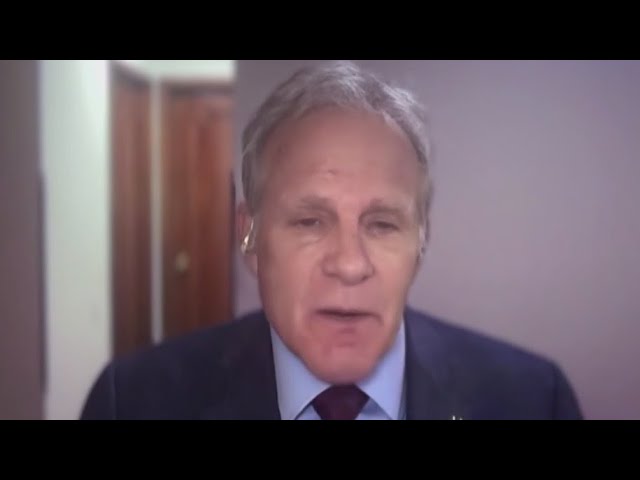
At a moment of heightened volatility in the Middle East, when the tectonic plates of regional power appear to be shifting beneath long-established alliances, a stark assessment has emerged from one of Israel’s most seasoned diplomatic voices. Former Israeli ambassador to the United States Michael Oren has argued that Iran’s current regime stands increasingly alone on the international stage, bereft of reliable foreign patrons willing to extend meaningful support. As VIN News reported on Thursday, Oren’s remarks, delivered in a televised interview with NewsNation anchor Elizabeth Vargas on “Elizabeth Vargas Reports,” cut through the customary euphemisms of diplomatic discourse with blunt clarity. “This is such a heinous regime,” Oren said, adding with emphatic finality, “No one’s coming to Iran’s aid.”
The assertion is not merely rhetorical. It reflects a broader analytical claim about Iran’s geopolitical predicament at a time when the regime faces mounting pressure from multiple directions: confrontations with Israel, setbacks among its regional proxies, and deepening internal challenges. VIN News has contextualized Oren’s remarks within this evolving landscape, noting that they mirror a growing perception among regional observers that Tehran’s strategic depth has narrowed. Once buoyed by an array of aligned non-state actors and tacit partnerships, Iran now confronts an environment in which its allies appear weakened and major powers increasingly reluctant to be seen as underwriting its ambitions.
Oren, who served as Israel’s ambassador in Washington from 2009 to 2013 and later as a member of the Knesset, is not a casual commentator on Iranian affairs. A historian by training, he has long interrogated the ideological foundations and strategic conduct of the Iranian regime, arguing in numerous public interventions that years of Western policy have failed to constrain Tehran’s aggression or its nuclear aspirations. VIN News has frequently cited Oren’s critiques as emblematic of a school of thought within Israel that views Iran not merely as a regional rival but as a destabilizing force whose ambitions have outpaced the patience of its putative partners.
The timing of Oren’s remarks is significant. Iran’s regional network of proxies, long regarded as a central pillar of its deterrence posture, has come under sustained strain. Conflicts with Israel have exacted costs, while the political and military capacities of aligned groups have been challenged by shifting regional dynamics. These developments have fueled speculation that Tehran’s ability to project power through surrogates is diminishing, thereby exposing the regime to greater direct scrutiny. At the same time, internal challenges—economic pressures, social unrest, and questions about regime legitimacy—have compounded the sense of vulnerability.
Against this backdrop, Oren’s assertion that “no one’s coming to Iran’s aid” can be read as both a descriptive claim and a strategic warning. Descriptively, it suggests that the regime’s international relationships have grown transactional and brittle. While Iran maintains diplomatic ties with a range of states, Oren’s contention is that these relationships lack the depth of commitment necessary to translate into tangible support in a moment of acute crisis. Major powers, wary of entanglement in regional conflagrations and sensitive to the reputational costs of aligning with a regime widely criticized for its human rights record, appear reluctant to extend the kind of backing that might alter the strategic balance.
Strategically, the claim underscores a recalibration of risk. If Iran perceives itself as isolated, the incentives governing its behavior may shift in unpredictable ways. Some analysts argue that isolation can constrain adventurism by raising the perceived costs of escalation. Others caution that regimes facing isolation may adopt riskier postures, seeking to compensate for diplomatic weakness through displays of resolve. The VIN News report highlighted that Oren’s remarks do not venture into prescriptive territory on this question, but his broader body of commentary has often emphasized the need for sustained international pressure to deter Iranian escalation rather than accommodate it.
Oren’s description of the Iranian leadership as “heinous” is deliberately moral in tone, reflecting a normative judgment that has long informed Israeli critiques of the regime. The language resonates with Oren’s earlier writings, in which he has characterized Tehran’s ideological hostility toward Israel and its pursuit of nuclear capabilities as evidence of an aggressive posture incompatible with regional stability. The VIN News report situated these remarks within a continuum of Oren’s public engagement, emphasizing that his assessment of Iran’s isolation is not an opportunistic observation but the culmination of a long-standing analytical framework.
The interview with Elizabeth Vargas also highlighted the media dimension of geopolitical discourse. By articulating his assessment on a prominent television platform, Oren sought to shape public understanding of Iran’s strategic position at a moment when narratives of escalation and de-escalation compete for primacy. Such interventions contribute to the broader information environment in which policymakers, publics, and allies interpret unfolding events. In this sense, Oren’s remarks function not only as analysis but as an attempt to influence the interpretive lens through which Iran’s actions are viewed.
Yet the claim that no foreign powers are poised to support Iran invites scrutiny. International relations are rarely binary, and the absence of overt support does not preclude more subtle forms of engagement. The VIN News report acknowledged that Iran continues to maintain economic and diplomatic relationships, albeit constrained, and that global politics often unfold in shades of gray rather than stark alignments. Oren’s assertion, however, emphasizes the difference between transactional engagement and meaningful strategic backing. In moments of crisis, it is the latter that determines whether a regime can rely on external support to offset pressure.
The notion of Iran’s isolation also has implications for regional actors recalibrating their own strategies. If Tehran’s support networks are indeed eroding, neighboring states may perceive greater latitude to pursue their interests without fear of provoking a coordinated response. Conversely, they may fear that a cornered regime could act unpredictably. The VIN News report suggested that Oren’s remarks feed into a broader conversation about deterrence and stability, one in which the perceived weakening of Iran’s alliances could alter the calculus of conflict and restraint.
At the heart of Oren’s intervention is a broader critique of Western policy. He has frequently argued that years of diplomatic engagement and sanctions have failed to meaningfully curb Iran’s ambitions, leaving the regime emboldened rather than constrained. The current moment of apparent isolation, in his view, is less the product of successful policy than the unintended consequence of Iran’s own overreach. The regime’s actions, he suggests, have alienated potential partners and narrowed its diplomatic options.
In the final analysis, Oren’s assertion that no foreign powers stand ready to support Iran’s current regime encapsulates a moment of perceived vulnerability for Tehran amid a volatile regional environment. The statement reflects both a reading of the geopolitical landscape and a normative judgment about the regime’s character. Whether this isolation proves durable or fleeting will depend on the evolving interplay of regional conflicts, internal dynamics, and great-power calculations. For now, Oren’s stark appraisal adds a resonant voice to a chorus of analysts arguing that Iran’s strategic loneliness may be one of the defining features of the current moment—an isolation that could either constrain its ambitions or, paradoxically, sharpen them.
