



|
Getting your Trinity Audio player ready...
|
(JNS) Some 78% of European teachers have seen students commit antisemitic acts, and 27.4% witnessed nine or more such incidents, according to a survey by the United Nations.
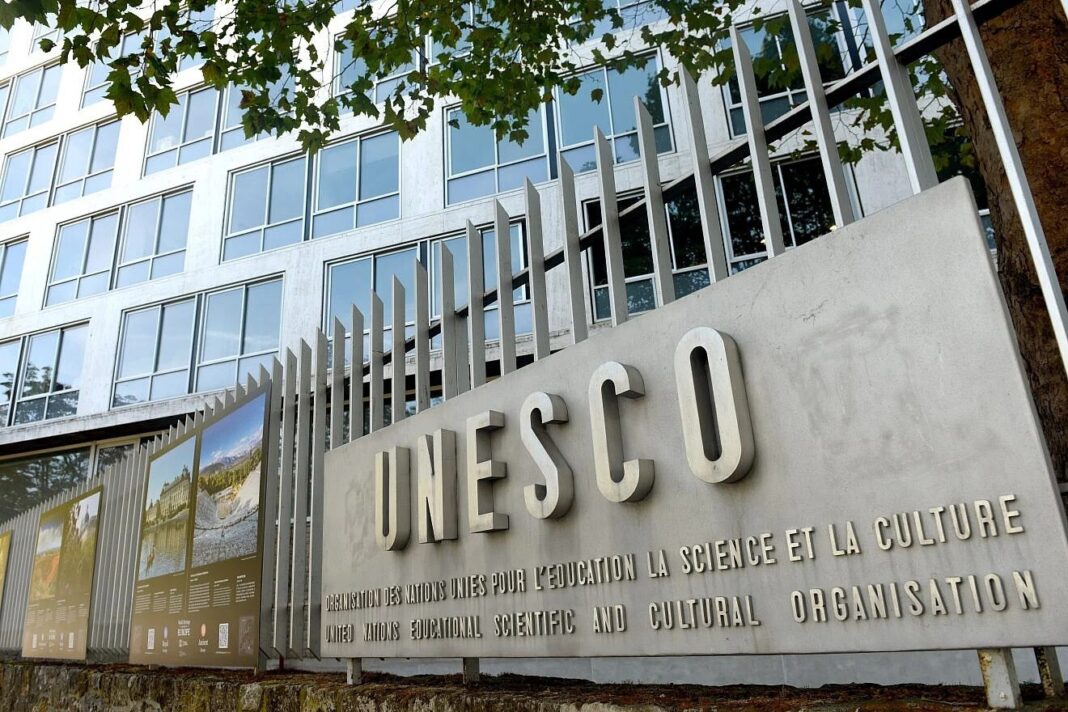
“Following almost a decade of work addressing antisemitism in education across more than 30 countries, UNESCO experts were not surprised by the clear and urgent need for stronger teacher training on antisemitism in Europe,” the U.N. Educational, Scientific and Cultural Organization told JNS.
UNESCO told JNS that though its experts weren’t surprised, “several findings remain deeply alarming.”
The Paris-based U.N. agency surveyed more than 2,000 teachers in 23 European countries. The European Union supported the poll. (JNS sought comment from the Israeli embassy in France.)
The survey is “the first European study on trends in teachers’ perceptions and experiences of antisemitism in the classroom,” UNESCO said. “Equally concerning were gaps in teachers’ understanding of what constitutes antisemitism.”
Some 61% of teachers cited observing Holocaust denial or distortion, and 44% said that they had seen the use of Nazi symbols. Among teachers, 16% didn’t consider saying things like “Jews are wealthy” to be antisemitic, and 32% thought that those sorts of statements, which draw on longstanding antisemitic tropes, had context-dependent meanings.
A smaller number (13%) of teachers said that believing that “Jews control the global financial system” isn’t antisemitic, and 24% saw such a statement’s meaning as context-dependent. Barely over half said unequivocally that the statement is Jew-hatred.
“Perhaps most worryingly, one in 20 teachers (5%) did not consider the use of derogatory terms to refer to Jewish individuals or groups to be antisemitic at all,” UNESCO said.
Per the survey, 70% of teachers said that they hadn’t received any professional training about how to recognize and address contemporary Jew-hatred, and less than one-third had participated in outside antisemitism training courses.
“In most countries, the only space where teachers receive any training, support or guidance on teaching about antisemitism is in history education, and in particular through Holocaust education,” UNESCO told JNS.
“While this field of education is of critical importance, it is not sufficient to prevent or educate about contemporary forms of antisemitism,” the agency said.
It is possible to find “curricula avenues” to teach about forms of Jew-hatred, such as in citizenship education, social sciences, language education, and arts and culture. But “contemporary antisemitism often intersects with current debates around geopolitics, social media, conspiracy thinking and identity politics,” UNESCO told JNS.
That means that at times, “educational decision makers are paralyzed by a concern that investing in education about contemporary antisemitism projects a particular political position,” the agency said.
Survey data suggested that teachers often said it was a challenge when students expressed “hateful comments about Israel.”
“Highly emotive discourse about the conflict is entering nearly half of European schools, while teachers report feeling unprepared to address such comments or discourse,” UNESCO said.
That’s particularly true when “discussions risk becoming polarized or are presented as controversial,” the agency said.
“Teaching tends to default to historical forms of antisemitism that feel ‘settled,’ rather than engaging with how antisemitic tropes manifest today,” UNESCO said.
Jew-hatred is often home-bred, which is why UNESCO told JNS that it recommends “creating events that invite parents and grandparents, as well as, for example, members of the local faith communities, police officers, shopkeepers, local government representatives and school bus drivers to share in learning to address antisemitism and broader civic issues.”
“Hate speech, notably antisemitism and Holocaust denial, has reached levels not seen since World War II,” stated Khaled El-Enany, director-general of UNESCO.
“Most teachers have never received specific training to confront this reality, including the consequences related to AI development,” El-Enany said. “UNESCO provides policymakers with unique tools to empower teachers in more than 30 countries—from classrooms and campuses to sports clubs—and soon even more.”
