



|
Getting your Trinity Audio player ready...
|
By: Fern Sidman
As smoke still lingers over the shattered hopes of Iran’s latest nationwide uprising, a chilling portrait of twenty-first-century authoritarian collaboration has begun to emerge. According to a new report released this week by the international human rights organization Article 19, the Iranian regime deployed an architecture of digital repression modeled in large measure on Chinese systems of surveillance and censorship, with complementary technological inputs linked to Russian expertise, to impose near-total information darkness during the recent protests.
The findings, widely cited and contextualized by The Algemeiner in a report on Tuesday, illuminate how Tehran’s campaign to crush dissent was not merely a domestic exercise in brutality but part of a transnational convergence of autocratic power, one that weaponizes technology to isolate populations from the global commons of information.
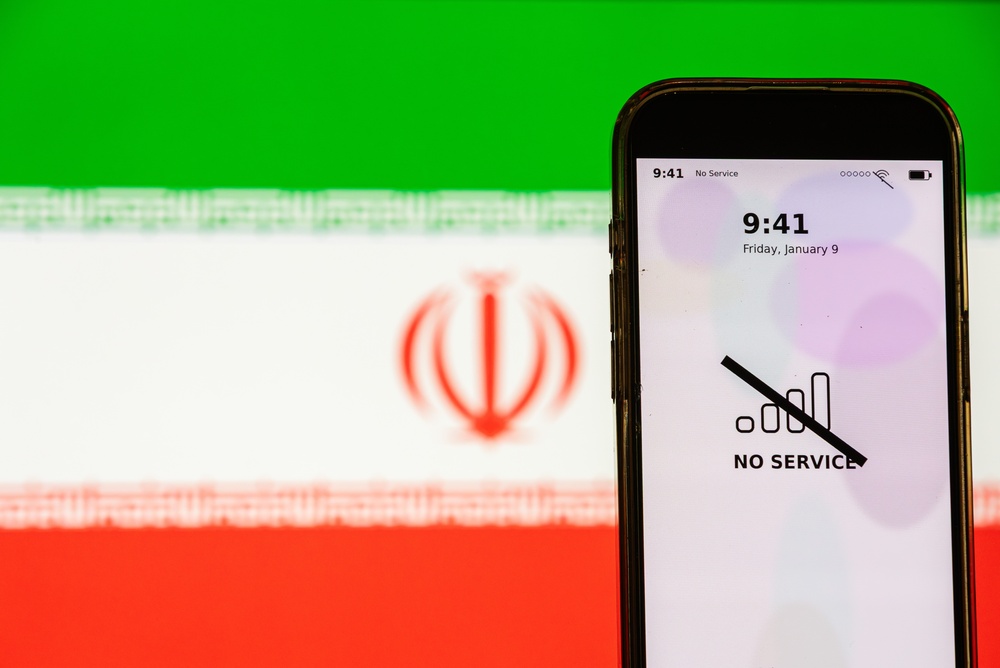
The Algemeiner reported that the report arrives at a moment when the scale of Iran’s crackdown is only beginning to be understood. While precise casualty figures remain elusive, the digital blackout imposed by the authorities during the most intense phases of the unrest was itself a central instrument of repression. By throttling internet access, jamming satellite communications, and fragmenting the country’s connectivity, the regime erected a technological cordon sanitaire around its own violence.
The world, deprived of images and testimony, was forced to peer through a glass darkly, even as security forces reportedly unleashed lethal force on demonstrators in multiple cities.
At the heart of the Article 19 report is the assertion that Iran’s contemporary digital repression architecture is neither improvised nor purely indigenous. Rather, it reflects a sustained and deliberate effort to import, adapt, and institutionalize elements of what the organization terms the “Chinese digital authoritarian playbook.”
As Michael Caster, head of Article 19’s Global China Program, observed in remarks cited by The Algemeiner, Iran’s leadership has sought “total control over the digital space,” borrowing directly from Beijing’s model of cyber sovereignty, which prioritizes state control over information flows, surveillance as a default condition of connectivity, and censorship as a tool of political hygiene. The ideological consonance between Beijing and Tehran on the concept of cyber sovereignty has provided a normative framework for technical cooperation that has unfolded over more than a decade.
The Algemeiner report noted that Chinese firms such as ZTE, Huawei, Tiandy, and Hikvision have continued to operate in Iran despite international sanctions, embedding hardware and software into the country’s telecommunications and surveillance infrastructure. This commercial presence has not been merely transactional. According to Article 19’s analysis, it has facilitated the transfer of technical expertise that allows Iranian authorities to expand the reach and granularity of their monitoring capabilities.
Surveillance cameras equipped with advanced recognition technologies, network video recorders capable of archiving and analyzing vast quantities of footage, and data management systems designed to integrate disparate streams of information have collectively enhanced the state’s ability to identify, track, and neutralize protesters.
Craig Singleton, a Stanford professor and senior fellow at the Foundation for Defense of Democracies, underscored this point in commentary cited by The Algemeiner, noting that equipment supplied by Chinese exporter Tiandy Digital Technology Co. has played a measurable role in strengthening Iranian security forces’ capacity to map protest networks and pursue dissidents. The chilling implication is that what might appear as inert infrastructure—cameras on lampposts, servers in anonymous buildings—constitutes a distributed apparatus of coercion, one that renders anonymity increasingly illusory for those who dare to challenge the state.
The digital blackout that accompanied the recent protests represents, in this context, not an aberration but the culmination of years of infrastructural preparation. Iran’s National Information Network, designed to function as a domestic intranet insulated from the global internet, bears an unmistakable resemblance to China’s “Great Firewall.”
The Algemeiner has previously documented Tehran’s ambition to replicate Beijing’s ability to selectively sever its population from the outside world while maintaining internal connectivity for state-approved platforms. Article 19’s report elaborates on how this architecture enables the regime to centralize censorship, embed surveillance deep within national networks, and retain the capacity to flick the proverbial switch when unrest threatens to escape its grasp.
The consequences of this digital iron curtain were not merely epistemic but corporeal. With connectivity severed for weeks, activists and families struggled to document arrests, disappearances, and deaths. Two senior officials within Iran’s own Ministry of Health reportedly told international media that tens of thousands may have been killed during the most intense days of the crackdown, with some estimates placing the figure for January 8 and 9 alone at as many as 30,000. While these numbers remain contested and difficult to verify, the opacity produced by the internet shutdown has itself become a strategic asset for the regime, one that shields it from accountability and complicates efforts by international bodies to assess the full scope of the violence.
Beyond the technical dimensions of Chinese-Iranian cooperation lies a broader geopolitical calculus. Beijing’s support for Tehran during the protests—expressed in public calls for the Iranian leadership to “uphold stability” and overcome unrest—reflects not only ideological affinity but strategic interest. China has invested heavily in its partnership with Iran, formalizing ties through a 25-year cooperation agreement, engaging in joint naval drills, and continuing to purchase Iranian oil despite Western sanctions. Indeed, China remains the largest importer of Iranian crude, absorbing the vast majority of Tehran’s exports and providing a critical lifeline to a sanctions-strangled economy.
This entanglement renders Iran’s stability a matter of consequence for Beijing. A weakened or collapsed Iranian regime would imperil Chinese investments, disrupt energy supply chains, and potentially destabilize a region through which critical maritime routes pass. It is therefore hardly surprising that China has signaled diplomatic support for Tehran even as images of repression filtered out in fragments. The alignment of interests suggests that technological cooperation in the realm of digital surveillance is but one facet of a deeper strategic symbiosis.
Russia’s role, while less elaborated in the Article 19 report, nonetheless forms part of the broader constellation of authoritarian collaboration. Tehran’s engagement with Moscow in recent years has encompassed military, intelligence, and cyber domains, reflecting a shared interest in contesting Western influence and norms. The convergence of Chinese hardware, Russian expertise, and Iranian ambition has produced a hybridized model of digital control, one that leverages the comparative advantages of each partner. In this sense, the Iranian case exemplifies a broader trend identified by The Algemeiner: the globalization of authoritarian techniques, facilitated by networks of states that exchange not only arms and energy but also methods of population management.
Yet the report also gestures toward the limits and contradictions inherent in this partnership. The Algemeiner has previously noted that, despite the rhetorical warmth of Sino-Iranian relations, the relationship is often characterized by asymmetry, mistrust, and constrained expectations. Chinese firms operating in Iran must navigate a volatile regulatory environment and the risk of secondary sanctions, while Iranian elites remain wary of overdependence on any single external patron. The recent speculation that China may assist Iran in rebuilding air defenses damaged during the brief but intense 12-day war with Israel underscores the fluidity of this relationship, one that oscillates between strategic solidarity and pragmatic caution.
For Iranian society, however, the immediate implications of this digital authoritarian convergence are stark. The architecture of repression imported from abroad has been localized with ruthless efficiency, transforming urban landscapes into monitored spaces and online platforms into arenas of risk. As Mo Hoseini, Article 19’s head of resilience, warned in remarks cited by The Algemeiner, emulating China’s infrastructure of oppression enables Iran to “entrench power” by preventing dissent from surfacing in the first place. The suppression of visibility becomes a precondition for the suppression of resistance, creating a feedback loop in which technological opacity begets political impunity.
The broader international community now confronts a sobering dilemma. The tools that enable authoritarian regimes to police their populations are often embedded in global supply chains, manufactured by multinational corporations, and normalized through the language of development and modernization. The Algemeiner has argued that the Iranian case should prompt a reexamination of how technology transfers are regulated, how sanctions regimes are enforced, and how digital rights are defended in an era when repression can be automated and outsourced.
Moreover, the Iranian protests, though temporarily submerged beneath a digital blackout, have exposed the fragility of regimes that rely on technological omnipotence to sustain their authority. The very need to impose near-total connectivity shutdowns suggests an underlying anxiety about the power of networked publics. Even as the state perfects its instruments of surveillance, the aspiration for dignity and political voice persists among citizens who have learned to navigate around firewalls and to encode dissent in the interstices of controlled platforms. The Algemeiner has chronicled this cat-and-mouse dynamic in previous episodes of unrest, noting that repression often incubates new forms of resistance rather than extinguishing them.
In the end, the Article 19 report forces a reckoning with the moral and strategic stakes of digital authoritarianism. Iran’s turn toward the Chinese model of cyber control is not merely a domestic policy choice but part of a global contest over the future of the internet itself. Will connectivity remain a conduit for pluralism and accountability, or will it be partitioned into sovereign enclaves of curated reality? As The Algemeiner report emphasized, the answer will shape not only the fate of dissidents in Tehran but the contours of political life in an increasingly surveilled world.