



|
Getting your Trinity Audio player ready...
|
By: Fern Sidman
Israeli Prime Minister Benjamin Netanyahu has made clear that his government will not pursue any partial agreement with the Hamas terrorist organization regarding the release of hostages, Israel National News reported on Monday evening. The decision represents a firm stance in ongoing negotiations and signals an alignment with senior cabinet members who have opposed interim arrangements that could leave some hostages in captivity while enabling Hamas to maintain a grip on power.
According to the information provided in the Israel National News report, sources close to the Prime Minister stated that Netanyahu is prepared to negotiate only under the conditions previously set by Israel’s Security Cabinet for ending the war – foremost among them the return of all Israeli hostages, whether alive or deceased. “Until all hostages are returned, there will be no negotiations on any arrangement that leaves others behind,” one source emphasized.
This position brings Netanyahu in line with Minister of Strategic Affairs Ron Dermer, who has consistently argued that partial agreements merely prolong Hamas’ leverage and undermine Israel’s long-term security objectives.
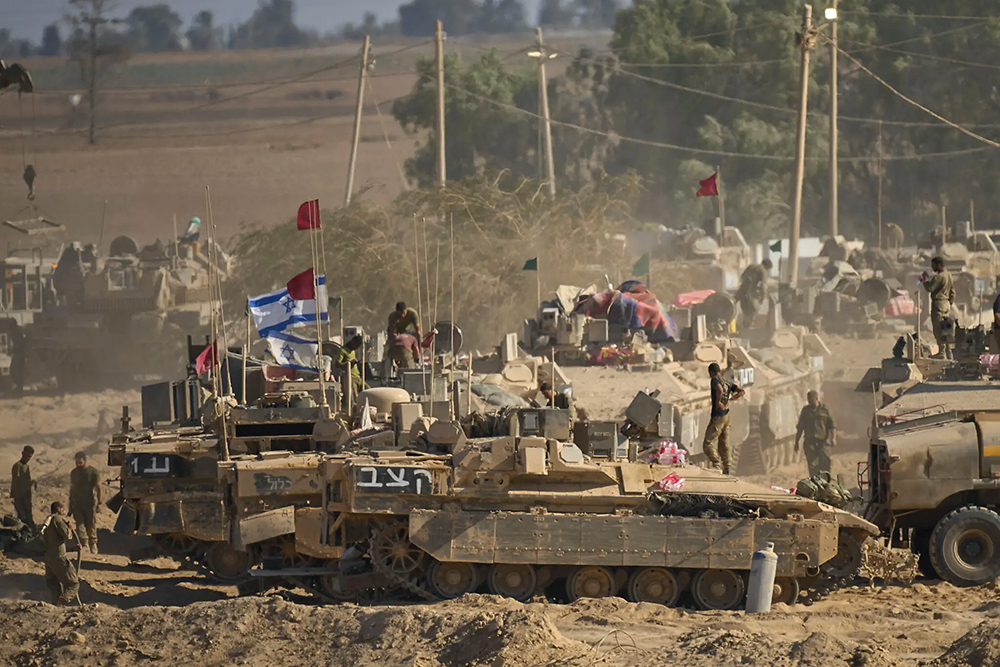
On Sunday, Netanyahu held a press conference to outline the Security Cabinet’s recent decision to authorize a military operation aimed at seizing control of Gaza City, described as the central nerve center of Hamas’ operations.
“The Cabinet instructed the IDF to move to the decisive phase and take control of the last strongholds held by Hamas – chief among them the terror capital, Gaza City, where the organization’s headquarters, commanders, and infrastructure are concentrated,” Netanyahu said, as reported by Israel National News.

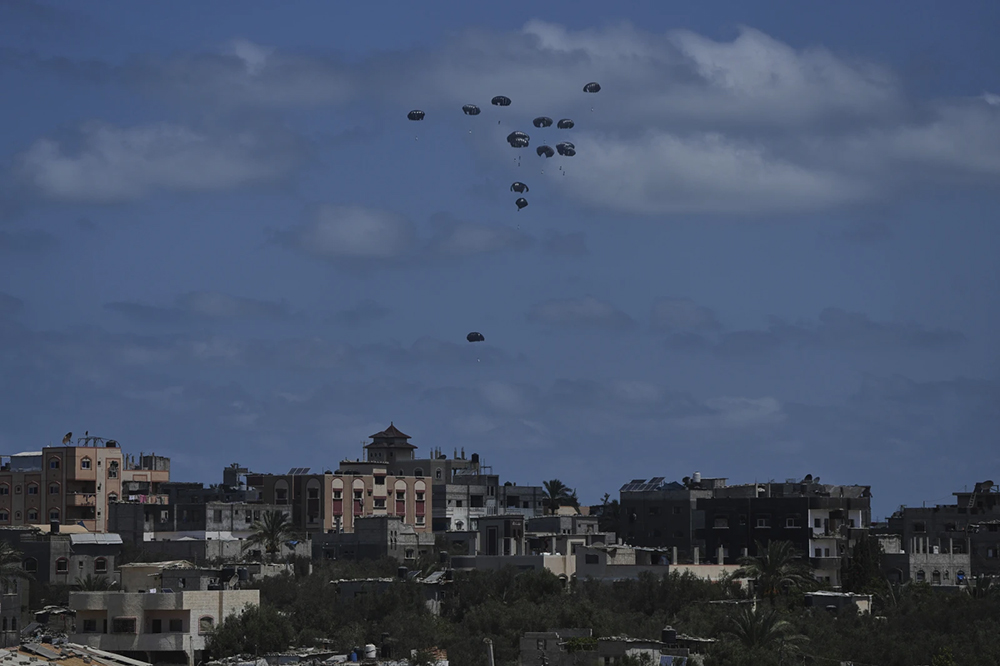
The Prime Minister detailed five guiding principles for the final phase of the war. Central to these is a directive to allow civilians in Gaza City to evacuate before combat intensifies. “As we successfully did in Khan Yunis, Rafah, and Deir al-Balah, the IDF will provide civilians with an organized exit corridor and humanitarian aid outside the combat zones,” he said.
Netanyahu underscored that after months of indirect talks and mediation efforts, it had become evident that Hamas had no genuine interest in reaching an agreement. “Hamas remains steadfast in its refusal and has presented impossible conditions, even in the eyes of the United States,” he said.
According to the report at Israel National News, the Prime Minister described Hamas’ negotiating demands as tantamount to “conditions of surrender.” These include a full Israeli withdrawal from the Gaza Strip, including from the Philadelphi Corridor – a narrow, strategic strip along the Egypt-Gaza border considered vital to preventing weapons smuggling.
Hamas has also reportedly demanded the release of Nukhba operatives – members of the elite commando unit involved in the October 7 attack – as well as binding international guarantees that would prevent the IDF from resuming military operations in Gaza.
“These are conditions no responsible government would accept,” Netanyahu said. “Hamas has deceived us – and therefore, I have decided that the correct path is to defeat Hamas.”
Meanwhile, a Hamas delegation arrived in Egypt earlier in the week to consider a new proposal for a comprehensive deal with Israel. The plan, presented by Egyptian mediators, calls for the release of all Israeli hostages in exchange for Palestinian Arab prisoners.
According to the framework, as reported by Israel National News, the IDF would implement a phased withdrawal from Gaza based on a map to be agreed upon “under Arab-American supervision,” with the arrangement remaining in place until a permanent solution is reached on disarmament and governance.
The proposal also envisions Hamas suspending all military operations and disarming, with enforcement guarantees provided by mediators and Turkey.
However, an Israeli security official told Israel National News that the likelihood of Hamas accepting the Egyptian terms was “slim.” The official noted that Hamas, as a terrorist organization, is unlikely to agree to total disarmament, although he suggested that Turkish influence could potentially sway the group’s decision-making.
Netanyahu’s rejection of partial deals dovetails with the IDF’s ongoing military strategy, which Israel National News has described as a combination of sustained operational pressure and targeted territorial gains.
Military analysts cited by the outlet have noted that securing Gaza City is a critical step toward dismantling Hamas’ centralized command structure and disrupting its operational capacity. The city is viewed as both a symbolic and strategic stronghold for the organization.

By defining the war’s endgame in terms of complete hostage recovery and Hamas’ defeat, Netanyahu has effectively set non-negotiable objectives that leave little room for incremental diplomatic compromises.
According to the information contained in the Israel National News report, Netanyahu’s latest policy stance has strengthened unity within key segments of the Cabinet. Dermer, a close adviser to the Prime Minister, has repeatedly warned against arrangements that would allow Hamas to regroup, rearm, or retain bargaining power by holding a reduced number of hostages.
The decision is also expected to have operational implications for the IDF, which will likely continue to press its advantage on the ground while international mediation efforts proceed in parallel.
Defense officials have privately indicated that maintaining military momentum is essential to shaping any future negotiating environment. The assessment, as reported by Israel National News, is that battlefield developments – rather than diplomatic overtures alone – will ultimately determine the terms of any agreement.
Netanyahu’s emphasis on organized civilian evacuation from Gaza City reflects an operational approach seen in earlier phases of the conflict. During the IDF’s campaigns in Khan Yunis, Rafah, and Deir al-Balah, evacuation corridors and designated humanitarian zones were established to separate noncombatants from combat operations.
Such measures are designed both to minimize civilian casualties and to preempt international criticism, while enabling the IDF to operate with fewer constraints in contested areas.
The Prime Minister reiterated that humanitarian aid will be provided outside active combat zones, in coordination with international partners, but stressed that military objectives will not be compromised.
The rejection of partial deals also carries broader diplomatic implications. According to the report at Israel National News, Israel’s position is being closely watched by regional actors, including Egypt, Qatar, and Turkey, each of which has played a role in mediation efforts.
Egypt’s latest proposal reflects ongoing attempts to balance humanitarian concerns with security guarantees, but the deep mistrust between the parties continues to hinder progress.
Internationally, Israel’s refusal to accept terms it views as compromising its security aligns with longstanding policy principles, though it may complicate relations with some allies advocating for incremental agreements to secure at least partial hostage releases.
For now, the Israeli government’s position is clear: no agreement will be reached unless it ensures the return of all hostages and the dismantling of Hamas’ capacity to wage war.
This dual-track approach – combining uncompromising negotiating terms with continued military pressure – reflects a belief that decisive battlefield outcomes will shape the diplomatic landscape.
The IDF’s planned operation in Gaza City, once underway, is expected to serve both as a tactical maneuver to degrade Hamas’ capabilities and as a strategic signal to the organization and its backers that Israel remains committed to its stated objectives.
The Israel Defense Forces(IDF)Chief of the General Staff, Lieutenant General Eyal Zamir, convened a wide-ranging situational assessment on Monday to evaluate the IDF’s operational preparedness across multiple arenas of engagement, Israel National News reported.
This latest meeting, the second in a series of strategic assessments, forms part of the broader process of shaping the IDF’s annual work plan. In accordance with the Chief of Staff’s directive, the session was expanded beyond senior headquarters officers to include a broad forum of commanders from both central command posts and active operational theaters.
According to the report at Israel National News, the purpose of these assessments is not only to review current operational challenges but also to translate battlefield lessons into long-term planning for force readiness, technological advancement, and structural development within the military.
In his opening remarks, Lt. Gen. Zamir emphasized that the IDF is operating under the assumption of being engaged in “continuous war,” a concept that reflects the sustained, multi-front threats Israel faces.
“We must learn from the lessons of the past, continuously examine our preparedness, and from there improve, strengthen, and advance towards a strategic plan and a significant force build-up,” he stated. He identified 2026 as a decisive year for “shaping and maximizing achievements, increasing preparedness, returning to fundamentals, and seizing operational opportunities.”
Zamir emphasized that since the outbreak of hostilities on October 7 th, the IDF has demonstrated multi-front combat capabilities that have “changed the face of the Middle East,” bolstered national security, and created regional strategic opportunities. These gains, he argued, must be consolidated through sustained readiness across every potential theater of conflict.
The Chief of Staff called for a dual approach: returning to foundational principles in military procedures, alertness, training, and planning, while simultaneously taking a tailored approach to the specific characteristics of each operational arena.
As the report at Israel National News noted, Zamir stressed that the IDF’s strengthening must be comprehensive – encompassing both the establishment of new frameworks and the reinforcement of existing formations. This process, he said, must be grounded in the lessons of the current war but also informed by a forward-looking operational and technological perspective.
He highlighted two pillars for future preparedness: the material – supplies, platforms, and advanced systems – and the human dimension, namely the “spirit and resilience of the people” at the heart of IDF operations.
In line with the Israeli Security Cabinet’s recent decisions, Zamir confirmed that the IDF is entering a new stage of combat operations in Gaza. “We will develop the best method, in line with the defined objectives, while maintaining the professionalism and principles that guide our operations,” he said, according to Israel National News.
He reiterated that the hostages held in Gaza remain central to the IDF’s operational considerations. “We will do everything to protect their lives and bring them back home,” Zamir pledged.
The Chief of Staff outlined that all operational alternatives presented to the Cabinet are intended to secure Hamas’ defeat, with a full understanding of the implications of each approach. Drawing on recent operations in Khan Yunis and Rafah, Zamir expressed confidence that the IDF would be able to establish operational control over Gaza City if tasked with doing so.
Zamir also addressed the need to balance operational momentum with force sustainability. “We must allow breathing room for IDF troops in mandatory and reserve service, creating pauses that enable us to continue the ground operation in the Gaza Strip in the most effective and optimal way, while preserving strength for the future,” he explained.
The Chief of Staff announced that the next situational assessment will focus exclusively on personnel issues, signaling the IDF’s recognition of the centrality of troop welfare and morale in sustaining long-term operational capacity.
Acknowledging the unprecedented nature of conducting force build-up processes while engaged in active conflict, Zamir warned that the IDF must remain prepared for a possible expansion of the campaign.
“I have immense appreciation for our people, in mandatory, career, and reserve service,” he said. “I meet them everywhere and see their fighting spirit and determination.” He also commended the maintenance and combat support personnel across all branches, noting their essential role in enabling frontline operations. “The achievements of the war are thanks to them,” he affirmed.
Over the past three months, one of the IDF’s key maneuver formations – the 401 st Armored Brigade, operating under the 162 nd Division – has conducted sustained operations in the northern Gaza Strip, specifically in the Jabaliya and Daraj Tuffah areas, as part of Operation Gideon’s Chariots, Israel National News reported.
The brigade’s mission focused on clearing entrenched terrorist infrastructure and degrading the combat capabilities of hostile organizations, both above ground and within extensive tunnel networks. These efforts were conducted in close coordination with the Israeli Air Force, enabling precision strikes on critical targets.
Numerous terrorist facilities were neutralized, including observation posts, launch positions, and fortified structures. In addition, dozens of enemy combatants were eliminated during the course of these missions.
Military analysts interviewed by Israel National News have noted that the combination of ground maneuver operations with sustained aerial precision strikes reflects a maturing operational model for the IDF in urban and semi-urban environments.
This integration allows ground forces to advance methodically while mitigating exposure to enemy fire, and it enables the targeting of command-and-control nodes, logistics hubs, and weapons caches in real time.
Such tactics have been particularly critical in the complex environment of northern Gaza, where dense civilian populations, underground tunnel networks, and embedded militant units create significant operational challenges.
As the IDF transitions into the next phase of its campaign in Gaza, Zamir’s emphasis on returning to fundamentals while integrating technological and structural innovation underscores a long-term vision for force development.
According to the report at Israel National News, this vision involves adapting to evolving threats from both state and non-state actors, reinforcing deterrence, and ensuring that the IDF retains its qualitative military edge in the region.
The force build-up processes currently underway include not only the procurement of advanced platforms but also the refinement of training regimes, doctrinal updates, and the creation of new operational frameworks tailored to future combat scenarios.
Zamir concluded the meeting by publicly recognizing the efforts of the IDF’s commanders, who, for nearly two years, have been managing unprecedented multi-front challenges. “These commanders have been leading the IDF in a period that demands both operational excellence and strategic foresight,” he said.
With the dual pressures of active conflict and the need for structural renewal, the IDF faces the challenge of sustaining high readiness across multiple arenas while shaping the future force. Zamir’s directive to “return to fundamentals” while seizing opportunities for operational innovation encapsulates the IDF’s current trajectory – one that must adapt in real time to a volatile security environment while preparing for the conflicts of tomorrow.
