



|
Getting your Trinity Audio player ready...
|
By: Fern Sidman
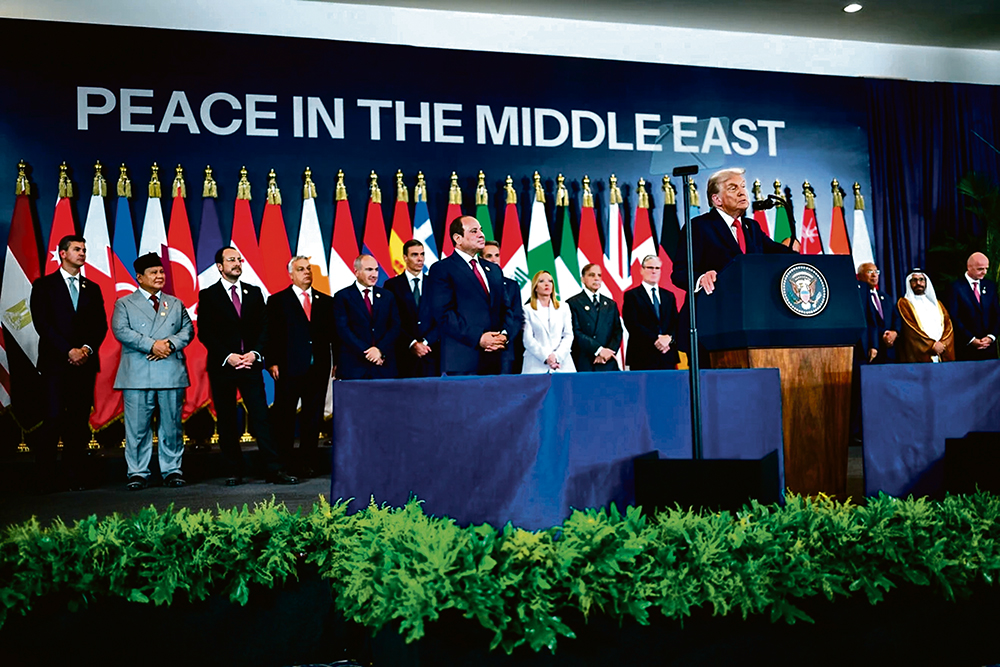
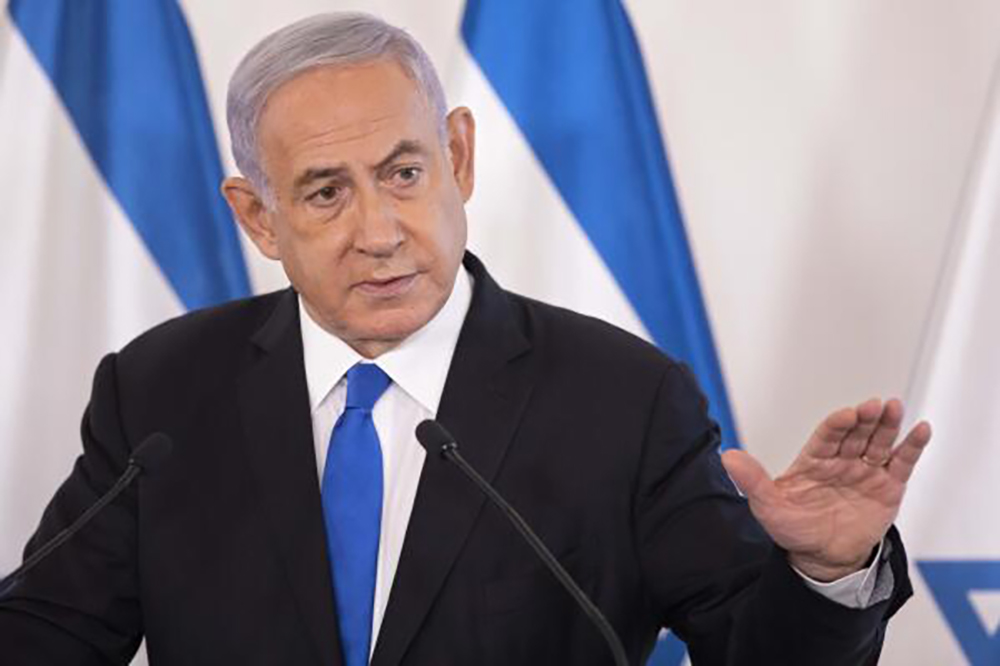
A new and unprecedented diplomatic initiative unveiled by President Donald Trump is reshaping the contours of Middle Eastern geopolitics, placing Israel at the center of a sweeping international framework aimed at reconstructing and stabilizing post-war Gaza. According to a report that appeared on Sunday at The Jewish News Syndicate (JNS), Trump has personally invited Israeli Prime Minister Benjamin Netanyahu to join the newly formed “Board of Peace for Gaza” as a founding member—an overture laden with both promise and political peril.
The invitation, described by analysts as a strategic overture to solidify Israeli-American coordination, comes at a moment of extraordinary sensitivity. The Board of Peace, which Trump has pledged to chair himself, is intended to function as the primary international body supervising security, governance, and reconstruction efforts in Gaza following the cessation of hostilities. In a letter sent to more than 50 world leaders and made public by Argentine President Javier Milei on social media, Trump characterized membership on the board as “an honor reserved for those prepared to lead by example.”
“Our effort will bring together a distinguished group of nations ready to shoulder the noble responsibility of building lasting peace,” Trump wrote in the correspondence, as reported by JNS. The president added that the new body would represent “a bold new approach to resolving global conflict,” signaling his desire to bypass traditional United Nations mechanisms in favor of a more streamlined, executive-driven architecture.
Yet even as Netanyahu considers the historic invitation, deep fissures have emerged over the composition of a subordinate entity known as the Gaza Executive Board. That panel, which is tasked with advising the Board of Peace and helping administer day-to-day operations, includes representatives from Qatar, Turkey, and Egypt—countries with fraught histories and complicated relationships with the Jewish state. According to the JNS report, Israeli officials reacted with open alarm to the announcement, issuing a sharply worded statement declaring that the executive body’s membership “was not coordinated with Israel and runs contrary to its policy.”
The architecture of Trump’s Gaza peace plan envisions a multilayered system of governance. At the apex stands the Board of Peace itself, a permanent international organization chaired by the American president. Beneath it are several administrative organs, including the Gaza Executive Board and the National Committee for the Administration of Gaza (NCAG), a technocratic body composed of Palestinian figures and headed by former Palestinian Authority Deputy Transportation Minister Ali Sha’ath.
As JNS has reported, the plan aims to remove Gaza from the grip of Hamas while avoiding a return to direct Israeli occupation or Palestinian Authority control. Former U.N. Middle East envoy Nickolay Mladenov has been appointed as the high representative overseeing the transition, lending the initiative an air of technocratic credibility.
The invitation extended to Netanyahu appears designed to anchor Israel firmly within this framework and to reassure Jerusalem that its security interests will not be marginalized. Trump has repeatedly emphasized that the Board of Peace will “solidify peace in the Middle East,” a message clearly intended to appeal to Israeli leaders wary of international schemes imposed from afar.
Reuters reported, and the JNS report confirmed, that invitations have also been extended to leaders from France, Germany, Australia, Canada, Argentina, and several Middle Eastern states. European Commission President Ursula von der Leyen has reportedly been asked to represent Brussels, underscoring the project’s sweeping geopolitical ambition.
Despite the allure of a direct role in shaping Gaza’s future, Netanyahu’s government has made clear that certain red lines cannot be crossed. Chief among them is the inclusion of Turkey and Qatar on the Gaza Executive Board.
Both nations have been active enablers of Hamas. Qatar has hosted senior Hamas officials for years and served as a major financial conduit to Gaza, while Turkish President Recep Tayyip Erdoğan has been among the terror group’s most vocal international defenders. Egyptian involvement, while less controversial, is also regarded with caution given Cairo’s delicate balancing act between Israel, Hamas, and domestic pressures.
The Israeli Prime Minister’s Office minced no words in its response. As JNS reported, the statement emphasized that the Executive Board’s composition was neither discussed with Israel nor consistent with its strategic interests. Netanyahu subsequently instructed Foreign Minister Gideon Sa’ar to raise the matter directly with Secretary of State Marco Rubio, himself named a founding member of the Executive Board.
The reaction from Netanyahu’s coalition partners was swift and forceful. Finance Minister Bezalel Smotrich declared that “the countries that resuscitated Hamas cannot be the ones that replace it,” a pointed reference to Doha and Ankara. In comments highlighted in the JNS report, Smotrich insisted that Israel must not trade “one problem for another” after months of bloody conflict.
“Our brave fighters did not risk their lives in a tremendous national mobilization just to swap one problem for another,” Smotrich tweeted. “The prime minister must insist on this, even if it requires managing a dispute with our great friend and with President Trump’s envoys.”
National Security Minister Itamar Ben-Gvir echoed the sentiment, stating bluntly that Gaza “doesn’t need any executive board” and should instead be subjected to renewed military pressure until Hamas is fully dismantled. Diaspora Affairs Minister Amichai Chikli was even more explicit, writing that “Erdoğan’s Turkey is Hamas,” and warned that Israeli influence over Gaza must not be diluted by hostile actors.
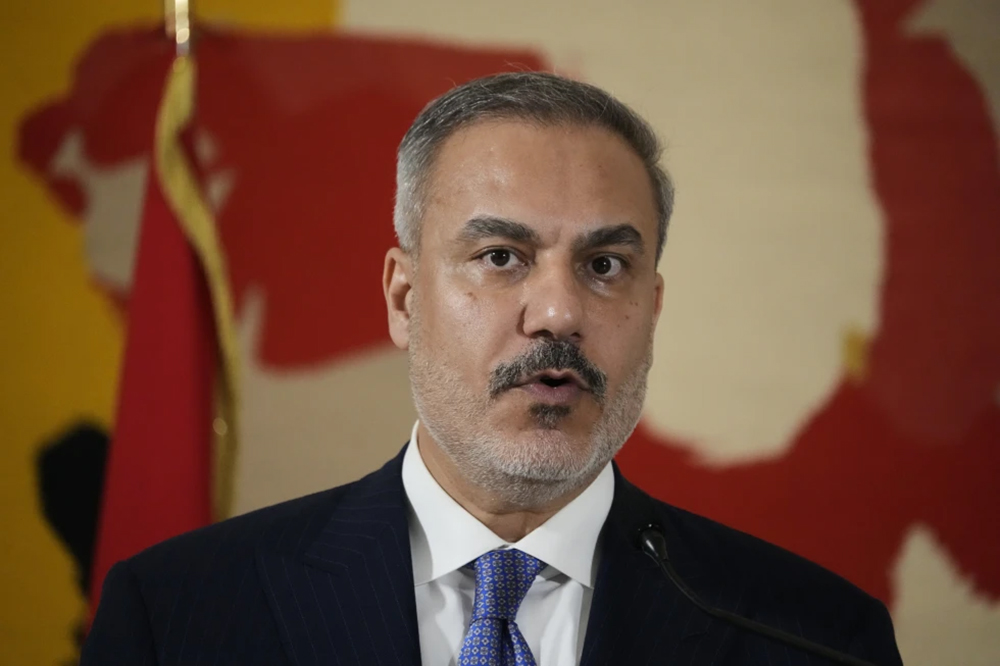
The controversy surrounding Turkish Foreign Minister Hakan Fidan’s inclusion on the Executive Board has been particularly acute. The JNS report reminded readers that Fidan publicly mourned the assassination of Hamas leader Ismail Haniyeh in July 2024, referring to him as a “martyr” and a “symbol” of Palestinian resistance. Such rhetoric, Israeli officials argue, is incompatible with any role in shaping Gaza’s postwar future.
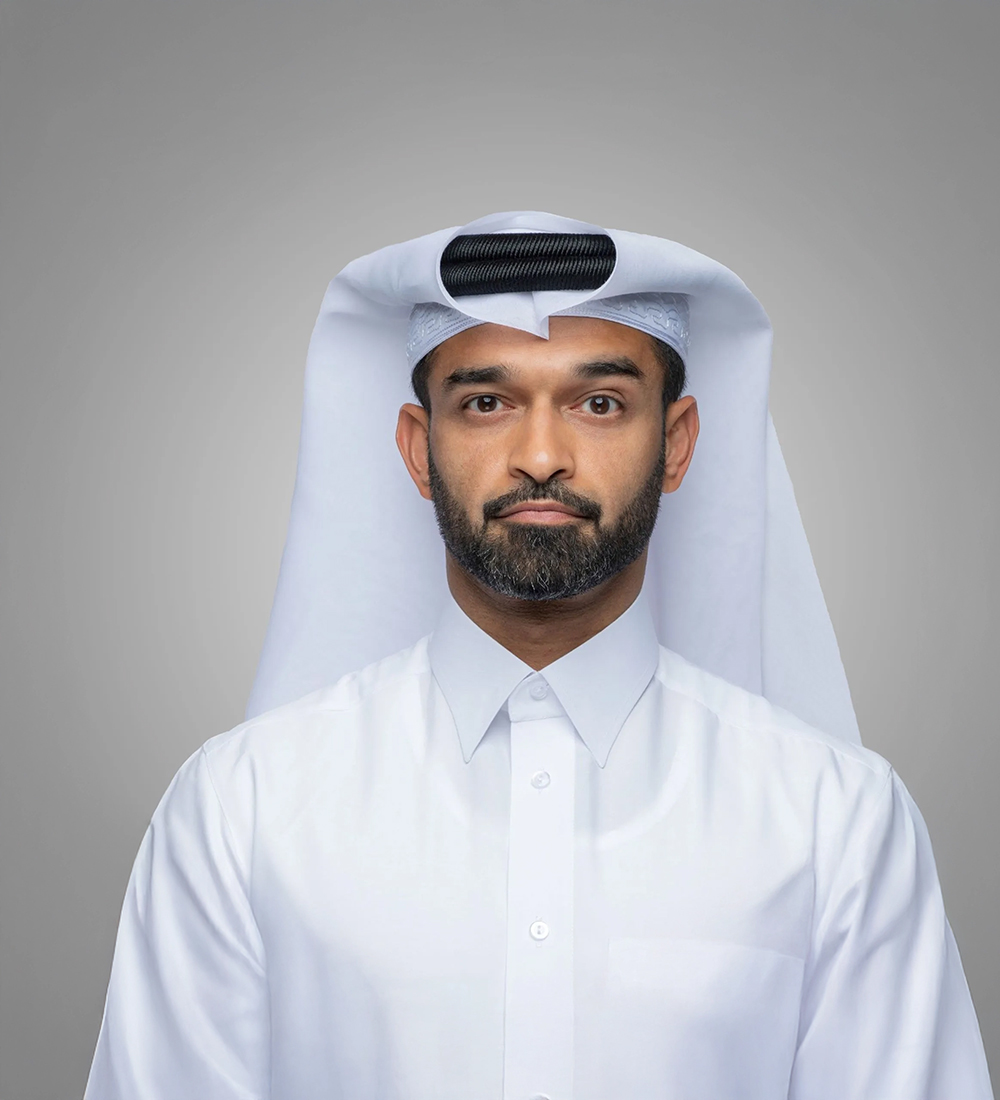
Similarly, Qatar’s presence on the board has triggered fears that the same patronage networks which sustained Hamas for years could be repackaged under the banner of reconstruction. Ali Al-Thawadi, Doha’s representative on the Executive Board, has been deeply involved in Gaza mediation efforts, but his appointment is viewed in Jerusalem with profound skepticism.
In an exclusive report that appeared on Saturday at i24News, it appears that US Special Envoy Steve Witkoff’s portfolio of relationships in the Gulf—particularly in Qatar—has raised eyebrows in Israel, where Doha is widely regarded as a primary financier of Hamas and a habitual spoiler of Israeli interests.
Over the past decade, Witkoff has cultivated extensive commercial ventures in the Middle East, ranging from luxury real estate developments to high-end hospitality projects. Industry sources have long noted his close associations with Qatari investment funds and business elites. These ties, Israeli officials now suggest, may be coloring his approach to regional decision-making.
It was also recently reported that a new federal portal that went live on Jan. 2 that is now laying bare the foreign financial arteries that sustain hundreds of colleges and universities in the United States. At the center of the revelations is a startling statistic: Qatar has emerged as the single largest source of foreign funding for American higher education, eclipsing not only China and Saudi Arabia but also traditional Western allies.
Egypt’s role, embodied by intelligence chief Maj. Gen. Hassan Rashad, is less incendiary but still contentious. Cairo has long served as a mediator between Israel and Hamas, yet its inclusion without explicit Israeli consent has fueled concerns that Washington is attempting to craft a regional arrangement that sidelines Jerusalem’s prerogatives.
For Netanyahu, the invitation to join the Board of Peace represents both an opportunity and a dilemma. On the one hand, participation would grant Israel a formal seat at the table where Gaza’s fate is decided—a prospect few Israeli leaders could afford to reject outright. On the other hand, legitimizing a structure that empowers Turkey and Qatar could undermine hard-won strategic gains achieved on the battlefield.
JNS analysts note that Netanyahu is likely to seek clarifications and amendments before committing. Israeli officials are expected to press Washington for guarantees that no element of the plan will enable Hamas to reconstitute itself politically or militarily.
The stakes are immense. Trump’s vision entails not merely rebuilding Gaza’s shattered infrastructure but reshaping its political DNA. Whether that process will safeguard Israeli security—or erode it—depends largely on the fine print.
Beyond the immediate Israeli concerns, the Board of Peace represents an audacious experiment in global governance. Trump has portrayed the initiative as a corrective to what he views as the paralysis and ineffectiveness of the United Nations. Membership, according to the invitation letter cited in the JNS report, is open to states willing to “brilliantly invest in a secure and prosperous future for generations to come.”
The board is envisioned as a permanent body, potentially extending its mandate beyond Gaza to other conflict zones. Such ambitions have already sparked unease in European capitals, where diplomats worry about the creation of a parallel international system driven largely by Washington.
Yet supporters argue that the traditional mechanisms have failed Gaza repeatedly, leaving cycles of war and reconstruction that benefit no one. A more muscular, executive-led approach, they contend, may be the only viable path forward.
As Netanyahu weighs his response, the coming weeks are likely to feature intense behind-the-scenes negotiations between Jerusalem and Washington. JNS reported that Israeli diplomats are already working to recalibrate the initiative in ways more palatable to the Jewish state.
Ultimately, the decision will hinge on whether Trump can reconcile two competing imperatives: his desire for a broad, inclusive regional coalition, and Israel’s insistence that its enemies not be entrusted with Gaza’s future.
For now, the drama underscores the enduring complexity of Middle Eastern diplomacy. Trump has thrown down an ambitious gauntlet, promising a “New Gaza” forged through international cooperation. But as JNS has chronicled, peace plans in this region rarely survive first contact with political reality.
Whether the Board of Peace becomes a transformative breakthrough or another footnote in the long history of failed initiatives will depend on how deftly its architects navigate the minefield of alliances, enmities, and existential fears that define the Israeli-Palestinian conflict.
In Jerusalem, optimism is tempered by hard experience. The invitation to Netanyahu may be historic—but it is also fraught with consequences that neither Israel nor the United States can afford to misjudge.
