



|
Getting your Trinity Audio player ready...
|
By: Fern Sidman
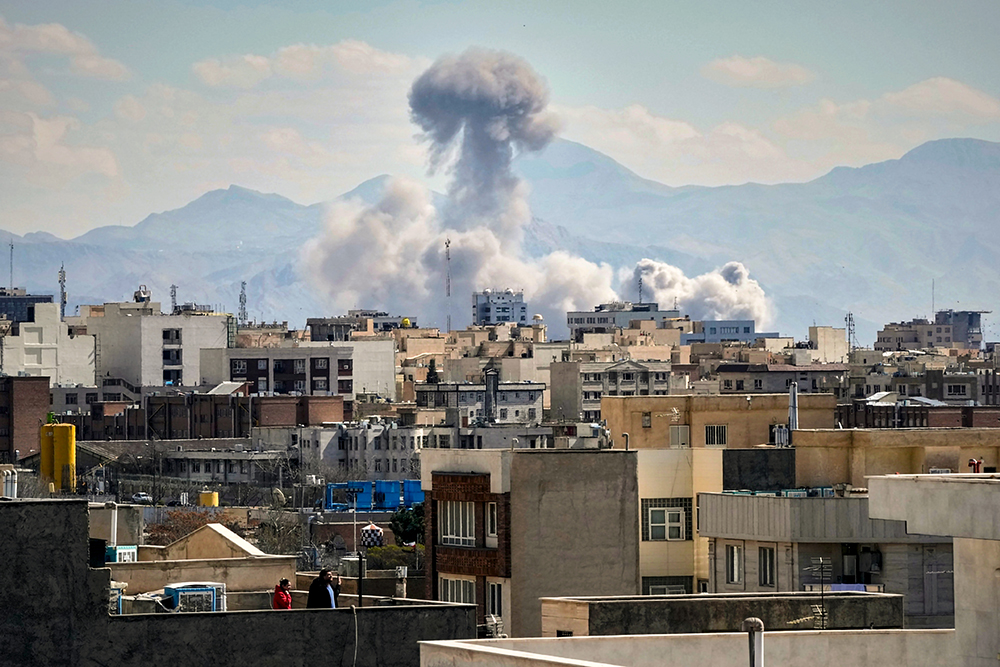
Israel dramatically expanded its aerial campaign against Iran on Monday night, striking a central communications facility in Tehran that Israeli officials say functioned as both a military coordination hub and a propaganda engine for the regime. The operation, carried out by the Israeli Air Force on the basis of what was described as “precise intelligence” from the Intelligence Directorate, signals a widening scope in the conflict—one that now encompasses not only missile sites and weapons depots but also the institutional architecture underpinning Iran’s military and ideological apparatus.
According to detailed reporting from Israel National News on Monday, the IDF Spokesperson’s Unit confirmed that shortly before midnight the Israeli Air Force dismantled what it identified as the Iranian regime’s communications center. Israeli officials asserted that the facility had recently been used to advance military operations under the guise of civilian activity, blurring the line between noncombatant infrastructure and operational command functions.
In a statement cited by Israel National News, the IDF said the center was directly managed and operated by the Islamic Revolutionary Guards Corps. Beyond its overt broadcasting role, Israeli officials contend that the facility served as a strategic node for command and coordination, as well as for disseminating state propaganda designed to incite hostility toward Israel and suppress internal dissent.
“Over the years, the Iranian Broadcasting Authority called for the destruction of the State of Israel and for the use of nuclear weapons,” the IDF statement declared, as quoted by Israel National News. “In addition, it led directly to the repression of the Iranian population and the spreading of lies to the public.” The Israeli military underscored that its campaign would continue to target what it described as the regime’s infrastructure across Tehran, framing the communications center not as a civilian media outlet but as a dual-use military asset embedded within the regime’s broader security apparatus.
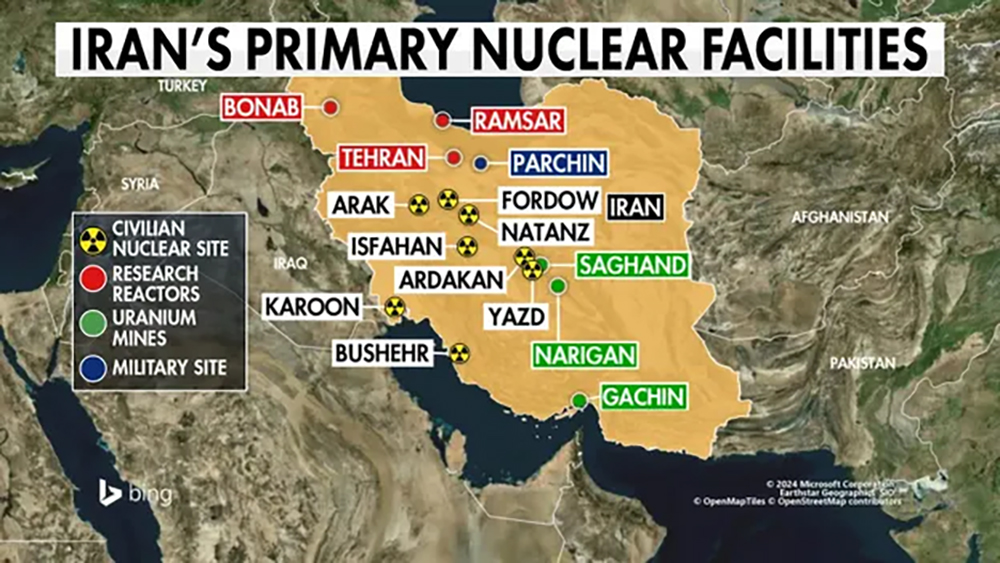
The strike marks a significant evolution in Israel’s operational doctrine. By focusing on communications nodes tied to the IRGC, Israel appears intent on dismantling not only Iran’s kinetic capabilities but also the regime’s capacity to coordinate, mobilize and sustain its narrative domestically and internationally. Israel believes that between 1,000 and 1,500 members of Iran’s IRGC and other Iranian security forces have been killed since the launch of its latest military campaign, according to an Israeli source cited by The Jerusalem Post.
According to The Jerusalem Post report, Israeli strikes have targeted a wide range of Iranian military and government assets. Facilities linked to the IRGC, the Basij militia, and other state institutions have been hit in coordinated attacks across multiple locations.
The Israel National News report emphasized that this approach reflects a strategy aimed at severing the connective tissue that links Iran’s command structure, propaganda operations and regional proxy networks.
On the same night, the IDF announced the elimination of Abu Hamza Rami, a senior commander of the Islamic Jihad terrorist organization in Lebanon. Israel National News reported that Rami was killed in overnight airstrikes in the Beirut area and had long overseen the organization’s activities in the Lebanese sector.
According to the IDF, Rami had been responsible for advancing and carrying out hundreds of terrorist attacks against Israeli civilians and soldiers. More recently, he had continued to orchestrate operations from within Lebanon, including the training of Nukhba operatives, the recruitment of additional fighters and the procurement of weapons. During Operation “Northern Arrows,” Rami reportedly coordinated the movement of Islamic Jihad operatives along the Syria-Lebanon border and directed activities against IDF troops in southern Lebanon.
Israel National News cited the IDF’s assessment that Rami’s elimination constitutes a severe degradation of Islamic Jihad’s operational capabilities. The statement reiterated that Israel would continue to act decisively against any threat posed to the state and its citizens.
Taken together, the strikes in Tehran and Beirut reflect a dual-track strategy: one focused on dismantling Iran’s central military and ideological infrastructure, and another aimed at neutralizing senior operatives within its proxy organizations. The message, Israeli officials suggest, is that the campaign will not be geographically confined nor tactically limited.
In Washington, the tone was equally resolute. Secretary of State Marco Rubio issued a stern warning that “the hardest hits are yet to come” for Iran, signaling that the United States is preparing for a more forceful phase in its operations. Speaking from Capitol Hill, Rubio stressed that the campaign would continue until Iran’s missile and naval capabilities were fully neutralized.
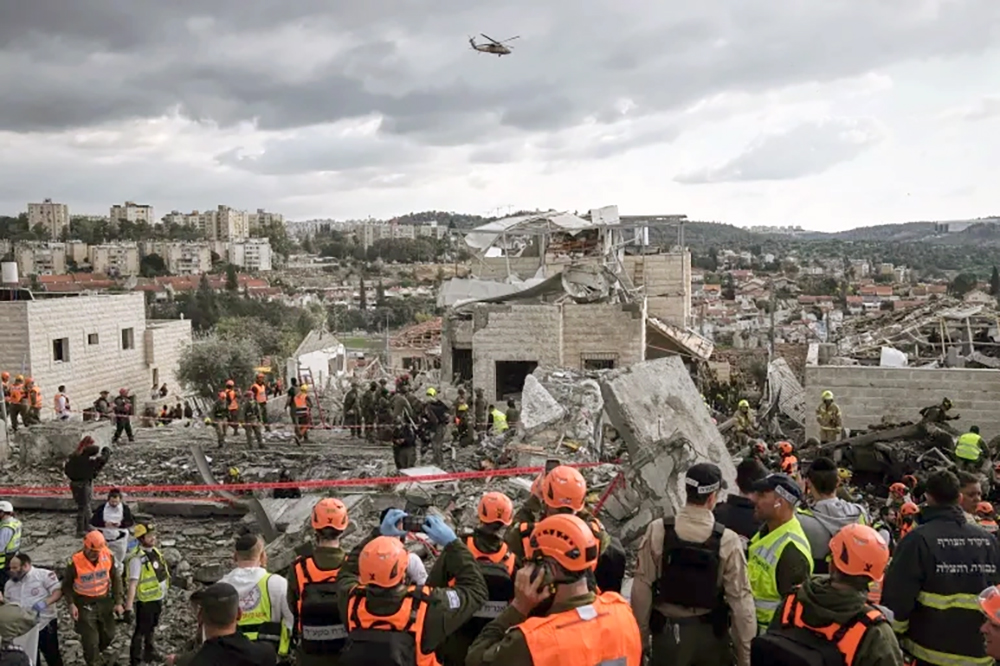
Rubio declined to provide a definitive timeline but made clear that Washington had defined objectives and intended to pursue them relentlessly. “We will do this as long as it takes to achieve those objectives and we will achieve those objectives,” he said. “The world will be a safer place when we’re done with this operation.”
The Secretary of State framed the urgency in stark strategic terms. Without intervention, he argued, Iran would soon cross what he described as a “line of immunity”—a threshold at which its stockpile of short-range missiles and drones would render it effectively untouchable. “They would have so many short-range missiles, so many drones that no one could do anything about it because they could hold the whole world hostage,” Rubio warned.
He pointed to the damage already inflicted on Iranian assets as evidence of the campaign’s effectiveness. “Look at the damage they’re doing now,” he remarked, adding that the current situation involved a weakened Iran. “Imagine a year from now.”
Rubio also acknowledged that Washington had been fully aware of Israeli intentions and had prepared accordingly. “Obviously, we were aware of Israeli intentions and understood what that would mean for us, and we had to be prepared to act as a result of it,” he said. While he expressed hope for a future Iran not governed by radical clerics, Rubio reiterated that the immediate mission was the destruction of Iran’s ballistic missile capabilities and the prevention of nuclear weaponization.
In a related development, it was reported on Monday that China has released what it claims is a comprehensive map detailing U.S. military installations across the Middle East — and it did so in full public view.
The document allegedly identifies airstrips, logistics depots, Patriot missile systems, naval facilities and other critical infrastructure, placing sensitive locations squarely in the spotlight.
The move sends an unmistakable signal about Beijing’s posture and appears to amount to an overt challenge to Washington on the global stage.
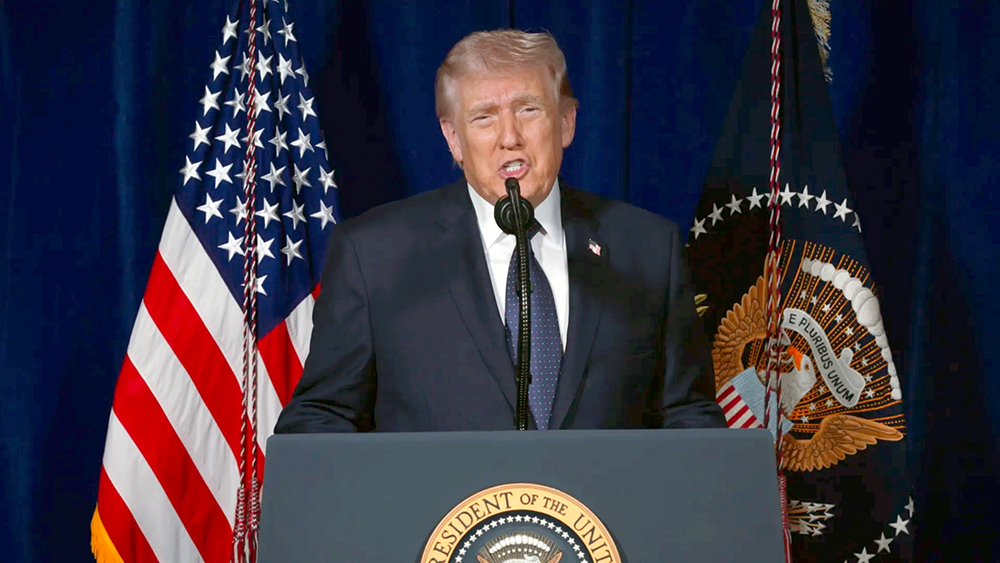
In a televised appearance on Fox News, former U.S. Ambassador to the United Nations and ex–South Carolina Governor Nikki Haley addressed the close coordination between Washington and Jerusalem in confronting the Iranian regime.
Haley characterized the current developments as a pivotal turning point, not only in geopolitical terms but also in shaping President Trump’s historical legacy. She argued that decisive action had become unavoidable, while emphasizing compassion for innocent civilians caught in the conflict. At the same time, she underscored the formidable strength of the American armed forces, asserting that their power is amplified even further when operating in concert with Israel’s military capabilities.
“This is a war of good versus evil,” she continued. “What you saw was the US went in. what I’m sure they did was go into an operation where the first thing they wanted to do was disable the communications among the Iranian leaders. The second thing is to go after those launchers. There is a about 300 Iranian launchers that send those ballistic missiles, so trying to take care of that all while the Israelis were going after the Iranian Revolution Guard, their leadership. To be able to go after the Ayatollah, to be able to go after the head of the defense, the head of the intelligence that they have there as well and to be able to eliminate them. This is a joint force of action. But this is something that really had to happen.”
“I know that they had negotiations, but the amount of force that was sent over to the region, you knew that there had to be something. You don’t send that much if you don’t have a plan in action. I think that what you saw here is they gave the Iranian regime a chance. They attempted to do diplomacy and the Iranian regime did what they always do. They lie, they cheat, they never tell the truth, and they always want to make sure in the back of their minds, they want to harm people.”
“We saw this when we got out of the Iranian deal years ago, that they were cheating then, I think that they were trying to get away with cheating now. I think that the Trump administration saw through that. Overall a very strong day for the US military and for the Trump administration.”
President Donald Trump has likewise adopted an uncompromising tone. In a post on Truth Social referenced by Israel National News, Trump sharply criticized the 2015 nuclear agreement, asserting that his withdrawal from the deal during his first term had prevented Iran from obtaining nuclear weapons years earlier. “That was the most dangerous transaction we have ever entered into,” he wrote, arguing that the world would look radically different had the agreement remained in force.
In interviews with American media, Trump declined to categorically rule out the possibility of deploying ground forces if circumstances demanded it. Speaking to the New York Post, he said he did not subscribe to the conventional political mantra of “no boots on the ground.” While emphasizing that such a step would likely be unnecessary, he left open the possibility if it proved essential to achieving U.S. objectives.
Secretary of War Pete Hegseth reinforced that no American troops are currently inside Iran but similarly refrained from foreclosing future options. “President Trump ensures our enemies understand we’ll go as far as we need to go to advance American interests,” Hegseth said at a Pentagon press conference. “But we’re not dumb about it.”
Trump suggested to the Daily Mail that the war might last “four weeks or so,” though he hinted in subsequent remarks that the timeline could shorten if operations continue to proceed ahead of schedule.
The regional ramifications are already significant. The U.S. Department of State issued an urgent advisory urging Americans to depart more than a dozen countries across the Middle East, including Israel, Bahrain, Egypt, Iraq, Jordan, Kuwait, Lebanon, Oman, Qatar, Saudi Arabia, Syria, the United Arab Emirates and Yemen. “Depart now via commercial means due to serious safety risks,” the advisory read.
In Israel, aviation authorities are navigating a fluid security environment. El Al Airlines announced that it would suspend flights to Taba pending approval from Israeli security authorities, citing a severe travel warning for Egypt. As reported by Israel National News, the airline stressed that it would not operate flights without explicit security clearance and that it prioritizes passenger safety above all other considerations.
With the reopening of Ben Gurion Airport, El Al has pledged to return customers to Israel without additional charges from more than 20 destinations worldwide. Meanwhile, Wizz Air has joined evacuation efforts, reinforcing flights to Sharm El Sheikh beginning later this week.
INN also reported that an explosion occurred early Tuesday morning at the US Embassy in the capital of Saudi Arabia, Riyadh, after it was hit by two Iranian drones. Sources said that a fire broke out at the scene following the explosion.
The Saudi Ministry of Defense confirmed that two drones hit the US Embassy, adding that a fire broke out and the building sustained minor damage. Fox News reported that the US Embassy was empty at the time of the attack.
A source familiar with the details told the AFP that Saudi Arabia intercepted a total of four drones that were launched towards the embassy area in Riyadh.
Following the incident, the US Embassy in Riyadh issued a shelter in place notification for Jeddah, Riyadh and Dhahran and are limiting non-essential travel to any military installations in the region.
Domestically, Israeli leaders are projecting determination. During a visit to the Binyamin Regional Council’s operations center, Deputy Prime Minister and Justice Minister Yariv Levin emphasized that Israel is acting with resolve to effect a profound change in the security landscape. Council Head Yisrael Ganz declared, as quoted by Israel National News, that the decision to go to war was courageous and that the people of Israel stand firmly behind the government.
As the campaign unfolds, the convergence of Israeli and American objectives appears increasingly synchronized. Israel is targeting the institutional and operational core of Iran’s military and propaganda machinery, while Washington signals readiness to escalate until missile and naval threats are neutralized. The coming days will test the durability of this strategy and the resilience of the Iranian regime.
What is clear, however, is that the conflict has entered a phase defined by systematic dismantling rather than symbolic strikes. Communications hubs, senior commanders and logistical networks are being targeted in rapid succession. Both Jerusalem and Washington insist that the campaign will continue until its strategic aims are fulfilled. In the words of Secretary Rubio, the “hardest hits” may still lie ahead.
