



|
Getting your Trinity Audio player ready...
|
By: Jason Ostedder
As the Middle East once again finds itself balanced on a knife’s edge, a familiar axis of power, memory, and mistrust has reasserted itself at the center of global concern. Israeli Prime Minister Benjamin Netanyahu is actively seeking a high-stakes meeting with President Donald Trump, a move freighted with strategic urgency as Israeli intelligence officials warn that recent Iranian missile drills may be more than routine military theater. According to a report on Monday by Fox News Digital, Jerusalem increasingly fears that these exercises could serve as camouflage for a surprise attack—an anxiety sharpened by history, heightened by Iran’s nuclear ambitions, and magnified by the trauma of Israel’s security failures on October 7, 2023.
The anticipated meeting, expected on or around December 29, has rapidly become a focal point of international attention. At issue is not merely Iran’s evolving military posture, but the broader question of whether deterrence itself—long the backbone of regional stability—remains intact. As Fox News Digital has reported, Israeli officials are sounding the alarm that Tehran’s missile activity, conducted under the auspices of the Islamic Revolutionary Guard Corps (IRGC), may be a rehearsal for something far more ominous.
The current sense of alarm cannot be disentangled from Israel’s recent past. In the wake of Hamas’ devastating October 7 attack, Israeli tolerance for uncertainty has narrowed dramatically. Intelligence ambiguity that might once have been absorbed as strategic noise is now treated as a potential precursor to catastrophe. A senior Israeli official, speaking on background to Fox News Digital, made that point with striking candor.
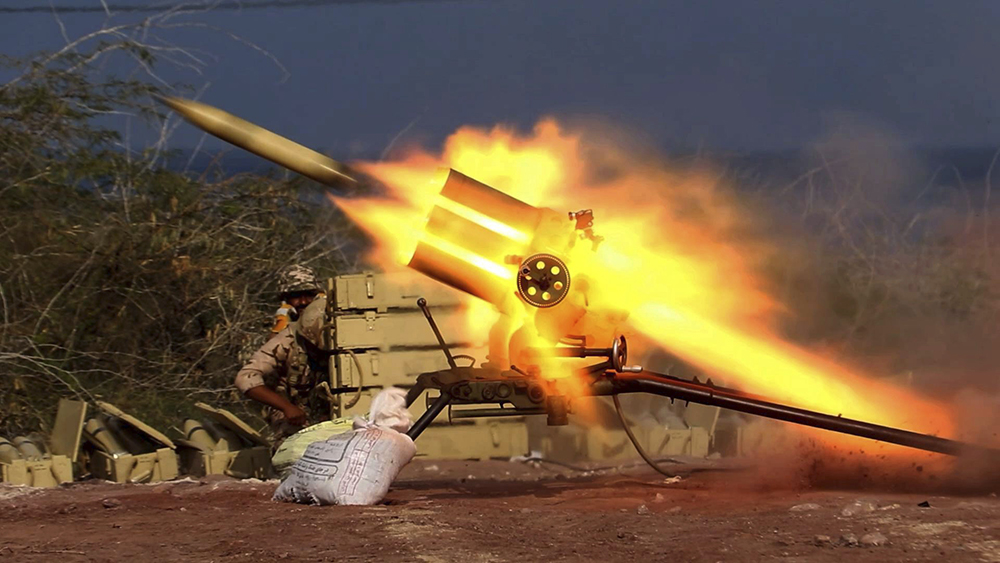
“Iran is doing drills,” the official said. “A concern that the drill will become a surprise attack is a real concern based on history. The Yom Kippur War started that way. I remind you, we shouldn’t ignore it.”
The reference was not incidental. The 1973 Yom Kippur War, launched under the cover of military exercises, remains the defining trauma of Israel’s intelligence community—a cautionary tale about the lethal cost of misreading enemy intent. As Fox News Digital has consistently emphasized, that historical memory now looms large over assessments of Iranian behavior.
These concerns were echoed publicly and forcefully on Monday by U.S. Ambassador to Israel Mike Huckabee, whose remarks at the Israel Institute for National Security conference reverberated well beyond the conference hall. Speaking with the bluntness that has become his hallmark, Huckabee framed Iran not merely as an Israeli problem but as a global one.
“It presents a threat, but not just to Israel, not just to the United States,” Huckabee said, according to Fox News Digital. “This presents a real threat to all of Europe.”
Huckabee went further, criticizing what he characterized as European complacency. “And if the Europeans don’t understand this,” he added, “then they’re even dumber than I sometimes think they are.”
While diplomatically undiplomatic, Huckabee’s comments captured a frustration widely shared among Israeli and American security officials. For years, Iran’s nuclear program has been treated by parts of Europe as a manageable diplomatic challenge rather than an existential strategic threat. Huckabee’s remarks, as reported by Fox News Digital, were a stark repudiation of that view.
Central to Huckabee’s message was the assertion that President Trump’s position on Iran has been unwavering. “All I can do is point out to you what the president has said repeatedly,” Huckabee told the audience. “He consistently has said Iran is never going to enrich uranium, and they’re not going to have a nuclear weapon.”
This red line, articulated throughout Trump’s presidency and reiterated since his return to office, forms the backbone of the anticipated Netanyahu-Trump discussions. According to Fox News Digital, Israeli officials believe that clarity—and credibility—on this point may be the single most important factor in deterring Iranian escalation.
Huckabee suggested that Tehran may have doubted Trump’s resolve until confronted with direct American military action earlier this year. “I don’t know that they ever took him seriously until the night that the B-2 bombers went to Fordow,” Huckabee said, referencing reported U.S. strikes on Iranian nuclear infrastructure.
“I hope they got the message,” he continued, “but apparently they didn’t get the full message because… they appear to be trying to reconstitute and find a new way to dig the hole deeper and secure it more.”
As the Fox News Digital report noted, this assessment underscores a growing belief among U.S. and Israeli officials that Iran’s strategic culture interprets restraint not as prudence but as weakness.
In one of his most revealing passages, Huckabee contextualized Iran’s hostility toward Israel within a broader, decades-long campaign against the United States itself. “Iran has threatened America for 46 consecutive years,” he said. “From 1979, when the ayatollahs took power… they’ve always said, ‘Death to Israel, death to America,’ in the same sentence.”

Israel, Huckabee argued, is not the ultimate target but the nearest one. “Israel is only the appetizer because you’re closer, and you’re an easier target than the vast geographical expanse that represents the United States,” he said. “But they’ve never hidden the fact that the real entrée, their ultimate goal, is to destroy the United States.”
This framing, highlighted extensively in the Fox News Digital report, casts the Iranian threat in civilizational rather than regional terms. It also helps explain why Israeli officials are pressing Washington so urgently: a strike on Israel, in this view, would not be an endpoint but a waypoint.
According to reporting cited by Fox News Digital, Israeli officials have warned the Trump administration that the IRGC missile drills could mask preparations for an actual strike. Axios, citing Israeli and U.S. sources, reported that force movements within Iran have raised alarms, even if definitive intelligence of imminent attack remains elusive.
The senior Israeli official who spoke to Fox News Digital dismissed speculation that the drills signal a coordinated Israeli-American offensive. “If we were planning an attack with the U.S., it probably wouldn’t make it into the media,” the official said dryly.
Instead, the concern lies in Iran’s potential exploitation of ambiguity—using the cover of exercises to normalize movements that could, with little warning, become operational. As Fox News Digital has reported, this tactic aligns with Iran’s long-standing doctrine of strategic surprise and plausible deniability.
The Iranian threat has not only reshaped Israel’s external posture but has also recalibrated its internal political discourse. According to the Israeli official quoted by Fox News Digital, public attention has shifted sharply.
“The headlines in Israel are now about the Iranian threat instead of the bill,” the official said, referring to contentious draft evasion legislation. “Is it spin? Is there something special? Is there truth? Maybe. But we always need to be prepared.”
This convergence of domestic and external pressures reflects the reality that Israel’s political debates rarely unfold in isolation from its security environment. Iran’s shadow looms large over every policy calculation, from military readiness to social cohesion.
Against this backdrop, Netanyahu’s planned meeting with Trump takes on profound significance. NBC News reported that Netanyahu intends to argue that Iran’s renewed expansion of its ballistic missile program constitutes an escalating threat that may require swift and decisive action. Fox News Digital has corroborated that assessment, noting that Israeli officials view missile capability as inseparable from nuclear ambition.
According to NBC, Netanyahu is expected to present Trump with a range of options, potentially including requests for U.S. support or involvement should Israel conclude that further military action is unavoidable. While details remain closely guarded, the very fact that such discussions are anticipated underscores the gravity of the moment.
Asked last week about a possible December 29 meeting, Trump offered a characteristically understated response. “We haven’t set it up formally,” he told reporters, “but he’d like to see me.” Israeli officials, however, have since confirmed that the meeting is planned.
Fox News Digital reached out to Netanyahu’s office for comment but received no response—a silence that, in this context, speaks volumes.
What emerges is a picture of accelerating timelines and shrinking margins for error. Iran’s nuclear program, once constrained by international agreements, now appears to be advancing under the cover of strategic distraction. Missile drills, diplomatic ambiguity, and hardened facilities all point to a regime intent on pushing the boundaries of deterrence.
For Israel, the lesson of history is unforgiving: threats ignored rarely dissipate on their own. For the United States, the challenge lies in balancing global commitments while confronting a regime that has openly declared its hostility for nearly half a century.
As Netanyahu and Trump prepare to meet, the stakes could scarcely be higher. The decisions made—or deferred—in the coming weeks may shape not only the future of Israeli security but the architecture of global nonproliferation itself.
In the end, as the Fox News Digital report observed, the question is not whether Iran seeks to change the strategic balance of the Middle East, but whether the world is prepared to stop it. The answer, increasingly, may hinge on a single meeting, a single message, and the credibility of a red line drawn once more in unmistakable terms.