



|
Getting your Trinity Audio player ready...
|
Jared Evan
(TJV NEWS) Iran is escalating its rhetoric—and its warnings—after a major strike on its critical energy infrastructure, signaling what could become a far wider and more dangerous phase of the regional conflict.
According to Bloomberg, Iranian officials are now openly threatening retaliation against key oil, gas, and petrochemical facilities across the Gulf, framing the attack not just as a military strike but as a direct assault on the country’s economic lifeline.
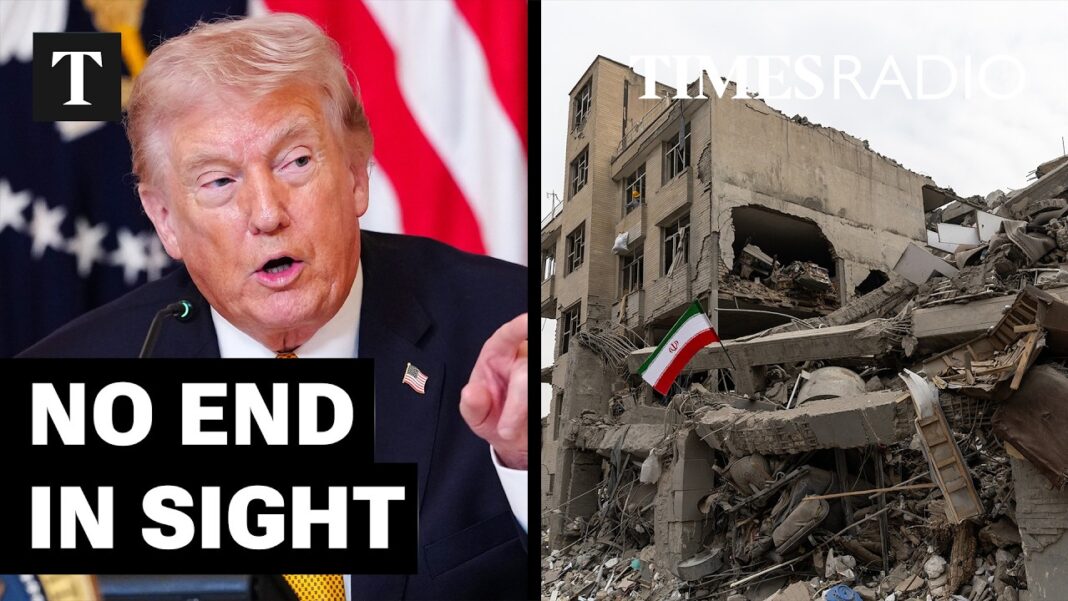
Tehran claims that the massive South Pars gas field—one of the most important energy hubs in the world—was hit in a coordinated strike involving the United States and Israel. As Bloomberg reported, Iranian leaders are portraying the attack as a turning point, warning that any nation hosting or supporting such operations could soon face consequences.
The response from Iran has been blunt and ominous. Officials have reportedly drawn up lists of potential targets across the region, including refineries, natural gas facilities, and petrochemical plants in countries like Saudi Arabia, the United Arab Emirates, and Qatar. Bloomberg noted that Tehran has effectively signaled these sites could be struck in retaliation, dramatically raising the stakes for Gulf nations that have so far tried to avoid direct involvement.
In some of the most alarming language yet, Iranian authorities have warned that energy infrastructure in the region is now considered a “legitimate target,” suggesting that any further attacks on Iran’s economy will be met with immediate and potentially devastating counterstrikes. As Bloomberg reported, this marks a shift from indirect confrontation to a more explicit threat against the global energy system itself.
Markets reacted instantly. Oil and gas prices surged sharply following the warnings, reflecting fears that even a limited Iranian response could disrupt supply routes that power much of the world. Bloomberg highlighted that traders are now bracing for potential strikes on infrastructure that underpins global energy flows—particularly in a region already on edge.
Iran’s messaging has also focused heavily on deterrence. Officials are signaling that the goal is not just retaliation, but prevention—warning neighboring countries that allowing their territory or airspace to be used in attacks against Iran could make them direct participants in the conflict. Bloomberg emphasized that Tehran is attempting to draw a clear red line: involvement will carry consequences.
At the same time, Iran is framing its position as defensive. Leaders insist that the strike on South Pars crossed a boundary by targeting civilian economic infrastructure, and they argue that any response would be proportional. Still, the scale of the threats—and the specificity of potential targets—suggest a widening conflict that could engulf much of the Gulf.
The situation is particularly volatile because of the region’s outsized role in global energy. Much of the world’s oil and liquefied natural gas flows through nearby shipping routes, and even the threat of disruption has already rattled markets. As Bloomberg reported, the fear is no longer hypothetical—investors and governments alike are preparing for the possibility of real strikes on critical infrastructure.
