



|
Getting your Trinity Audio player ready...
|
Iran Seeks Russian and Chinese Role to Verify if U.S. Ceasefire Plan Is Genuine
By: Tzirel Rosenblatt
As the international community watches with mounting apprehension, a precarious diplomatic moment is unfolding in the volatile arena of Middle Eastern geopolitics. Iran has yet to deliver a formal response to a sweeping 15-point ceasefire proposal advanced by President Trump, a delay that has introduced fresh uncertainty into already fragile negotiations. According to a report on Sunday in The Times of Israel, Tehran’s hesitation reflects not indecision alone, but a calculated effort to reshape the contours of the proposed agreement and secure broader international assurances.
At stake is not merely the cessation of hostilities, but the architecture of a potential settlement that could either stabilize the region or precipitate a new phase of escalation.
Sources cited by The Times of Israel indicate that Iran’s reluctance to respond stems from deep-seated concerns regarding the sincerity of the negotiations. Iranian officials reportedly fear that the ceasefire proposal could function as a strategic deception—a diplomatic overture masking preparations for intensified military action.
This suspicion is not without precedent. In a region marked by decades of mistrust and shifting alliances, diplomatic initiatives are often scrutinized through the lens of strategic intent. Tehran’s insistence on securing “international guarantees” underscores its desire to avoid entering into an agreement that could leave it vulnerable to unilateral actions by its adversaries.
Such caution, while understandable from a strategic standpoint, has the effect of prolonging uncertainty and complicating efforts to de-escalate tensions.
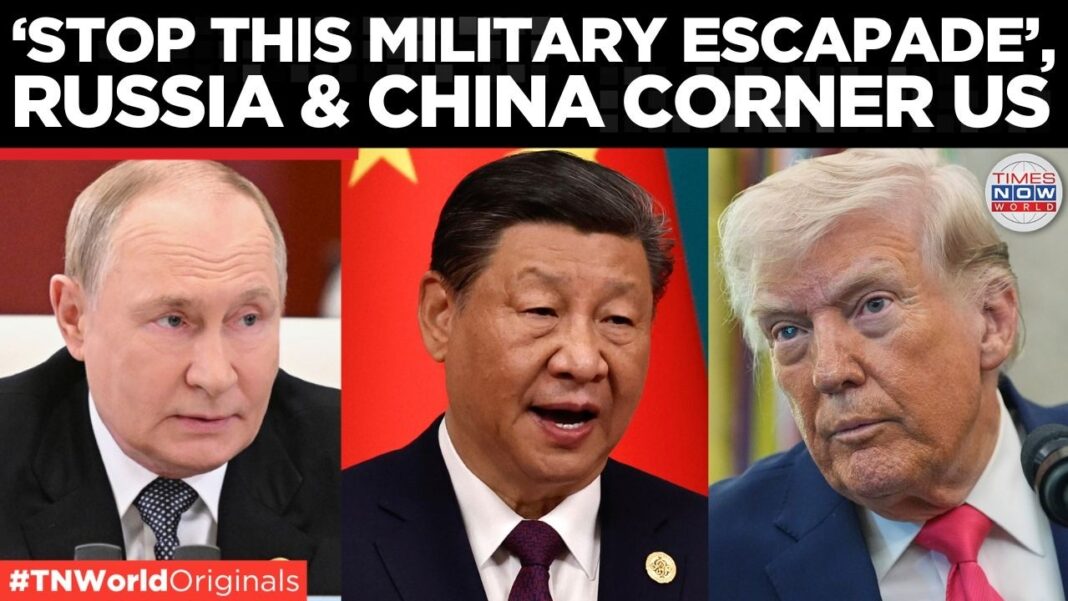
A central element of Iran’s approach, as reported by The Times of Israel, is its attempt to broaden the negotiation framework beyond the immediate regional actors. Tehran is actively seeking to involve additional global powers, most notably Russia and China, alongside Gulf states.
This expansion reflects a strategic calculation. By incorporating major international stakeholders, Iran aims to create a more balanced negotiating environment—one in which its interests are safeguarded by a broader coalition of guarantors. Such an arrangement could also serve to legitimize any eventual agreement, lending it greater durability in the face of shifting political dynamics.
However, the inclusion of these actors introduces additional layers of complexity. Each brings its own geopolitical priorities, alliances, and strategic considerations, potentially complicating consensus and prolonging negotiations.
While diplomatic efforts continue, parallel discussions are taking place between the United States and Israel regarding the possibility of coordinated military action should negotiations collapse. According to The Times of Israel report, these discussions have revealed emerging differences in strategic outlook between the two allies.
Israeli officials are reportedly advocating for the continuation of strikes against Iranian national infrastructure, even as negotiations remain ongoing. From their perspective, sustained military pressure is essential to maintaining leverage and preventing Iran from using the diplomatic process as a means of regrouping or delaying.
The United States, by contrast, appears more cautious. American officials are said to be concerned that continued strikes could undermine the credibility of the negotiations, potentially prompting Iran to disengage entirely. This divergence reflects a broader tension between military and diplomatic approaches—a tension that has long characterized efforts to address the Iranian challenge.
The current impasse highlights the inherent difficulty of balancing coercion and negotiation. On one hand, military pressure can serve as a powerful incentive for compliance, signaling resolve and imposing tangible costs. On the other hand, excessive force risks alienating negotiating partners and eroding the very conditions necessary for meaningful dialogue.
As The Times of Israel has reported, the success of the ceasefire proposal may hinge on the ability of all parties to navigate this delicate balance. Too much emphasis on force could derail diplomacy; too little could embolden defiance.
The broader regional context further amplifies the stakes. The Middle East remains a complex mosaic of alliances, rivalries, and proxy conflicts, with Iran positioned as a central actor. Any agreement—or failure thereof—will reverberate far beyond the immediate parties involved.
Gulf states, for instance, have a vested interest in the outcome, given their proximity to Iran and their own security concerns. The potential involvement of Russia and China adds a global dimension, transforming what might otherwise be a regional dispute into a matter of international significance.
Iran’s delay can also be interpreted as a form of strategic signaling. By withholding a formal response, Tehran maintains a degree of ambiguity that can be leveraged in negotiations. This ambiguity allows it to gauge reactions, extract concessions, and position itself advantageously without committing prematurely.
As emphasized in the report in The Times of Israel, such tactics are not uncommon in high-stakes diplomacy. They reflect a broader understanding that time itself can be a resource—one that, when used effectively, can shape the trajectory of negotiations.
The current juncture represents a moment of profound consequence. The decisions made in the coming days—by Iran, the United States, Israel, and other stakeholders—will determine whether the region moves toward de-escalation or further conflict.
For now, the absence of a formal Iranian response leaves the diplomatic process suspended in a state of uncertainty. Yet within that uncertainty lies both risk and opportunity. As The Times of Israel report noted, the path forward remains contested, shaped by competing priorities and strategic calculations.
Whether diplomacy can prevail over distrust, and whether a sustainable framework for peace can emerge, remains an open question—one whose answer will carry implications far beyond the immediate crisis.
