



|
Getting your Trinity Audio player ready...
|
Iran Reports Killing of Six Militants in Restive Southeast, Alleges Mossad Links
By: Ariella Haviv
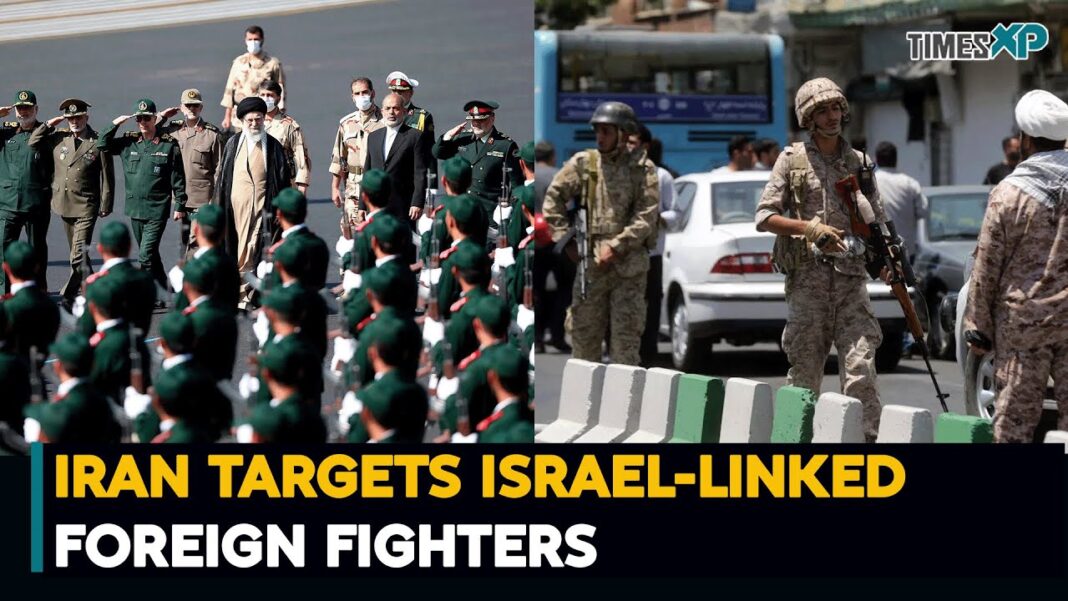
Iranian security forces announced on Saturday that they had killed six militants during an armed confrontation in the country’s restive southeast, a volatile region long plagued by insurgency, smuggling, and separatist violence. The clash comes just one day after five police officers were killed in the same area, underscoring the persistence of instability in a part of Iran often described as a flashpoint between Tehran and its adversaries.
According to the state-run IRNA news agency, which carried the official account of events, the militants killed in Saturday’s firefight were allegedly linked to Israel, and preliminary evidence suggested that they may have received training from the Mossad, Israel’s intelligence service. As Reuters noted in its coverage, Iran did not provide supporting evidence for the claim, and there was no immediate response from Israeli officials regarding the accusation.
Iranian state authorities further reported that two other members of the armed cell were taken into custody during the confrontation. IRNA added that all but one of the group were foreign nationals, though their precise countries of origin were not disclosed.
Iran’s southeast, bordering Pakistan and Afghanistan, has for decades been a theater of sporadic clashes between government forces and armed groups. As the Reuters report said, the area is marked by significant Sunni populations and minority communities who claim political and economic marginalization at the hands of Tehran.
Militant groups in the region frequently frame their campaigns as struggles for greater rights, autonomy, or resistance to the central government. Tehran, however, has long maintained that many of these groups are engaged in cross-border smuggling, insurgency, and criminality, often with alleged backing from foreign powers hostile to Iran.
The narrative of external interference is a recurring feature in Iranian state rhetoric. As the report at Reuters highlighted, Iranian officials regularly claim that Israel, the United States, or regional rivals such as Saudi Arabia are covertly assisting separatist or extremist organizations. Analysts caution, however, that while some militant groups may receive foreign support, Tehran often invokes these accusations to reinforce its political narrative and discredit domestic dissent.
The reported firefight also comes against the backdrop of Iran’s broader confrontation with Israel. The Reuters report noted that earlier this month, Iranian police claimed to have arrested as many as 21,000 suspects during the 12-day war between Israel and Iran in June. The figures, if accurate, would represent one of the largest security sweeps in recent memory, highlighting the extent to which Tehran perceives internal threats to be linked with its external adversaries.
Authorities in Tehran argue that such detentions are essential to preventing sabotage, terrorism, and espionage orchestrated by Israel and its allies. Yet human rights groups, often cited by Reuters in its reporting, have questioned the scale and due process of such arrests, warning of arbitrary detentions and the use of vague national security charges to silence dissent.
The claim that Saturday’s militants were trained by Mossad falls squarely within this established pattern. IRNA’s report, echoed by local media and summarized by Reuters, asserted that forensic and intelligence evidence tied the group to Israel. Mossad, which has carried out operations inside Iran for decades, particularly targeting the country’s nuclear program, is often blamed by Tehran for assassinations, sabotage, and support for anti-government insurgents.
Reuters noted that Iranian authorities did not provide photographs, videos, or other verifiable material to support the assertion of Israeli involvement. The absence of such evidence leaves the international community reliant on Iran’s official statements, which are frequently met with skepticism outside the country.
Nevertheless, the timing of the allegation is significant. With tensions between Iran and Israel at one of their highest points in decades following open warfare in June, accusations of Mossad links serve to reinforce Tehran’s narrative of an embattled nation resisting foreign conspiracies.
Another striking detail in IRNA’s report, highlighted by Reuters, was the claim that all but one of the slain militants were foreign. Iranian authorities stopped short of naming their nationalities, a silence that may reflect sensitivities about neighboring Pakistan and Afghanistan, both of which have porous borders with Iran’s Sistan-Baluchestan province.
The province, where Saturday’s clashes occurred, has long been a hub for smuggling networks trafficking in drugs, fuel, and weapons across frontiers that are notoriously difficult for any state to secure. Groups such as Jaish al-Adl, a Sunni terrorist organization operating in the region, have claimed responsibility for deadly attacks on Iranian security forces in the past. Tehran frequently accuses such groups of receiving shelter or support from across the border.
If foreign militants were indeed involved, as IRNA asserted, it would underscore the transnational nature of the insurgency in southeastern Iran. Reuters has previously reported on how instability in Afghanistan, coupled with the challenges of policing the Pakistani frontier, has fueled a security dilemma for Tehran that shows no signs of abating.
Saturday’s operation raises questions about whether Tehran’s security forces can contain the simmering unrest in the southeast. Reuters quoted regional analysts who note that while Iranian forces have been effective in eliminating small militant cells, the recurrence of attacks — including Friday’s killing of five police officers — suggests that the underlying grievances and logistical networks sustaining insurgency remain intact.
The escalation of violence also risks diverting Tehran’s attention and resources at a time when the Iranian state is under acute external pressure. The June war with Israel exposed vulnerabilities in Iran’s military defenses, while ongoing economic sanctions continue to strain its economy. Domestic discontent, visible in periodic protests across the country, further compounds the challenge facing Iran’s rulers.
Iran’s insistence on framing local insurgency through the lens of Israeli subversion also reflects a strategic narrative. As the Reuters report observed, by attributing domestic unrest to foreign intelligence agencies such as Mossad, Tehran strengthens its claim to be fighting not merely internal dissent but an international conspiracy against its sovereignty. This framing consolidates domestic support, diverts blame from local governance failures, and bolsters Tehran’s global positioning as a victim of foreign aggression.
Yet this narrative, while politically expedient, often obscures the more complex socio-political realities of the southeast. As Reuters noted in earlier coverage, demands for greater economic opportunities, an end to discrimination, and political autonomy have long fueled resentment among Sunni and ethnic minorities in the region. Absent meaningful reforms, security crackdowns may quell individual cells but risk perpetuating a cycle of violence.
The killing of six militants and the arrest of two others marks another chapter in Iran’s ongoing struggle to assert control over its southeast. While Iranian officials are presenting the operation as a victory against terrorism and foreign subversion, the backdrop of Friday’s deadly assault on police officers underscores that the threat is far from eliminated.
Reuters’ reporting suggests that the broader significance of the clash lies less in the tactical details than in the political framing: an embattled Iranian state invoking the specter of Mossad involvement to rally domestic support and deflect international criticism.
Whether the militants were truly linked to Israel or were instead part of the region’s long-running separatist and insurgent movements may remain unclear. What is evident, however, is that southeastern Iran continues to represent both a security liability and a political narrative tool for Tehran — a duality that ensures its instability will persist in the months and years to come.
