



|
Getting your Trinity Audio player ready...
|
Iran Launches Sweeping Arrests After Violently Suppressing Nationwide Protests
By: Fern Sidman
In the shadow of the bloodiest wave of unrest Iran has witnessed since the 1979 Islamic Revolution, the Islamic Republic is now entering a new and darker phase of repression—one defined not only by lethal force, but by fear, disappearance, and the quiet machinery of mass detention. According to a report on Thursday by Reuters, corroborated by human rights groups, activists, lawyers, medical professionals, and even Iranian officials speaking anonymously, plainclothes security forces have launched a sweeping campaign of arrests, intimidation, and enforced disappearances designed to suffocate any possibility of renewed protest.
As Reuters has documented, the crackdown follows protests that initially appeared modest in scale—demonstrations in Tehran’s historic Grand Bazaar last month sparked by economic hardship, inflation, and worsening living conditions. Yet those early protests rapidly evolved into something far more profound: a nationwide eruption of long-suppressed grievances, with chants openly calling for the removal of Iran’s ruling clerics and the dismantling of the Shi’ite theocratic system itself. What began as economic anger transformed into an existential political challenge to the Islamic Republic.
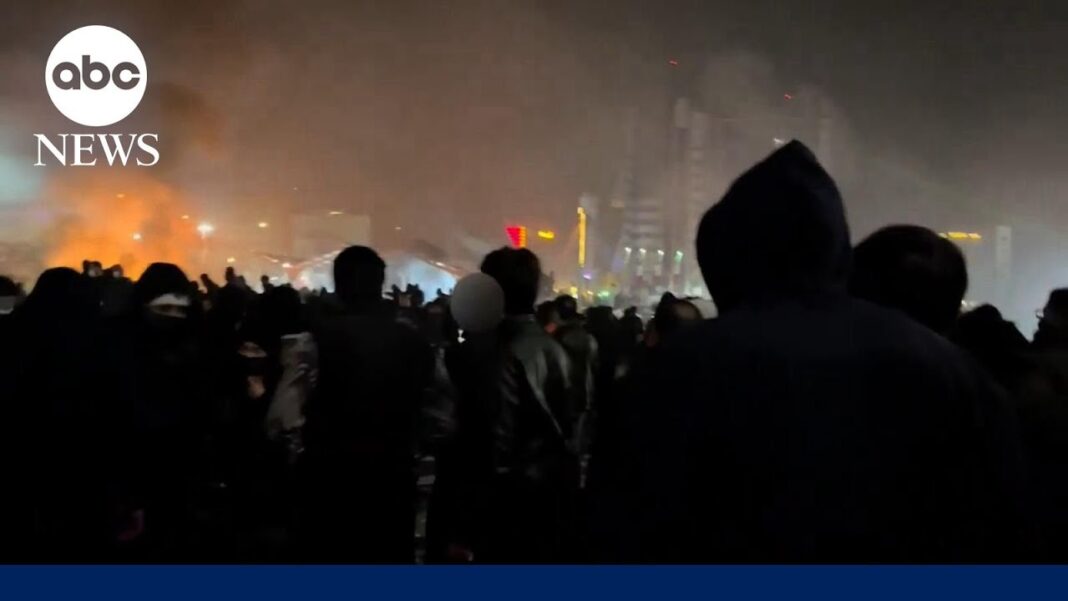
Within days, the regime responded with overwhelming force. Internet access was cut. Communications were severed. Security forces flooded the streets. Rights organizations report that thousands were killed as authorities crushed demonstrations with live fire, mass detentions, and military-style suppression tactics. Tehran, however, has attempted to reframe the violence, blaming “armed terrorists” allegedly linked to Israel and the United States—a narrative echoed in state media and official statements.
Now, according to Reuters, the repression has entered a second, quieter phase: a campaign of systematic arrests conducted largely out of public view.
Plainclothes units, operating at checkpoints and in neighborhoods across the country, are reportedly rounding up not only suspected protest participants, but also individuals previously detained in earlier protest movements—even if they took no part in the recent unrest. Family members are being targeted as well. Homes are raided. Devices are confiscated. People vanish into unofficial detention facilities, including warehouses and improvised lockups.
“They are arresting everyone,” one activist inside Iran told Reuters, speaking on condition of anonymity. “No one knows where they are being taken or where they are being held. With these arrests and threats, they are trying to inject fear into society.”
Similar testimonies have been provided to Reuters by lawyers, doctors, witnesses, and two Iranian officials who confirmed that thousands of arrests have occurred in recent days. Many detainees, they said, are being held in unofficial detention centers—facilities deliberately designed to operate outside legal oversight, without transparency, due process, or access to legal representation.
This strategy, analysts say, reflects a regime attempting not merely to suppress protests, but to preempt their return through psychological warfare—using fear, uncertainty, and disappearance as tools of social control.
As The Algemeiner has noted in its broader regional coverage, the Iranian regime increasingly relies on internal repression as external pressures mount. The unrest has unfolded amid heightened international tensions, particularly with the United States and Israel. President Donald Trump’s recent statements about a U.S. “armada” heading toward Iran, combined with warnings of devastating retaliation if Tehran refuses to negotiate limits on its nuclear program, have created a climate of geopolitical uncertainty that further destabilizes the regime’s internal position.
According to multiple Western and Middle Eastern sources cited by Reuters, U.S. officials are reportedly weighing options that include targeted strikes on Iranian security forces and leadership figures, not simply for military objectives, but as a means of emboldening internal dissent. Yet Israeli and Arab officials have also acknowledged that air power alone is unlikely to dismantle Iran’s entrenched clerical establishment, which retains deep institutional control over the state, economy, and security apparatus.
Against this backdrop, Tehran appears determined to extinguish any internal spark before it can reignite.
The scale of repression is staggering. The U.S.-based Human Rights Activists News Agency (HRANA), cited by Reuters, currently estimates at least 6,373 confirmed deaths, including nearly 6,000 protesters, over 200 security personnel, more than 100 minors, and dozens of bystanders. Arrests have surpassed 42,000, with investigations ongoing into nearly 20,000 additional potential deaths. Several media outlets, citing internal Iranian sources, suggest the true death toll may exceed 30,000.
Amnesty International described the aftermath as a “suffocating militarization,” marked by “sweeping arbitrary detentions, enforced disappearances, bans on gatherings, and attacks to silence families of victims.” The United Nations human rights office has warned that detainees face serious risks of torture, coerced confessions, and sham trials. UN Special Rapporteur Mai Soto confirmed that thousands of detainees include doctors and healthcare workers—individuals targeted not for protest participation, but for treating wounded demonstrators.
This targeting of medical professionals represents a particularly chilling dimension of the crackdown. Five doctors told Reuters that wounded protesters were removed from hospitals by security forces, while physicians were summoned, interrogated, and warned not to provide medical assistance to demonstrators. Prison authorities, however, deny holding wounded protesters—a contradiction emblematic of the regime’s broader information control strategy.
Families, meanwhile, are left in a state of agonizing uncertainty. Lawyers report being overwhelmed by desperate parents searching for children who have vanished. One Iranian man told Reuters, “They took my child as if they were arresting a terrorist. We don’t know where they are, whether they are still alive, or when we’ll see them.”
More than 60% of Iran’s population is under 30, making youth both the engine of protest and the primary target of repression. Teenagers, students, and young adults now constitute a large portion of detainees. According to three Iranian lawyers interviewed by Reuters, minors—boys and girls—are among those arrested in recent days.
This generational dimension is critical. As The Algemeiner has emphasized in its reporting on Iranian society, the regime faces a demographic reality that fundamentally challenges its longevity: a young population disconnected from revolutionary ideology, deeply integrated into global culture through technology, and increasingly alienated from clerical authority. Repression may suppress protest temporarily, but it cannot reverse demographic and cultural transformation.
Iran’s judiciary has made its intentions unmistakably clear. Officials have publicly warned that those accused of “sabotage,” “burning public property,” or “armed clashes” could face death sentences. Such language, human rights experts argue, is deliberately vague—designed to allow broad interpretation and maximal punishment.
Meanwhile, Tehran’s official narrative continues to frame the unrest as foreign-instigated terrorism, absolving the regime of responsibility and justifying extreme measures. This narrative, repeated in state media and diplomatic channels, mirrors patterns seen in previous crackdowns but on a far larger scale.
What distinguishes the current campaign, according to the Reuters report, is its scope, speed, and coordination. This is not reactive policing—it is systemic repression, executed through intelligence services, security forces, judiciary mechanisms, and informal detention networks operating in parallel.
The use of plainclothes agents further blurs the line between civilian space and state violence. Checkpoints, neighborhood patrols, and anonymous detentions create an atmosphere of omnipresent surveillance, where fear becomes a constant psychological condition rather than an episodic response to visible violence.
As The Algemeiner has observed in its broader Middle East analysis, such strategies are characteristic of regimes under existential pressure. When legitimacy erodes, coercion becomes the primary instrument of governance.
Externally, Iran faces increasing isolation. Internally, it faces a population that no longer fears ideological authority in the same way previous generations did. The result is a regime increasingly dependent on force rather than consent.
The paradox is stark: the very brutality intended to stabilize the system may, in the long term, deepen the conditions that threaten it. History offers few examples of regimes that survive indefinitely through repression alone.
For now, however, Iran’s streets are quieter—not because dissent has vanished, but because fear has been imposed.
As one activist told Reuters, “They are trying to inject fear into society.” It is a strategy rooted in disappearance, uncertainty, and terror rather than persuasion or legitimacy.
And yet, as The Algemeiner has repeatedly noted in its coverage of authoritarian systems, fear is a fragile foundation for power. It suppresses voices, but it does not erase memory. It silences crowds, but it does not extinguish grievance.
In Iran today, the protests may be crushed, the streets subdued, and the voices muted—but beneath the surface, a society remains profoundly unsettled, watching, waiting, and remembering.
The mass arrests, the secret prisons, the shattered families, and the vanished youth are not signs of strength. They are signs of a regime struggling to contain a population that no longer believes in its moral authority.
In that sense, the silence now settling over Iran is not the silence of peace—it is the silence of repression. And history has shown, time and again, that such silence rarely lasts forever.
