



|
Getting your Trinity Audio player ready...
|
By: Ariella Haviv
In a moment of profound geopolitical consequence, Israel has signaled an extraordinary degree of strategic deference to Washington, declaring its readiness to abide by any determination made by President Donald Trump regarding the next phase of the war with Iran. As reported on Monday by World Israel News, this declaration reflects not merely tactical coordination, but a deeper realignment in the calculus of power, risk, and political necessity amid an increasingly volatile regional conflict.
The statement, delivered by a senior Israeli political official, marks a notable departure from prior episodes of friction between Jerusalem and Washington. It underscores a recognition that the trajectory of the war—whether toward escalation or negotiated cessation—now rests decisively in American hands. In doing so, Israel has effectively tethered its operational tempo and strategic ambitions to the decisions emerging from the White House.
The contrast with earlier phases of the conflict is striking. During a previous escalation last June, Israeli leaders resisted efforts to curtail military operations, prompting a dramatic intervention in which American leadership ordered Israeli Air Force jets to stand down mid-mission. That episode revealed fissures in the alliance, highlighting divergent assessments of both risk tolerance and desired outcomes.
“This is not that event,” the senior Israeli official emphasized, in remarks cited by World Israel News. “The moment he makes the decision, we go with the decision.”
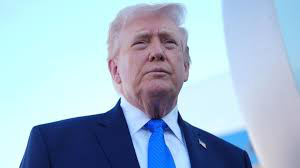
Such language conveys more than diplomatic courtesy; it signals an acknowledgment of the asymmetry inherent in the alliance. While Israel retains formidable military capabilities, the broader strategic environment—encompassing global diplomacy, economic leverage, and the potential for large-scale escalation—remains largely under American stewardship.
At the same time, Israeli leadership is not relinquishing agency entirely. Rather, it is pursuing a dual-track approach: maximizing military gains in the immediate term while deferring ultimate decisions regarding the war’s continuation or termination to Washington.
Central to Israel’s current strategy is an intensified effort to degrade Iran’s military infrastructure before any potential ceasefire takes hold. As described by officials and detailed in the World Israel News report, Israeli forces are actively seeking to “exhaust the target bank”—a phrase that encapsulates a methodical campaign aimed at dismantling Iran’s capacity to project power.
“We want to stretch this out as much as possible so we can destroy as many targets as possible and push Iran farther away from nuclear capability and the production of weapons and ballistic missiles,” the official stated.
This approach reflects a recognition of the fleeting nature of military opportunity. Should negotiations yield a cessation of hostilities, the window for such operations would close, potentially leaving critical elements of Iran’s military apparatus intact. Thus, Israel’s current tempo of strikes is not merely tactical, but anticipatory—designed to secure long-term advantages before diplomacy imposes constraints.
Yet this strategy is tempered by a sober assessment of limitations. Israeli officials acknowledge that absent a fundamental transformation within Iran’s political system, the conflict may yield diminishing returns.
“If there is no regime change, you eventually exhaust your move,” the official conceded. “For us, it is a cost-benefit calculation.”
Such candor underscores the inherent complexity of the conflict: a recognition that military superiority does not necessarily translate into decisive victory when confronting a resilient and ideologically driven adversary.
At the center of this unfolding drama stands President Trump, whose decisions now carry extraordinary weight. As noted in the World Israel News report, the administration is simultaneously pursuing diplomatic engagement and preparing for potential escalation—a delicate balancing act that reflects both opportunity and peril.
Trump has characterized the current approach as “negotiations under fire,” a formulation that encapsulates the paradox of seeking peace amid ongoing hostilities. This strategy is predicated on the belief that sustained military pressure may compel Iran to accept terms it would otherwise reject.
In parallel, the United States is engaging in a complex web of diplomatic interactions, both direct and indirect. Iranian Parliament Speaker Mohammad Bagher Ghalibaf has emerged as a central interlocutor, with communications facilitated through intermediaries including Pakistan, Turkey, Qatar, and Egypt.
Trump’s own statements suggest cautious optimism, coupled with a readiness to pivot swiftly should negotiations falter. “You’ll see shortly,” he remarked when asked about potential responses to recent Iranian actions, hinting at imminent decisions that could reshape the conflict’s trajectory.
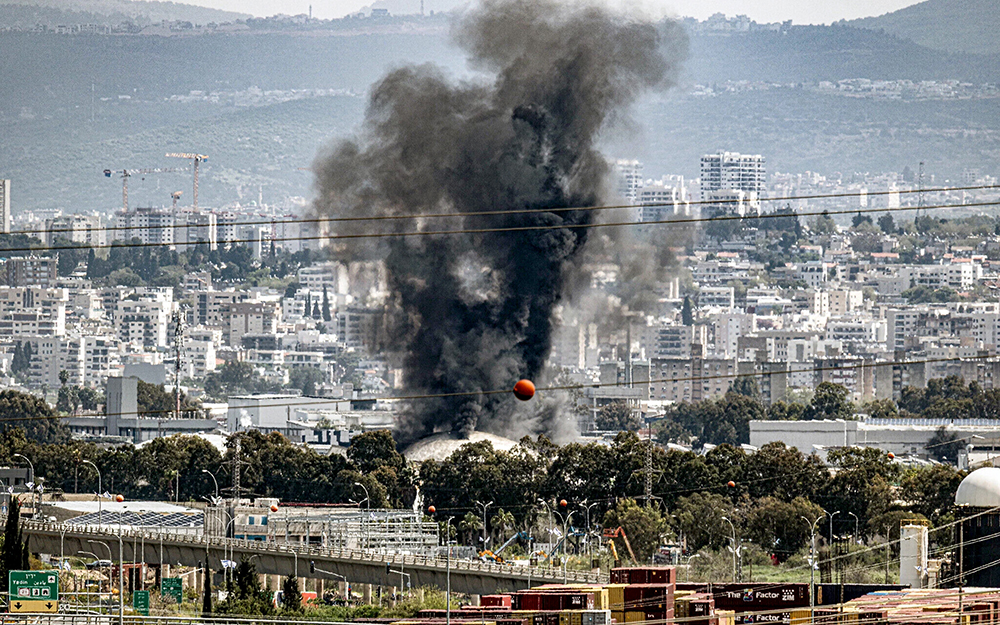
The urgency of these deliberations has been heightened by continued hostilities. A recent Iranian cluster missile strike targeting Haifa—Israel’s largest oil refinery hub—underscored the persistent threat posed by Tehran’s arsenal. According to reports referenced by World Israel News, interceptor debris and secondary impacts caused damage across multiple locations, including a residential building in Shfar’am.
Such incidents serve as stark reminders that the conflict remains active and unpredictable, with civilian populations bearing significant risks. They also reinforce the stakes of American decision-making: each escalation carries the potential to broaden the conflict, drawing in additional actors and amplifying its consequences.
Trump has signaled that any further escalation could prompt a forceful response. In a message posted on Truth Social, he warned that failure to reach a deal could lead to the destruction of critical Iranian infrastructure, including electric generating plants, oil facilities, and strategic assets such as Kharg Island.
The language was unmistakably direct, reflecting both the administration’s confidence in its military capabilities and its willingness to employ them. Yet it also underscores the precariousness of the moment, as diplomacy and deterrence intersect in a high-stakes contest of resolve.
On the opposing side, Iranian leadership has adopted a posture of defiance, framing the conflict in expansive and existential terms. Ghalibaf has characterized the war as a “major world war,” signaling both the regime’s perception of the stakes and its intent to sustain resistance.
“Our launches continue, our missiles will not stop, and our determination has only grown stronger,” he declared, dismissing suggestions that Iran might be inclined toward compromise.
This rhetoric is not merely performative; it reflects a strategic calculation that endurance may yield advantage. By demonstrating resilience and a willingness to absorb damage, Iran seeks to impose costs on its adversaries and potentially outlast their political will.
At the same time, internal tensions within Iran suggest a more nuanced reality. Reports cited by World Israel News indicate disagreements among senior officials, with President Masoud Pezeshkian warning that continued conflict could precipitate economic collapse.
Such divisions highlight the dual pressures confronting Tehran: the imperative to project strength externally, and the necessity of managing internal stability amid mounting economic and social strain.
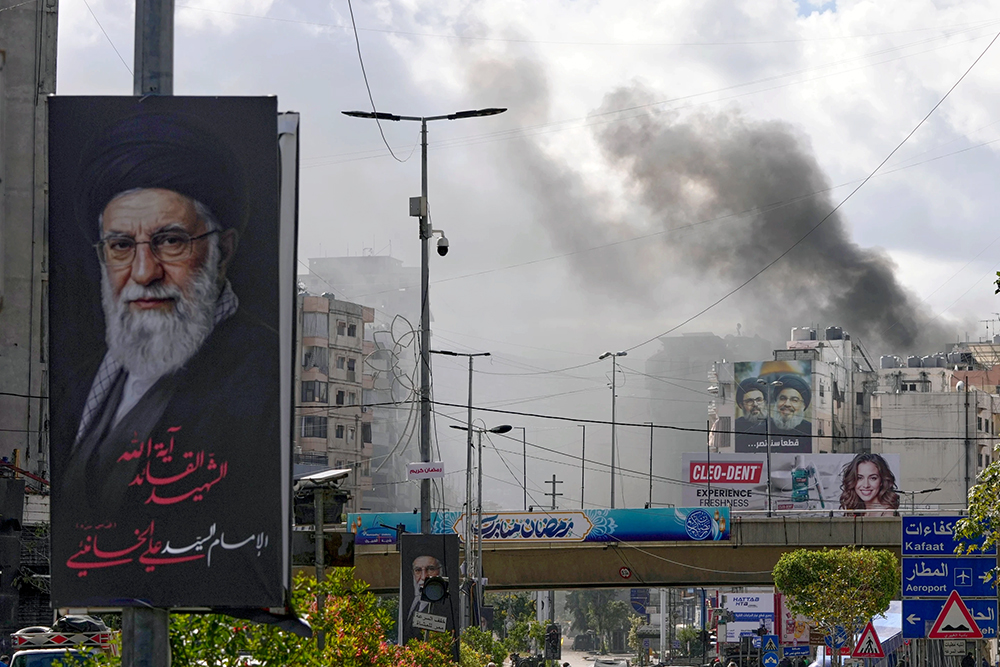
The conflict’s ramifications extend far beyond Israel and Iran, encompassing a broader network of regional actors and proxy forces. Ghalibaf’s praise for Hezbollah and other allied groups underscores the interconnected nature of these dynamics, as Iran leverages its relationships to project influence across multiple theaters.
These proxy forces serve as both assets and liabilities, enabling Iran to exert pressure while also complicating the strategic landscape. Their involvement increases the risk of escalation, as localized conflicts intersect with broader geopolitical tensions.
For Israel, this reality reinforces the urgency of its current operations. By targeting not only Iranian assets but also the infrastructure supporting these networks, Israeli forces aim to disrupt the broader ecosystem of influence that underpins Tehran’s strategy.
As the conflict approaches a potential inflection point, the interplay between military action and diplomatic engagement becomes increasingly critical. Israel’s decision to align itself fully with American leadership reflects both pragmatism and necessity, acknowledging the central role of the United States in shaping the conflict’s outcome.
At the same time, this alignment carries risks. By deferring to Washington, Israel effectively places its strategic fate in the hands of an external actor, whose decisions will be influenced by a complex array of domestic and international considerations.
For Trump, the challenge is equally formidable. The administration must navigate a narrow path between achieving its objectives and avoiding a broader conflagration, balancing the imperatives of strength and restraint.
The unfolding situation represents a moment of profound consequence, not only for the immediate participants but for the broader international order. As chronicled by World Israel News, the decisions made in the coming days and weeks will shape the trajectory of the conflict and its aftermath.
Israel’s declaration of alignment with the United States marks a pivotal development, signaling both unity and dependency. It reflects a recognition that the complexities of modern warfare—encompassing military, economic, and diplomatic dimensions—require coordinated action at the highest levels.
Yet it also underscores the fragility of the moment. With each passing day, the window for decisive action narrows, even as the risks of escalation persist.
In this delicate balance, the future of the conflict—and perhaps the stability of the region—hangs in the balance, awaiting the decisions of leaders whose choices will resonate far beyond the battlefield.
U.S.-Israel Offensive Reshapes Iran’s Military Power
In a sweeping demonstration of coordinated military force, the United States and Israel have executed an unprecedented aerial and strategic campaign against Iranian military infrastructure, conducting more than 11,000 strikes since the launch of Operation Epic Fury on February 28. As reported on Monday by VIN News, the sustained offensive has not merely degraded but fundamentally disrupted Iran’s capacity to project power across the Middle East, signaling a profound recalibration of the regional balance.
According to briefings from United States Central Command, the campaign has achieved what officials describe as near-total operational dominance in key theaters. VIN News cited military assessments indicating that Iran’s once formidable ballistic missile and drone capabilities have been reduced by approximately 90 percent. This dramatic decline reflects not only the destruction of launch systems but also the systematic dismantling of production infrastructure, leaving Tehran with sharply diminished offensive reach.
At the heart of this effort lies a meticulously coordinated strategy targeting the pillars of Iran’s military-industrial complex. Missile development facilities, drone manufacturing sites, naval shipyards, and command-and-control centers have all been struck with precision. As VIN News has reported, nearly 70 percent of Iran’s defense production base—spanning missiles, drones, and naval assets—has been either severely damaged or entirely destroyed. This erosion of capacity represents a long-term strategic setback for Iran, constraining its ability to rebuild and rearm in the foreseeable future.
Perhaps most striking has been the near-total neutralization of the Iranian Navy. Once a central instrument of Tehran’s asymmetric warfare strategy in the Persian Gulf and surrounding waterways, the naval force has suffered catastrophic losses. More than 150 vessels have been destroyed, including approximately 92 percent of its largest and most operationally significant ships. VIN News has highlighted that this level of attrition has rendered the navy effectively combat ineffective, stripping Iran of a critical mechanism for threatening maritime traffic and projecting influence along vital shipping lanes.
The implications for regional security are profound. With its naval capabilities decimated, Iran’s ability to disrupt chokepoints such as the Strait of Hormuz—a corridor through which a significant portion of the world’s energy supply flows—has been sharply curtailed, though concerns about residual threats persist. The VIN News report noted that global markets remain sensitive to the evolving situation, as even diminished Iranian capabilities could still impact shipping and energy prices under certain conditions.
Equally consequential has been the establishment of air superiority by U.S. and Israeli forces. Military officials confirm that more than 11,000 successful combat flights have been conducted, enabling sustained operations deep within Iranian territory. This level of aerial dominance has allowed for continuous targeting of strategic assets with minimal resistance, effectively opening the skies over Iran to allied operations. VIN News has described this development as a decisive factor in the campaign’s success, enabling a tempo of operations that would have been unattainable under contested conditions.
The origins of Operation Epic Fury lie in escalating tensions between Iran and its adversaries, particularly over Tehran’s nuclear ambitions, ballistic missile program, and its extensive support for proxy groups across the region. The joint campaign was conceived as a means of addressing these threats comprehensively, rather than through piecemeal responses. The scale and intensity of the strikes reflect a deliberate effort to impose enduring constraints on Iran’s strategic capabilities.
Despite the scale of the offensive, Iran has not remained entirely passive. Retaliatory missile and drone attacks have been launched against Israel and allied positions, though at a markedly reduced frequency and effectiveness. The sharp decline in these attacks underscores the success of the campaign in degrading Iran’s launch capabilities and logistical networks. VIN News has reported that while the threat has not been eliminated, it has been significantly diminished, altering the calculus of both immediate and long-term risk.
