



|
Getting your Trinity Audio player ready...
|
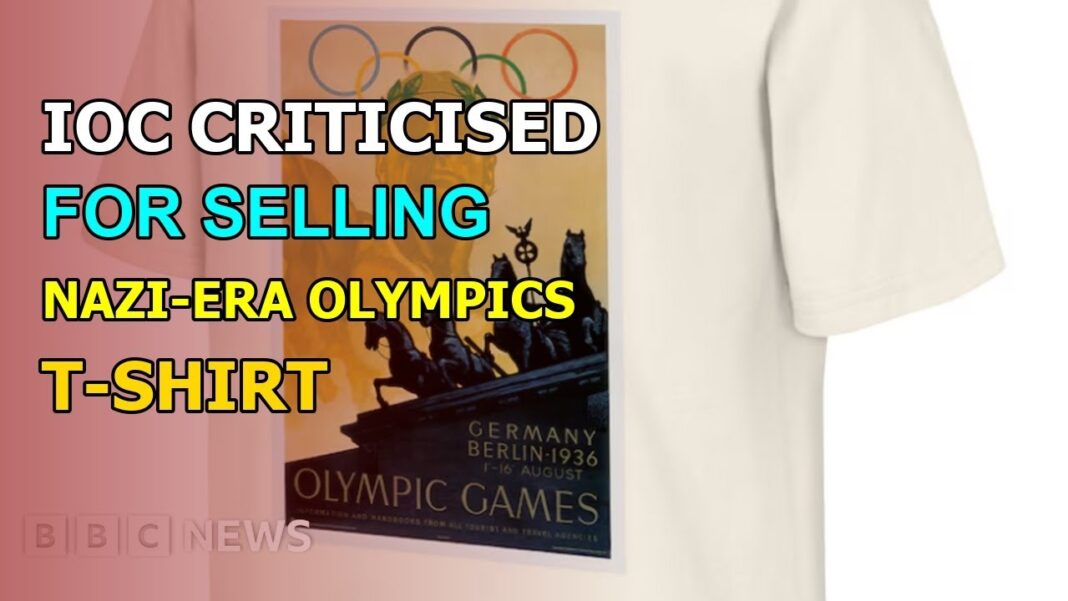
(TJV NEWS) T-shirts featuring artwork from the 1936 Berlin Olympics — staged under Adolf Hitler’s regime — have completely sold out on the International Olympic Committee’s official website, sparking backlash in Germany and beyond, as The Telegraph reported.
The shirts, priced at £34, are part of the IOC’s “heritage” collection and display the original poster created for the 1936 Games by artist Franz Würbel. The design incorporates classical imagery intended to connect Nazi symbolism with ancient Greece, including a golden male figure wearing a laurel wreath beneath the Olympic rings and above a quadriga atop Berlin’s Brandenburg Gate. The text reads: “Germany, Berlin 1936, Olympic Games,” along with the dates and location of the event.
The 1936 Games, hosted in Berlin while Hitler was in power, were widely regarded as a propaganda spectacle for the Third Reich. Nazi officials used the global sporting event to promote Aryan supremacy and project a polished image of the regime to the international community just three years before the outbreak of World War II.
Critics in Germany have urged the IOC to pull the merchandise from its website, arguing that the Games were a “central propaganda tool” of the Nazi regime. Klara Schedlich, a spokesperson for Germany’s Green Party, told local media that the event’s historical context cannot be separated from its imagery.
Despite those objections, the men’s shirts have sold out in every available size. In contrast, similar heritage shirts commemorating the Rome 1960, Tokyo 1964, and London 1908 Olympics remain available for purchase on the IOC’s online store.
The IOC has defended the product line, telling the BBC that the collection celebrates 130 years of Olympic art and design. While acknowledging the problematic role of Nazi propaganda during the Berlin Games, the committee emphasized that 4,483 athletes from 49 countries competed in 1936 and that their participation should also be remembered.
The Berlin Olympics remain one of the most controversial chapters in Olympic history. Nazi propaganda minister Joseph Goebbels orchestrated the Games to showcase regime iconography and soften Germany’s international image, even as the government remilitarized the Rhineland and intensified discrimination against Jews and Roma at home.
The event is also remembered for American track star Jesse Owens, who won four gold medals in Berlin — in the 100m, 200m, long jump, and 4x100m relay — undermining Nazi racial ideology. Hitler reportedly chose to congratulate only German victors and did not publicly shake Owens’ hand.
The controversy over the shirts comes during a separate dispute involving Olympic rules on political expression. As The Telegraph reported, Ukrainian skeleton racer Vladyslav Heraskevych was disqualified from the 2026 Winter Olympics after wearing a helmet honoring 24 Ukrainian athletes killed in Russia’s war. The helmet, worn during training in Cortina d’Ampezzo, featured portraits of the deceased athletes.
The IOC ruled that the display violated the Olympic Charter’s prohibition on political, religious, or racial demonstrations during the Games. Ukrainian President Volodymyr Zelensky criticized the decision, accusing the committee of effectively aiding aggressors by enforcing the restriction.
Together, the two controversies have renewed debate over how the IOC balances historical legacy, commercial interests, and political neutrality — especially when dealing with some of the most sensitive moments in Olympic history.
