



|
Getting your Trinity Audio player ready...
|
By: Fern Sidman
In a climate already fraught with geopolitical instability and intensifying global conflict, a new and deeply unsettling concern has taken root within the American national security establishment: the potential presence of covert Iranian operatives embedded within the United States. According to a report on Saturday in The New York Post, federal authorities and lawmakers are grappling not merely with the number of Iranian nationals apprehended at the southern border in recent years, but with a far more ominous unknown—how many may have entered undetected.
The issue, once confined to classified briefings and internal memoranda, has now emerged into public discourse with striking urgency. Officials across multiple agencies and political affiliations are warning that the threat is no longer hypothetical. Instead, it is increasingly viewed as a plausible and potentially imminent danger, particularly in light of escalating hostilities between the United States, Israel, and Iran.
The figures themselves, as highlighted in The New York Post report, are enough to give pause. Between 2021 and 2024, approximately 1,500 Iranian nationals were intercepted at the United States border. Subsequent data suggests that the number rose to roughly 1,650 between 2022 and 2025. Yet these statistics, significant as they are, represent only those individuals who were detected and detained.
The more pressing concern lies in the unknowable: those who may have evaded capture altogether. Senator Bill Hagerty, a member of the Senate Foreign Relations Committee, articulated this anxiety with stark clarity. “We have no idea how many people got around,” he warned, underscoring the inherent limitations of border enforcement mechanisms. The implication is as unsettling as it is unavoidable: even a small number of undetected entrants could pose a disproportionate threat if linked to hostile state actors.
Compounding these concerns is the revelation that roughly half of the intercepted individuals—approximately 700—were released into the country pending court proceedings. While such releases are not uncommon within the framework of immigration law, their application in cases involving nationals from a state designated as a sponsor of terrorism has raised profound questions about risk assessment and policy calibration.
The term “sleeper cell” evokes images of clandestine networks operating beneath the surface of ordinary life, awaiting activation at a moment of strategic significance. While often associated with the realm of fiction, the concept has long been a recognized component of asymmetric warfare and intelligence operations.
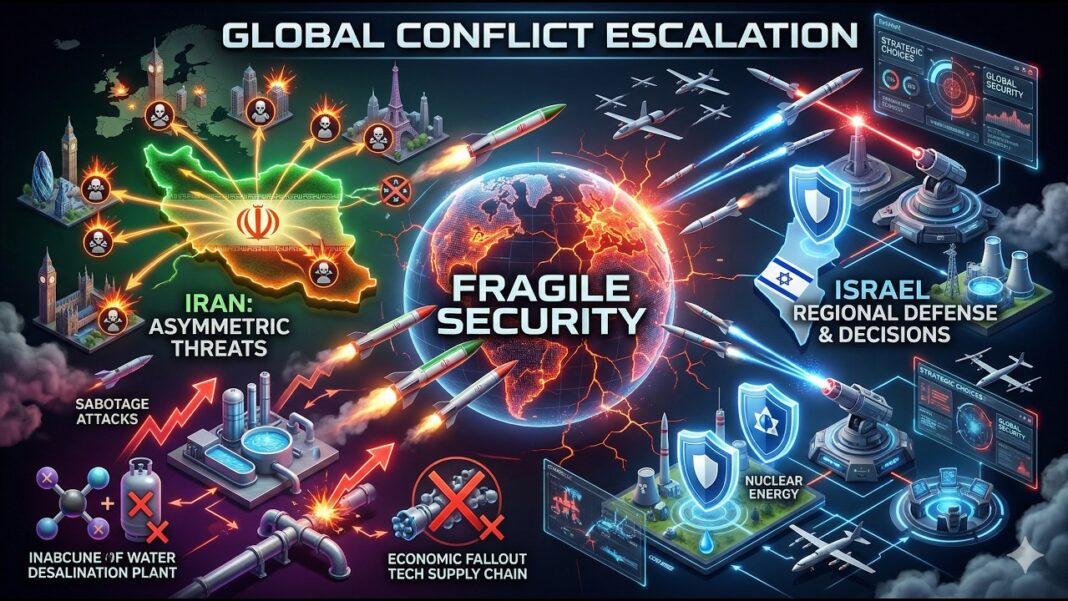
Recent federal alerts suggest that such concerns are no longer confined to theoretical scenarios. Authorities have warned of the possibility that Iran may seek to leverage “prepositioned sleeper assets” within the United States, particularly in response to sustained military pressure that has reportedly decimated elements of its leadership and infrastructure.
The logic underpinning this strategy is both simple and chilling. Unable to project conventional military power directly onto American soil, Iran could instead rely on covert operatives to carry out acts of sabotage, terrorism, or targeted violence. Such actions, even if limited in scale, would carry significant psychological and political impact.
Senator Hagerty did not mince words in conveying the gravity of the situation. “There’s a greater than zero percent probability that there’s a sleeper cell in America today,” he stated—a formulation that, while measured, leaves little room for complacency.
The heightened sense of alarm is not occurring in a vacuum. Rather, it is being fueled by a confluence of recent incidents and broader geopolitical developments that have underscored the permeability of domestic security.
Among the most disturbing episodes cited in discussions reported by The New York Post was an attempted attack on a synagogue in West Bloomfield, Michigan, involving a vehicle laden with explosives. In a separate incident, an individual linked to extremist networks opened fire at a university in Virginia, resulting in the death of a military instructor.
While these events have not been directly attributed to Iranian operatives, they serve as stark reminders of the diverse and evolving nature of threats facing the United States. The possibility that state-sponsored actors could exploit similar vulnerabilities adds a further layer of complexity to an already challenging security landscape.
The pathways through which individuals have entered the United States also merit close scrutiny. Investigations have identified São Paulo, Brazil, as a significant transit hub, particularly for those utilizing fraudulent travel documents. This underscores the transnational nature of the challenge, which extends far beyond the immediate confines of the United States border.
The use of third countries as staging points for entry complicates detection efforts and highlights the need for enhanced international cooperation. It also raises questions about the effectiveness of existing screening protocols and the extent to which they are equipped to identify individuals with potential ties to hostile regimes.
The issue has inevitably become entangled in broader political debates surrounding immigration and national security. President Donald Trump, speaking earlier this month, attributed the situation in part to what he characterized as lax border policies under the previous administration. “A lot of people came in through Biden,” he remarked, while asserting that authorities are monitoring known individuals.
Such statements reflect a broader narrative that links border security with counterterrorism, a connection that, while not new, has gained renewed prominence in the current context. Critics, however, caution against oversimplification, noting that the relationship between migration and security is complex and multifaceted.
Within Congress, concern appears to transcend party lines, albeit expressed with varying degrees of specificity. Senator Ron Wyden, constrained by the classified nature of intelligence briefings, nonetheless alluded to “a moment with a lot of safety challenges.” Similarly, Senator James Risch emphasized the need for vigilance, while Senator Rick Scott offered a blunt assessment: “It just takes one person.”
These statements, while differing in tone, converge on a common theme—the recognition that the threat, however diffuse, is real and requires sustained attention.
The evolving threat landscape has also reignited debates over the tools available to intelligence and law enforcement agencies. Meetings between senior officials, including FBI Director Kash Patel and CIA Director John Ratcliffe, and members of Congress have focused in part on the renewal of surveillance authorities deemed critical to tracking potential threats.
Such discussions underscore the delicate balance between security and civil liberties—a perennial challenge in democratic societies. While the need for effective intelligence capabilities is widely acknowledged, so too is the importance of ensuring that such powers are exercised with appropriate oversight and restraint.
As the United States navigates this period of heightened uncertainty, the question is not merely one of numbers or probabilities, but of preparedness. The possibility of sleeper cells—however difficult to quantify—demands a comprehensive and coordinated response that encompasses border security, intelligence gathering, international cooperation, and community resilience.
The warnings conveyed through reporting by The New York Post serve as a stark reminder that the nature of modern threats is both diffuse and dynamic. In an era where adversaries can operate across borders and through networks that defy traditional detection, vigilance must be both constant and adaptive.
Yet vigilance alone is not sufficient. It must be accompanied by a willingness to confront uncomfortable truths, to refine policies in light of emerging realities, and to invest in the capabilities necessary to safeguard the nation.
In the final analysis, the most unsettling aspect of the current situation may be its inherent uncertainty. The known figures—1,500 intercepted, 700 released—are significant, but they are overshadowed by the unknown.
How many entered undetected? How many, if any, are acting on behalf of hostile entities? And perhaps most critically, how prepared is the nation to respond should these threats materialize?
These are questions without easy answers. But as lawmakers, security officials, and citizens alike grapple with their implications, one conclusion emerges with unmistakable clarity: in the realm of national security, uncertainty is itself a risk—one that demands not complacency, but vigilance, foresight, and resolve.
