



|
Getting your Trinity Audio player ready...
|
By: Fern Sidman
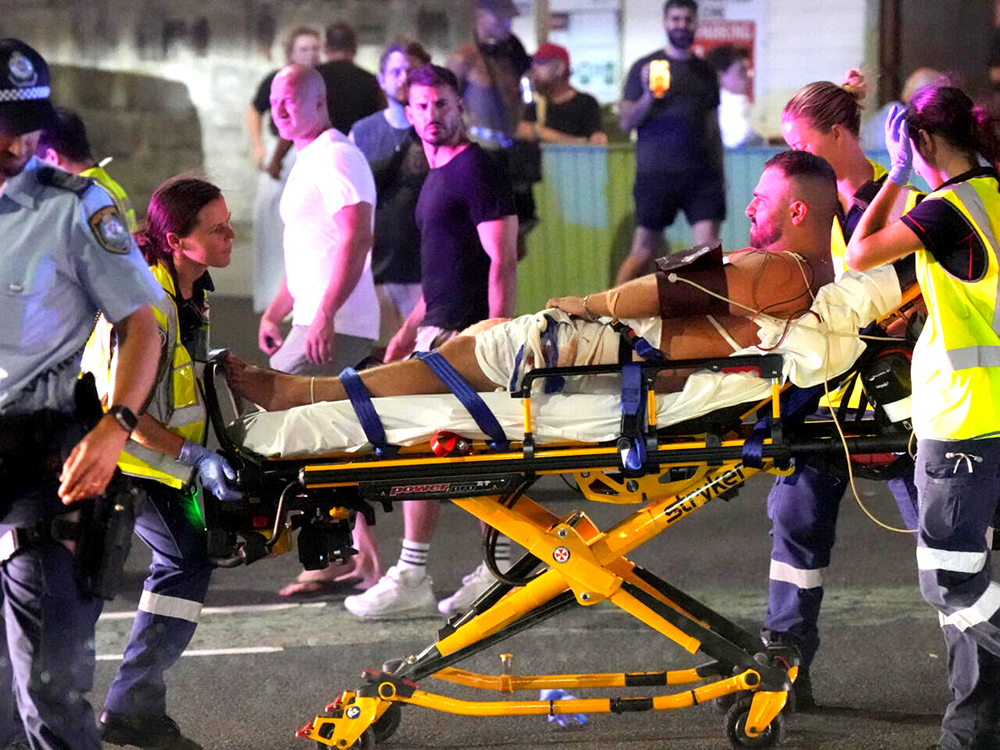
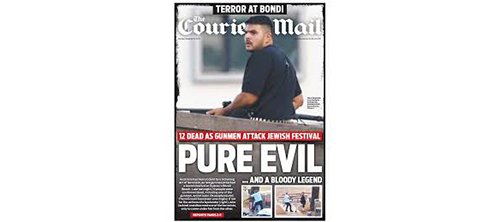
The massacre that unfolded on Sydney’s famed Bondi Beach during a Hanukkah celebration on Sunday has reverberated far beyond Australia’s shores, jolting Jewish communities worldwide and triggering an intensifying international investigation into whether the Islamic Republic of Iran orchestrated one of the deadliest antisemitic attacks in modern Australian history. As The Algemeiner reported on Monday, the attack left 15 people dead and at least 40 wounded in what authorities now acknowledge was a meticulously planned act of mass terror aimed squarely at a Jewish gathering.
What initially appeared to be a lone extremist attack has rapidly evolved into a far more ominous scenario. Israeli and Australian intelligence agencies are now jointly examining evidence suggesting that the Bondi Beach shooting was not only ideologically motivated but potentially coordinated, financed, or operationally guided by Tehran—or by one of its extensive network of Islamist terror proxies.
According to information provided in The Algemeiner report and corroborated by international media, investigators have uncovered evidence that the perpetrators had planned to deploy explosive devices alongside firearms, a development that dramatically raises the stakes surrounding the attack. While the explosives were ultimately defused before detonation, authorities say their presence indicates a level of sophistication inconsistent with a spontaneous or isolated act of violence.
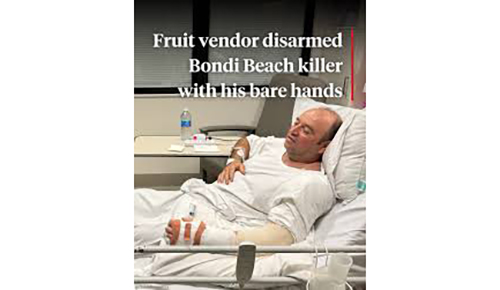
Israeli officials, speaking to the British newspaper The Telegraph, have expressed growing confidence that the attack bears the hallmarks of Iranian-backed terrorism. “We believe Iran is behind the attack,” one Israeli official told the paper, a claim The Algemeiner has noted aligns with longstanding intelligence assessments regarding Tehran’s global terror apparatus. “We are also investigating a connection with Hezbollah, Hamas, and a Pakistani terrorist organization.”
These groups—each sustained financially, militarily, or operationally by Iran—have long served as instruments of Tehran’s asymmetric warfare strategy, enabling the regime to strike Jewish and Israeli targets worldwide while maintaining plausible deniability. According to the information contained in The Algemeiner report, Israeli intelligence has documented a marked escalation in Iranian efforts over the past year to target Jewish communities abroad, particularly in Western democracies perceived as politically vulnerable or ideologically divided.
“In recent months, Iran has increased its activity to orchestrate attacks against Israeli and Jewish targets around the world,” a senior Israeli security official told Israel Hayom and in remarks frequently cited by The Algemeiner in its coverage of the expanding Iranian threat network. “There is no doubt that the direction and infrastructure for the [Bondi Beach] attack originated in Tehran.”
Perhaps most damning is Israel’s assertion that Australian authorities had been warned—explicitly and repeatedly—about credible Iranian plots targeting Jews in the country. According to The Algemeiner report, Israeli officials had shared intelligence earlier this year flagging heightened risks, including specific threats against Jewish institutions and communal gatherings.
Yet Israeli leaders now contend that those warnings were not met with sufficient urgency or protective measures. The failure, they argue, created a security vacuum that terrorists exploited with devastating efficiency.
Israeli Prime Minister Benjamin Netanyahu issued one of his most forceful rebukes yet of an allied government, accusing Australian Prime Minister Anthony Albanese of ignoring Israeli intelligence and contributing to an environment in which antisemitic violence could flourish.
“The Australian government’s policies pour fuel on the antisemitic fire,” Netanyahu said in remarks quoted by The Algemeiner. He pointed specifically to Canberra’s decision to recognize a Palestinian state in September, arguing that such moves “reward Hamas terror, embolden those who menace Australian Jews, and encourage the Jew hatred now stalking your streets.”
“Antisemitism is a cancer,” Netanyahu continued. “It spreads when leaders stay silent. You must replace weakness with action.”
Albanese rejected the Israeli leader’s accusations, insisting that his government’s priority is national unity and resilience in the face of terrorism. “Now more than ever, we must support the Jewish community during this incredibly difficult time,” the prime minister said, emphasizing solidarity with grieving families and broader Jewish communities across Australia.
Yet as The Algemeiner has noted, these assurances have done little to quell anger among Australian Jews, many of whom feel that official rhetoric has not been matched by concrete security guarantees—particularly amid a documented surge in antisemitic incidents over the past year.
The Bondi Beach massacre has thus become a flashpoint in a broader geopolitical and moral reckoning, exposing tensions between Israel and Australia over foreign policy, counterterrorism priorities, and the consequences of diplomatic signaling in an era of globalized jihadist violence.
Further complicating matters is the revelation, reported by Australia’s ABC and highlighted by The Algemeiner, that one of the alleged attackers, Naveed Akram, had been under surveillance by the Australian Security Intelligence Organization (ASIO) for six years due to his links to an Islamic State (ISIS) cell operating domestically.
That Akram remained at liberty despite years of monitoring has prompted uncomfortable questions about intelligence thresholds, legal constraints, and whether warning signs were overlooked in a system strained by competing priorities. While ISIS and Iran are ideological rivals, Israeli officials stress that Tehran has repeatedly demonstrated a willingness to collaborate tactically with Sunni extremist networks when it serves strategic objectives.
Australian authorities have not dismissed the possibility of Iranian involvement and are reportedly working closely with Israeli intelligence agencies to trace funding streams, communications, and potential foreign handlers. As The Algemeiner has reported, this cooperation marks a rare moment of deep intelligence alignment amid otherwise strained diplomatic relations.
Iran’s official response has only deepened suspicions. Foreign Ministry spokesperson Esmaeil Baghaei issued a vague condemnation of “terror violence and mass killing,” carefully avoiding any reference to antisemitism, Jews, or the specific nature of the target. “Terror violence and mass killing shall be condemned, wherever they’re committed,” Baghaei wrote on X.
Yet Iranian state and semi-official media outlets struck a sharply different tone. According to the information contained in The Algemeiner report, several Iranian platforms promoted conspiracy theories framing the massacre as a “false flag” operation orchestrated by Israel itself—an accusation long favored by Tehran in the aftermath of antisemitic attacks worldwide.
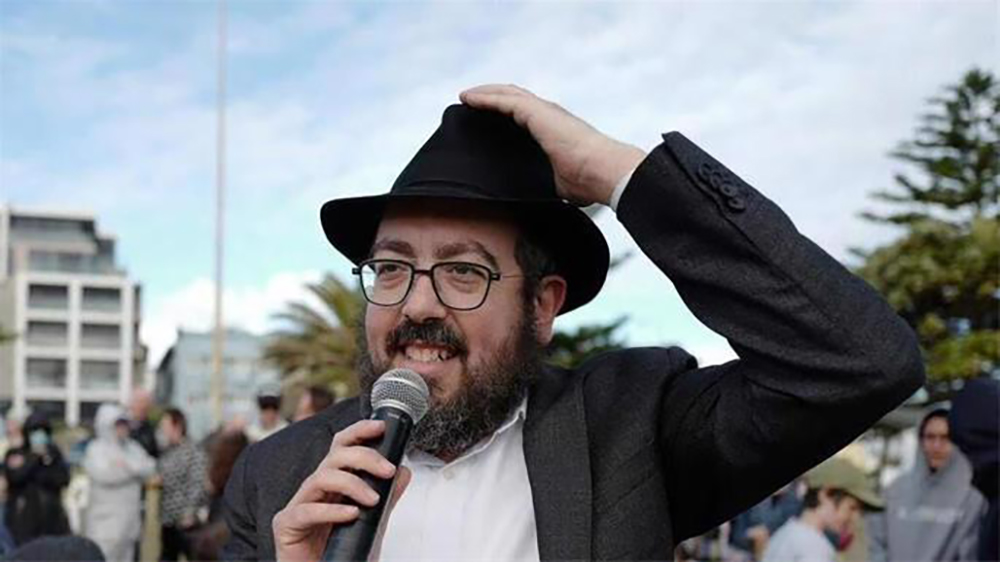
The Iranian news agency Mehr went further, explicitly labeling “the Zionist regime” as the primary suspect. Other outlets expressed outright support for the massacre, even praising it and vilifying one of the victims, Rabbi Eli Shlanger, falsely portraying him as a “staunch advocate of genocide in Gaza.”
Such rhetoric, experts say, is not merely propaganda but an integral component of Iran’s psychological warfare strategy—designed to incite further violence while insulating the regime from accountability.
The Bondi Beach massacre comes against the backdrop of a dramatic deterioration in Australia–Iran relations. As The Algemeiner report documented, Canberra severed diplomatic ties with Tehran in August, expelled the Iranian ambassador, and publicly accused the regime of masterminding multiple antisemitic arson attacks across Australia.
In November, Australia formally designated Iran’s Islamic Revolutionary Guard Corps (IRGC) as a state-sponsored terrorist organization, a move hailed by Jewish advocacy groups but condemned by Tehran as an act of hostility.
Australian officials have since stated that Iran was likely responsible for at least two major antisemitic attacks this year and possibly additional incidents still under investigation. The Bondi Beach massacre, many fear, represents the most lethal escalation yet in a covert campaign of intimidation and terror.
For Jewish communities worldwide, the events in Sydney are not viewed as an anomaly but as part of a grim continuum. As The Algemeiner has reported, Iranian-backed plots against Jewish targets have been uncovered in Europe, Latin America, Africa, and North America—often narrowly foiled, sometimes tragically successful.
The use of proxies, ideological incitement, and targeted violence against civilians has become a defining feature of Tehran’s external operations, particularly as the regime faces mounting internal unrest and international isolation.
The massacre at Bondi Beach has thus become a stark warning: that no Jewish community, no matter how geographically distant or politically integrated, is beyond the reach of globalized antisemitic terror.
As investigations continue, the imperative for accountability grows ever more urgent. Israeli officials have made clear that they expect not only justice for the victims but a fundamental reassessment by Western governments of how Iranian threats are confronted—and how intelligence warnings are heeded.
For Australia, the challenge is equally profound. Beyond grieving the dead and healing the wounded, the nation must confront difficult questions about security preparedness, political signaling, and the price of complacency in an era where hatred travels faster than ever.
As The Algemeiner report observed, the massacre at Bondi Beach is not merely an Australian tragedy. It is a global inflection point—one that demands clarity, courage, and an unflinching resolve to confront the forces that seek to turn celebrations of faith into scenes of carnage.
Whether that resolve materializes may determine not only the safety of Australia’s Jews, but the credibility of democratic societies in the face of an emboldened and relentless adversary.