



|
Getting your Trinity Audio player ready...
|
By: Carl Schwartzbaum
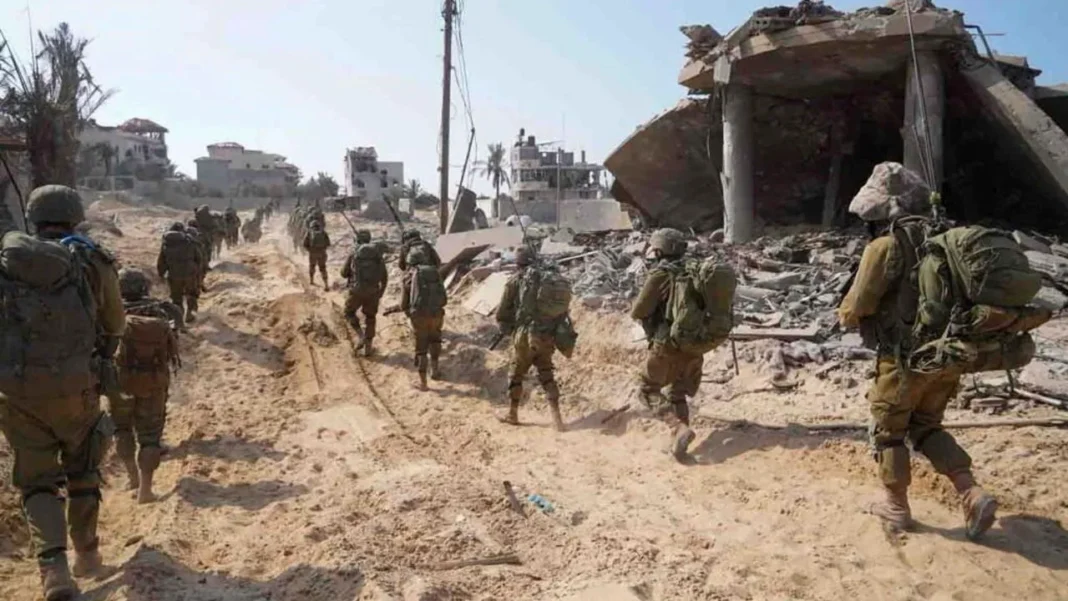
Israeli armored units pressed farther into Gaza City, with tanks reportedly advancing to the fringes of the Sabra neighborhood, according to Palestinian sources cited by Ynet News. The movement marks a significant escalation in the military campaign, coming just two days after Prime Minister Benjamin Netanyahu formally approved the Israel Defense Forces’ (IDF) plan to seize full control of the city.
The development coincides with growing domestic and international pressure over the fate of hostages held by Hamas, leaving Israel caught between a widening military operation and fragile negotiations mediated by regional and global actors.
Netanyahu’s office confirmed Thursday that the prime minister had authorized the IDF’s operational blueprint for taking Gaza City, declaring that “the defeat of Hamas and the release of our hostages go hand in hand.”
As Ynet News reported on Saturday, Netanyahu instructed his government to prepare for potential talks on a framework that could lead to the release of captives and possibly an end to the war — but only “on terms acceptable to Israel.” Officials indicated that the military was already laying logistical groundwork for urban operations, even as diplomatic channels remained gridlocked.
Despite his endorsement of the IDF plan, Netanyahu has not yet provided a timetable for negotiations, leaving uncertainty about whether talks will move forward in Doha or Cairo, where mediators from the United States, Egypt, and Qatar have been working to keep fragile dialogue alive.
At present, the only concrete proposal under discussion is a partial agreement put forward by Egypt and Qatar. As detailed in the Ynet News report, the draft envisions Hamas releasing 10 living hostages and 18 bodies in exchange for an unspecified number of Palestinian prisoners, including those serving life sentences.
The proposal would also impose a 60-day temporary ceasefire, coupled with expanded humanitarian access to Gaza under the supervision of the United Nations and the International Committee of the Red Cross.
Netanyahu has not dismissed the idea outright but has emphasized that Israel continues to favor a comprehensive settlement that goes far beyond temporary measures. His conditions include Hamas’s full disarmament, the demilitarization of the Gaza Strip, and the establishment of a non-Hamas governing authority to oversee the enclave. In return, Israel would consider releasing a broader number of Palestinian prisoners and facilitating reconstruction aid.
Such maximalist demands shine a spotlight on the wide gap between the Israeli government’s strategic objectives and Hamas’s own priorities — making a near-term breakthrough unlikely.
While diplomats weigh proposals, the military campaign has accelerated. For several days, IDF troops have operated extensively in the Zeitoun district of Gaza City. On Saturday, tanks reportedly rolled into Sabra, a neighborhood abutting Zeitoun, in what the Ynet News report described as a deeper thrust into the city’s dense urban core.
Military analysts note that such maneuvers reflect Israel’s determination to dismantle Hamas’s remaining infrastructure, including command nodes, tunnel networks, and weapons caches that remain embedded within civilian areas. The IDF has framed the Gaza City operation as critical to breaking Hamas’s chain of command, which has been steadily eroded in recent months through targeted strikes.
The hostage crisis added fresh layers of uncertainty on Friday when President Donald Trump asserted that fewer than 20 hostages remain alive in Gaza — a claim that contradicts Israeli government figures.
Israel’s hostage affairs coordinator, Gal Hirsch, moved quickly to correct the record, reassuring families that 20 hostages are confirmed alive, with grave concern for two additional captives, and 28 confirmed dead.
As reported by Ynet News, Hirsch’s intervention sought to prevent panic among hostage families, who have repeatedly accused the government of withholding information and dragging its feet in negotiations. The discrepancy between Trump’s remarks and Israel’s official numbers has nonetheless fueled speculation about the true state of intelligence regarding the captives.
Against this backdrop, families of hostages announced plans for a new wave of nationwide protests, demanding that the government prioritize the return of all captives over military escalation.
Organizers, speaking to Ynet News, argued that the continuation of large-scale operations in Gaza without a parallel hostage deal risks endangering the lives of those still held by Hamas. Their demonstrations are expected to draw broad public support, tapping into the growing unease across Israeli society about the length and cost of the war.
Netanyahu’s government thus finds itself at a crossroads: pressing forward with the IDF’s urban offensive while simultaneously facing domestic uproar and international calls for restraint. The dilemma, as Ynet News has reported, lies in reconciling Israel’s strategic aim of eradicating Hamas with the urgent humanitarian imperative of freeing the hostages.
For now, the military momentum appears to be with the IDF. Yet every kilometer gained in Gaza City comes at the cost of mounting pressure at home, where families and civil society groups insist that diplomacy must take precedence.
Saturday’s advance into Sabra symbolizes Israel’s determination to seize the heart of Gaza City, a campaign Netanyahu has endorsed as essential to defeating Hamas. But it also highlights the fraught balancing act confronting the government: fighting a war of annihilation against Hamas while negotiating for the lives of civilians trapped in captivity.
As Ynet News emphasized in its coverage, the outcome of this dual-track strategy will shape not only the fate of the hostages and the trajectory of the Gaza war, but also Israel’s broader political and moral standing in an increasingly skeptical international arena.
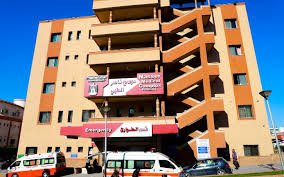
The Israel Defense Forces (IDF) confirmed Monday that it carried out a strike on Nasser Hospital in Khan Yunis, a facility that, according to Israeli intelligence, had been co-opted by Hamas operatives for hostile activities. The incident, which resulted in the deaths of at least 20 people—including several journalists—has drawn intense scrutiny and reignited debate about the use of civilian infrastructure in warfare. As VIN News reported, the military has emphasized that the hospital was being misused for terrorist purposes, while reiterating its regret over civilian casualties and its commitment to investigating the episode thoroughly.
According to details published by VIN News, Israeli intelligence determined that Hamas had installed a surveillance camera on the hospital’s rooftop to monitor IDF troop movements in Khan Yunis. A senior security source told Israel Hayom that the IDF had obtained authorization to neutralize the surveillance device, which constituted a direct operational threat to Israeli soldiers engaged in combat operations in the area. What began as a targeted action, however, escalated into a broader strike that inflicted severe collateral damage.
The IDF has stressed that it does not deliberately target medical facilities or journalists, but it cannot ignore the exploitation of such sites for military purposes. “We regret any harm to uninvolved civilians,” the military stated, underscoring its operational doctrine to minimize casualties even while acting decisively to protect its forces.
Palestinian media outlets reported that more than 20 individuals were killed in the strike, among them several journalists working for prominent international agencies. According to VIN News, those killed included Associated Press freelance reporter Mariam Abu Daqa, Al Jazeera cameraman Mohammed Salama, journalist Ahmad Abu Aziz, and Reuters photographer Hossam al-Masri.
The deaths of journalists in conflict zones invariably spark international outcry, and this incident is no exception. News agencies around the world have condemned the loss of their colleagues, while the IDF reiterated its policy that media personnel are never deliberate targets of military operations.
Chief of Staff Lt. Gen. Eyal Zamir has ordered a comprehensive investigation into the strike. As VIN News highlighted, the probe will focus on the intelligence chain of command, the authorization process for the strike, and whether the operational outcome matched the initial intention to disable a single surveillance device.
Military sources emphasized that Hamas’s systematic use of civilian infrastructure—including hospitals, schools, and mosques—poses profound challenges for the IDF, which is simultaneously expected to neutralize threats and uphold international humanitarian law. This latest strike illustrates the tragic consequences of such dual-use tactics, in which military and civilian functions are deliberately interwoven.
The Nasser Hospital strike fits into a wider pattern long documented by Israel and acknowledged by observers, in which Hamas embeds its operatives and assets within civilian settings. As VIN News noted, hospitals in Gaza have repeatedly been exploited as command posts, weapons storage sites, and observation points.
By placing surveillance equipment atop a medical facility, Hamas not only jeopardized the neutrality of the hospital but also effectively transformed it into a military target. Israeli officials argue that this tactic is designed both to deter Israeli action and to maximize international condemnation when inevitable civilian casualties occur.
The deaths of civilians and journalists are likely to intensify calls for restraint on Israel, particularly from international organizations and human rights groups. Yet, as VIN News observed, the IDF’s insistence that Hamas deliberately manipulates humanitarian spaces complicates the discourse. While critics focus on the human toll, Israeli officials stress that the greater moral outrage lies in Hamas’s cynical strategy of using hospitals as shields for its war machine.
For the residents of Khan Yunis, the strike represents yet another grim reminder of the precariousness of daily life in Gaza. Hospitals—normally bastions of refuge and healing—are increasingly drawn into the theater of war, eroding the very concept of civilian sanctuary.
The deaths of journalists will reverberate internationally, but the broader issue remains: Hamas’s embedding of military assets in civilian infrastructure forces impossible choices onto the battlefield. For Israel, the imperative to defend its soldiers intersects painfully with the humanitarian cost of striking targets woven into the fabric of civilian life. The outcome is not only a military and diplomatic challenge but also a profound moral dilemma that will continue to test the resolve and conscience of all parties involved.
The inadvertent killings prompted an immediate statement of regret from the Israeli Prime Minister’s Office (PMO). As The Jewish News Syndicate (JNS) reported, the government underscored that Israel’s war is against Hamas—not civilians—while reiterating that a thorough military investigation has already been launched into the incident.
In its formal statement, the PMO conveyed sorrow over the deaths of more than 20 people, among them five journalists affiliated with Reuters, the Associated Press, and Al Jazeera.
“Israel values the work of journalists, medical staff and all civilians,” the statement read, adding that “our war is with Hamas terrorists. Our just goals are defeating Hamas and bringing our hostages home.”
As JNS noted, the carefully worded expression of regret reflects Israel’s longstanding doctrine: that while civilian casualties are tragic, the moral and legal culpability ultimately rests with Hamas for embedding its fighters, weapons, and command structures within civilian infrastructure.
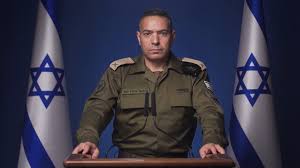
Brig. Gen. Effie Defrin, spokesperson for the Israel Defense Forces (IDF), emphasized in remarks cited by JNS that the IDF does not deliberately target civilians. “I would like to be clear from the start—the IDF does not intentionally target civilians,” he said, acknowledging that the strike near Nasser Hospital had resulted in reports of civilian casualties, including journalists.
Defrin stressed that the IDF is operating in an extraordinarily complex reality, one shaped by Hamas’s systematic exploitation of civilian sites. “Hamas terrorists deliberately use civilian infrastructure, including hospitals, as cover,” he said. “They have operated from the Nasser Hospital itself.”
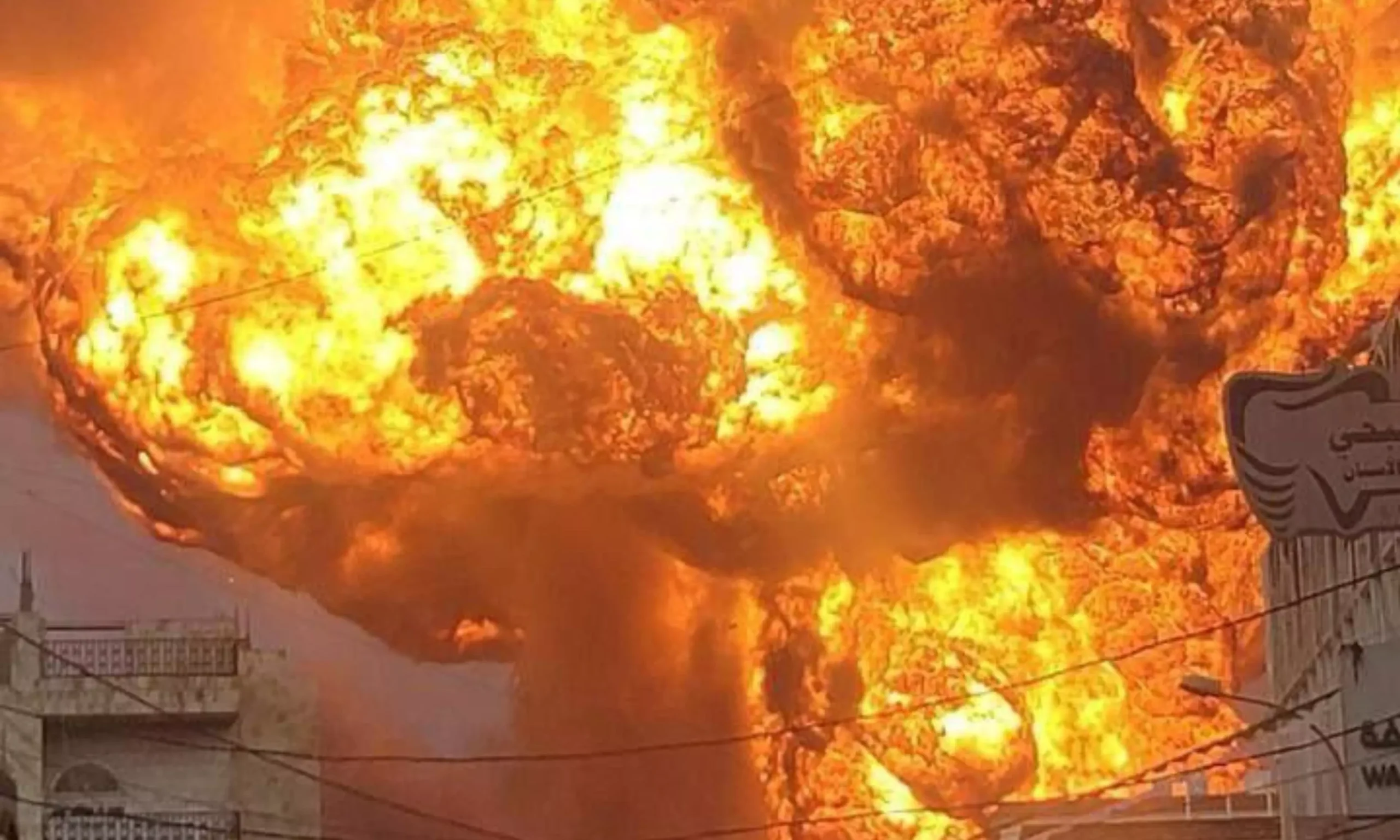
The Israel Defense Forces attacked several key locations in Yemen on Sunday, including in the capital Sanaa and the port city of Hodeidah, following the first-ever cluster missile fired by the Houthis at Israel on Friday night.
The IDF said the targets included a military compound housing the presidential palace, the Asar and Hizaz power plants, and a fuel storage facility, all of which were used by the Houthi terrorist regime to support its attacks.
“The use of these plants constitutes further proof of how the Houthi regime uses civilian infrastructure for military purposes,” said the IDF.
The strikes were in response to “repeated attacks by the Houthi terrorist regime against the State of Israel and its civilians, including the launching of surface-to-surface missiles and UAVs toward Israeli territory in recent days,” added the military.
The IDF noted that the Houthis operate under Iranian direction and funding to target Israel and its allies, and exploit the maritime domain to project power and conduct attacks against global shipping and trade routes.
“The Houthi terror regime is learning the hard way that it will pay and is paying a very heavy price for its aggression against the State of Israel,” Prime Minister Benjamin Netanyahu said on Sunday night.
“Anyone who attacks us—we attack them. Anyone planning to attack us—we attack them. I believe the entire region is learning the power and determination of the State of Israel,” he continued.
Added Defense Minister Israel Katz: “For every missile the Houthis launch at Israel, they will pay with compound interest.”
On Sunday, the Israeli Air Force revealed that the Houthis launched a cluster munition for the first time at the Jewish state, just after Shabbat began.
The IDF spokesman said on Sunday that “the missed interception last Friday is being investigated and is not related to the type of missile that was launched.
“The air defense systems, with an emphasis on the upper layer, know how to deal with and intercept missiles of this type, as they have intercepted [them] in the past,” the spokesman said.
(Upper layer air defense systems are designed to intercept long-range ballistic missiles at high altitude, including outside the atmosphere.)
It was initially suspected that Israel failed to intercept the missile because it had fragmented in mid-air. One piece fell into a backyard but no one was hurt.
The missile contained a warhead with 22 small, armed bombs, which explode when they fall. It’s an identical missile to one fired by the Iranians at Israeli territory in June, Israeli news site N12 reported.

It is not clear if the journalists were at the Nasser Hospital in Khan Yunis for medical care or to be with Hamas, knowing that it was a hospital and should not be used for military activities. [sarcasm]
Calling Netanyahu’s minimal requirements “maximalist” is another fake news media slander.