



|
Getting your Trinity Audio player ready...
|
\By: Fern Sidman – Jewish Voice News
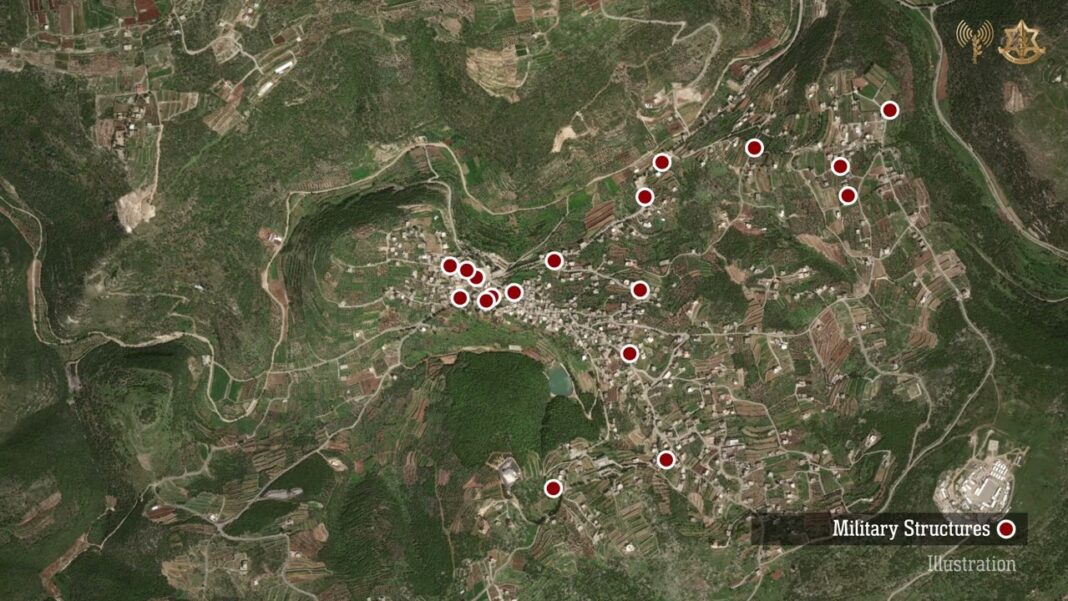
The Israel Defense Forces issued a stark warning Wednesday, accusing Hezbollah of systematically rebuilding terrorist infrastructure in the southern Lebanese village of Beit Lif in what Israeli officials say is a brazen and escalating violation of the year-old ceasefire agreement. According to reporting by VIN News, the IDF stated it had identified dozens of terrorist sites embedded within civilian spaces—an effort, it said, that reflects the Iran-backed organization’s broader strategy to restore its military capabilities across Lebanon’s rural landscape.
In a detailed statement, the army described what it called an extensive reconstruction campaign undertaken by Hezbollah since late 2024, singling out Beit Lif as a focal point of renewed operational activity. The IDF asserted that the group has established command centers, weapons storage depots, and logistical hubs in private homes and in close proximity to public facilities, using the village’s civilian character to shield itself from scrutiny and potential military response.
“The terror organization places these inside civilian homes of village residents and near civilian buildings and facilities,” the IDF said, according to the VIN News report, emphasizing that Hezbollah “continues to endanger the villages and their residents and exploits the civilian environment to advance terror activities.”
The November 2024 truce—brokered through intensive U.S. diplomatic engagement—had required Hezbollah to withdraw fighters and dismantle military infrastructure south of the Litani River. That agreement was credited by regional observers with halting 13 months of grinding violence that followed the Hamas-led massacre in southern Israel on October 7, 2023, an attack that precipitated heavy cross-border fighting between Israeli forces and Hezbollah units in Lebanon.
But as VIN News has reported consistently throughout the year, Israeli defense officials have expressed increasing frustration with what they characterize as Hezbollah’s deliberate and covert efforts to reestablish its military footprint in the very areas from which it was obligated to withdraw.
In its latest statement, the IDF argued that Beit Lif represents “one of many examples” of truce violations, describing an expanding network of militant infrastructure designed to increase Hezbollah’s readiness for future confrontation. Israeli intelligence assessments suggest that the organization has been rebuilding command nodes, reinforcing weapons caches, and embedding fighters in locations intentionally selected to maximize civilian exposure.
The IDF noted that Israeli officials had already reported a number of the Beit Lif installations to the U.S.-led international monitoring mechanism established to oversee compliance with the ceasefire agreement. Yet those warnings, Israel says, have “not been addressed,” raising concerns within the Israeli security establishment about what it views as ineffective enforcement of the truce’s most critical provisions.
“The presence of these terror infrastructures and the organization’s activity in these areas constitute a grave violation of the understandings between Israel and Lebanon,” the IDF stated, according to the report at VIN News. Military officials added that they will continue to “monitor these violations and act against them in order to remove any threat and protect the State of Israel.”
The statement reflects Israel’s growing impatience with international diplomatic channels and a sense that unilateral action may become necessary if Hezbollah’s reconstruction accelerates unchecked. Israeli analysts quoted by VIN News have warned that the situation in southern Lebanon risks returning to the pre-2024 environment, where Hezbollah maintained an entrenched military presence in villages along the border, often shielded behind civilian structures and institutions.
Hezbollah has yet to issue a public response to the latest IDF accusations. Historically, however, the organization has denied systematic breaches of the ceasefire while countering that Israel continues to violate Lebanese airspace and conduct strikes against what it describes as Hezbollah-linked targets. The group maintains that its positioning in southern Lebanon reflects defensive necessities and not a deliberate attempt to reignite conflict.
As VIN News noted in an earlier report, Hezbollah has repeatedly accused Israel of undermining the truce through reconnaissance flights, artillery fire, and targeted operations against specific militant cells. The organization often frames its activities as necessary responses to Israeli violations, creating a cycle of mutual accusation that complicates diplomatic oversight.
The cessation of hostilities achieved in November 2024 marked the end of more than a year of volatile exchanges along the Israeli-Lebanese frontier. The conflict began when Hezbollah launched rockets and anti-tank missiles into northern Israel following the Hamas-led massacre of October 7, drawing Israel into sustained engagements along the border.
While the ceasefire dramatically reduced the scale of violence, it did not eliminate it. As VIN News has documented, sporadic exchanges have continued over the past year, including Israeli airstrikes on alleged Hezbollah reconnaissance posts, suspicious movement along the border fence, and drone activity attributed to Hezbollah-linked operatives.
The latest IDF revelations about Beit Lif point to concerns that Hezbollah is laying the groundwork for a more extensive operational revival. Israeli defense commentators cited by VIN News have argued that Hezbollah’s rebuilding efforts indicate an intention to restore strategic depth in southern Lebanon, creating a fortified buffer that would facilitate future attacks on Israel or complicate Israeli defensive operations.
The village of Beit Lif, located just a few miles from the Israeli border, has often been referenced in Israeli defense reporting as a site of entrenched Hezbollah activity. According to intelligence assessments shared with VIN News, the area has historically hosted Hezbollah command cells, underground storage bunkers, and cross-border observation posts.
What makes the current allegations particularly sensitive is the IDF’s assertion that the rebuilt infrastructure is deliberately embedded within civilian homes and adjacent to public facilities such as schools, clinics, or municipal buildings. Israeli officials argue that this strategy is intended to deter Israeli military responses and create conditions under which any Israeli strike could be used for propaganda purposes.
The pattern mirrors the group’s tactics in the 2006 Lebanon War and other engagements, where Hezbollah placed rockets, ammunition, and communications equipment within densely populated neighborhoods.
The United States, which played a central role in brokering the 2024 ceasefire, has publicly reiterated the importance of preserving stability along the Israel-Lebanon border. Yet the IDF’s claim that complaints to international monitors have gone unanswered raises diplomatic questions about the truce’s enforcement mechanisms.
American officials have not yet commented on the specific allegations pertaining to Beit Lif. However, VIN News reported that Washington is closely monitoring developments, mindful that renewed escalation could undermine broader regional efforts to stabilize the post-October 7 landscape.
The IDF’s latest statement suggests a shift toward greater public transparency regarding Hezbollah’s activities, possibly signaling preparations for intensified diplomatic engagement or preemptive operational measures. Israeli military leadership has repeatedly emphasized that it will not tolerate a situation in which Hezbollah regains the military foothold it held before the ceasefire.
Defense officials stress that renewed terrorist entrenchment in southern Lebanon would pose direct threats to Israeli communities near the border, which endured months of rocket fire and evacuations during the 2023–2024 hostilities.
The evolving situation in Beit Lif reflects the fragility of the current calm along the Israeli-Lebanese frontier and highlights the enduring complexities of enforcing ceasefire conditions amid competing narratives, proxy dynamics, and persistent mistrust.
As the IDF continues to document what it calls “grave violations” and Hezbollah continues to reject responsibility for escalating tensions, the truce remains under significant strain. The coming months may reveal whether international oversight mechanisms can prevent renewed conflict or whether the patterns identified in VIN News reporting point toward a broader strategic confrontation yet to unfold.