



|
Getting your Trinity Audio player ready...
|
By: Fern Sidman
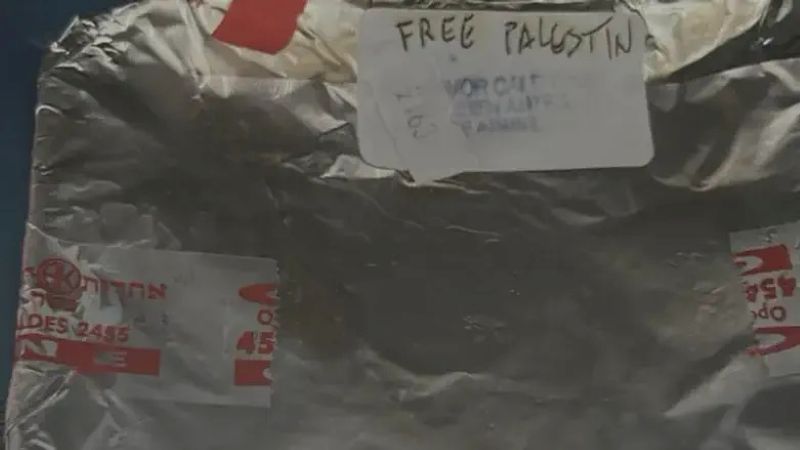
Jewish passengers aboard Iberia Airlines flight IB0102 from Buenos Aires to Madrid on Sunday night expected routine service. Instead, what they encountered has become the focus of international outrage and scrutiny: handwritten graffiti reading “Free Palestine” and the initials “FP” on their kosher meal trays.
As VIN News reported on Tuesday, Argentina’s leading Jewish organization DAIA immediately condemned the incident as a “serious act of antisemitism” and demanded a full investigation into how the markings were allowed to reach Jewish passengers aboard a flagship European carrier.
The episode, while seemingly confined to a handful of trays on a single transatlantic flight, has rapidly grown into a flashpoint in the broader debate about antisemitism in global travel spaces, the politicization of airline services, and the vulnerabilities of Jewish passengers in an era of heightened hostility.
The defaced trays were first discovered by Salvador Auday, a Jewish passenger traveling with his family. As he opened his kosher meal service, Auday found the slogans scrawled directly on the trays meant for religious passengers who require specially prepared food.
“I couldn’t believe it,” Auday later told Enfoque Judío in an interview cited by The VIN News. “Not only was my tray marked, but others who ordered kosher meals also had identical writing. It was clearly intentional, not an isolated accident.”
Passengers brought the matter to the attention of the Iberia crew. The crew reportedly apologized immediately, and in a rare move, the captain left the cockpit mid-flight to address passengers directly and express regret over the offensive markings. According to the report at VIN News, the captain’s intervention underscored the seriousness with which the incident was treated on board—but did little to erase the sense of unease among the targeted travelers.
The Delegación de Asociaciones Israelitas Argentinas (DAIA), Argentina’s principal Jewish umbrella organization, wasted no time in condemning the act. In a statement published by VIN News, DAIA labeled the graffiti “a direct and deliberate affront to Jewish passengers, reflecting not only antisemitism but also a gross breach of trust by those responsible for airline catering and security.”
DAIA further demanded Iberia immediately identify whether the graffiti originated with airline employees, third-party catering staff, or another point of contact in the food preparation and delivery chain. “Accountability cannot be vague or deferred,” DAIA stressed, insisting that Jewish passengers deserve assurance that they will not be singled out in such a targeted way.
The most likely source of the markings, according to passengers and initial reports, may be the airline’s catering provider. Large international airlines such as Iberia contract meal preparation to third-party companies, which are tasked with delivering meals that meet specific dietary requirements—including kosher.
Auday himself told Enfoque Judío, as reported by VIN News, that he suspected the graffiti was added by a catering worker rather than airline crew. “It seems more probable that the trays were marked before they ever reached the aircraft,” he said. Yet he emphasized that regardless of where responsibility lies, “we cannot normalize antisemitism.”
This distinction matters because catering facilities often employ hundreds of workers across multiple shifts. The process involves preparation, packaging, and delivery under strict timelines. Any breach in neutrality during this chain—particularly targeting meals earmarked for religious groups—raises questions about systemic oversight.
The Iberia case comes on the heels of another controversy involving the airline’s parent group, International Airlines Group (IAG). In July, Vueling Airlines, a subsidiary of IAG, came under fire after removing 52 French Jewish teenagers from a flight departing from Spain. The justification, according to crew members, was “rowdy behavior.” However, as the report at VIN News highlighted, accounts from passengers indicated that the disciplinary action was triggered after one of the students sang a Hebrew song on board.
Community leaders across Europe condemned Vueling’s actions, with some drawing direct parallels between the growing normalization of anti-Israel rhetoric and incidents of outright antisemitic targeting in public spaces. The Iberia graffiti incident, following so quickly after the Vueling controversy, has fueled perceptions of a troubling pattern.
Reactions to the Iberia incident have rippled across Jewish communities in both South America and Europe. The Jewish Community of Madrid called the graffiti “a vile act of hate that cannot be excused as political speech.” Meanwhile, international watchdogs, including the World Jewish Congress and the American Jewish Committee, urged Iberia to conduct a transparent investigation and make its findings public.
As the report at VIN News noted, DAIA has already initiated communication with Iberia’s Madrid headquarters and has requested an update on disciplinary or corrective measures. For Jewish leaders, the incident reflects a deeper trend: that antisemitic targeting is seeping into increasingly ordinary and controlled spaces, from schools and campuses to airlines and hotels.
Incidents of antisemitism on flights are not new, but the Iberia graffiti case represents an especially stark example. Air travel is one of the most regulated industries in the world, with catering operations, passenger interactions, and security procedures subject to layers of oversight. For antisemitic slogans to make it onto trays destined for Jewish passengers signals, in the eyes of Jewish leaders, a failure not only of oversight but also of basic safeguards meant to ensure neutrality in service delivery.
The VIN News report cited experts in international aviation law who noted that catering providers often operate in large facilities employing diverse staff, and airlines must enforce strict codes of conduct across all subcontractors. “When antisemitic graffiti slips into passenger service items, it points to a breach of both ethics and quality control,” one source told the outlet.
The Iberia case cannot be divorced from the broader international climate. Since Hamas’ October 7, 2023 massacre in southern Israel and the subsequent war in Gaza, antisemitic incidents have skyrocketed worldwide. According to recent FBI data, cited by VIN News, Jewish Americans alone faced nearly 2,000 hate crimes in 2024, accounting for more than two-thirds of all religion-based hate crimes in the United States.
European countries have also recorded sharp rises in antisemitic acts, from graffiti and harassment to physical assaults and desecration of Jewish sites. Jewish leaders warn that the normalization of anti-Israel slogans—such as “Free Palestine”—has increasingly blurred into direct hostility toward Jews, regardless of individual political views or national context.
As of this writing, Iberia Airlines has not issued a full public statement detailing the scope of its investigation. However, sources told VIN News that the airline has begun tracing its catering supply chain to determine where the graffiti originated. Iberia has reportedly pledged to cooperate with Jewish organizations and ensure that disciplinary measures will be taken if responsibility is identified.
The airline has also stressed, through internal communications, its commitment to ensuring the safety and dignity of all passengers. Yet for many Jewish leaders, words of reassurance will not be enough without concrete action.
Jewish leaders caution that the Iberia case is not an isolated incident but part of a growing global problem: the infiltration of antisemitic sentiment into routine spaces where Jews should expect neutrality and safety. DAIA has stressed that even seemingly “minor” incidents—such as slogans on meal trays—carry profound psychological weight, especially for communities already feeling targeted.
International watchdogs have called on all airlines to review their catering and service protocols, implement stricter monitoring, and ensure that Jewish passengers can rely on neutral, respectful treatment.
The discovery of “Free Palestine” graffiti on kosher meal trays aboard Iberia Airlines flight IB0102 has sparked outrage far beyond the confines of one aircraft cabin. The incident raises troubling questions about accountability, oversight, and the normalization of antisemitism in global travel.
For Jewish passengers, the graffiti was more than an inconvenience; it was a stark reminder that even in controlled environments like international flights, targeted hostility remains a reality. The case now serves as a litmus test for Iberia—and for the airline industry as a whole—on whether such incidents will be treated as isolated embarrassments or as urgent calls for systemic change.
