



|
Getting your Trinity Audio player ready...
|
Hebrew U Alumnus Joel Mokyr Wins 2025 Nobel Prize in Economic Sciences for Groundbreaking Work on Technological Progress & Sustained Growth
By: Fern Sidman
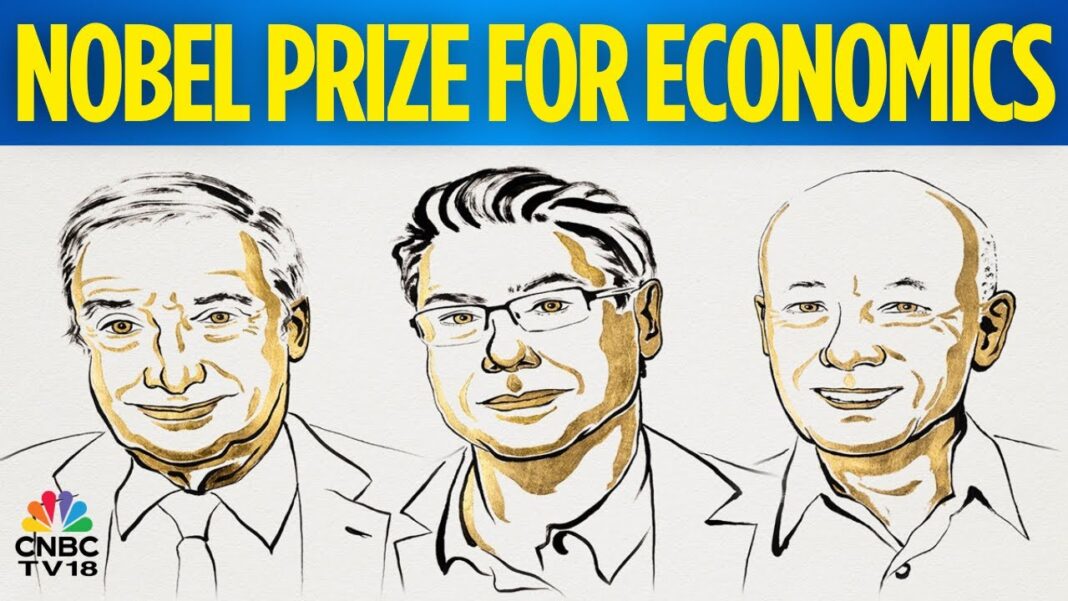
The Hebrew University of Jerusalem (HU) on Thursday proudly celebrated one of its own, announcing that Prof. Joel Mokyr, a distinguished alumnus and visiting scholar, has been awarded the 2025 Sveriges Riksbank Prize in Economic Sciences in Memory of Alfred Nobel for his pioneering research into the historical and theoretical foundations of sustained economic growth through technological innovation.
Mokyr, 79, an American-Israeli economic historian, shares the prize with Philippe Aghion of the Collège de France, INSEAD, and the London School of Economics, and Peter Howitt of Brown University. The Royal Swedish Academy of Sciences credited the trio with “explaining the mechanisms underlying sustained technological progress and the role of innovation in economic development,” noting that their work has “transformed our understanding of how knowledge, culture, and institutions combine to create enduring economic prosperity.”
Prof. Mokyr’s intellectual journey is, in many ways, a reflection of the evolution of modern economic thought itself—a bridge between the disciplines of history, economics, and philosophy of science. Born in Leiden, the Netherlands, to Jewish Holocaust survivors, Mokyr’s early life was marked by an acute awareness of both history’s fragility and humanity’s capacity for renewal. His family emigrated to Israel when he was young, settling in Haifa, where he later attended the Hebrew University of Jerusalem, completing his B.A. with honors in Economics and History.
From Jerusalem, he went on to pursue his doctorate at Yale University, establishing a career that would blend meticulous historical inquiry with sweeping theoretical insight. Now a professor at Northwestern University in Evanston, Illinois, and a lecturer at Tel Aviv University, Mokyr’s research has focused on the cultural and institutional conditions that make technological progress possible—and sustainable—over time.
As the Nobel Committee explained, Mokyr’s work “used historical sources as one means to uncover the causes of sustained growth becoming the new normal.” His research, particularly in his seminal works The Lever of Riches (1990) and The Gifts of Athena (2002), challenged conventional economic models by showing that innovation is not merely a byproduct of market forces, but a deeply cultural phenomenon—one shaped by society’s openness to knowledge, its respect for rational inquiry, and its willingness to embrace uncertainty.
“Mokyr demonstrated that for innovations to succeed one another in a self-generating process, we not only need to know that something works, but we also need to understand why it works,” the Nobel announcement noted. “This insight, which he traced back to the scientific culture of the Enlightenment and the Industrial Revolution, helps explain why certain societies transitioned to sustained growth while others stagnated.”
In a statement issued Thursday, Prof. Tamir Sheafer, President of the Hebrew University, hailed Mokyr’s recognition as “both a personal triumph and a testament to the enduring excellence of Hebrew University’s academic community.”
“Warm congratulations on this distinguished achievement,” Sheafer said. “Prof. Mokyr joins a long line of Nobel Prize winners who began their research careers at the Hebrew University. For us, this is further proof of our university’s central role as a birthplace of discovery and as Israel’s leading academic institution.”
Indeed, Hebrew University’s record speaks for itself. Now celebrating its 100th year, HU stands as Israel’s premier institution of higher learning, responsible for nearly 40% of the country’s civilian scientific research and holder of over 11,000 patents. Its faculty and alumni have earned ten Nobel Prizes and a Fields Medal, and its research legacy continues to shape global scholarship in fields from medicine to computer science, law, and agriculture.
In honoring Mokyr, the University also highlighted his role as a visiting professor and mentor to younger scholars in Jerusalem, many of whom have drawn inspiration from his interdisciplinary approach. “Joel’s work reminds us that economic theory divorced from history is sterile,” said Dr. Lior Kariv, a senior lecturer in economic history at HU. “He shows how culture, ideas, and curiosity—things that cannot be quantified—lie at the heart of all sustained human progress.”
For decades, Mokyr’s research has reshaped how economists understand the origins of modern prosperity. Rejecting deterministic models that emphasize geography or capital accumulation alone, he instead focused on knowledge as the ultimate engine of growth—and on the institutions and values that make knowledge thrive.
According to the Nobel Committee, Mokyr’s contribution “bridges the gap between economics and the humanities.” His use of archival data, correspondence between inventors, and cultural histories of the 18th and 19th centuries revealed that the Industrial Revolution was not a sudden rupture, but the culmination of a gradual, cumulative shift toward a society that valued rational experimentation and scientific explanation.
“Before the Industrial Revolution,” Mokyr argued, “many societies innovated but lacked the epistemic infrastructure—the scientific framework—to understand why innovations worked. This limited the scope of progress. It was only when explanations became as important as inventions themselves that growth became self-sustaining.”
In an era marked by renewed debates over artificial intelligence, automation, and economic inequality, Mokyr’s insights have found fresh relevance. His recent essays, including those written for The Journal of Economic History and VoxEU, examine how digital technologies mirror earlier transformations—and how societies must cultivate the same openness to intellectual experimentation that characterized the Enlightenment if they wish to avoid stagnation.
Mokyr shares this year’s Nobel Prize with Philippe Aghion and Peter Howitt, whose joint work on endogenous growth theory provided a formal mathematical framework for understanding how innovation drives long-term economic expansion.
Together, the three economists have connected the abstract models of modern growth theory with the empirical and historical record, creating what the Nobel Committee called “a unified theory of progress.”
Aghion and Howitt’s theoretical models describe how innovation, fueled by research incentives and competitive markets, leads to creative destruction and rising productivity. Mokyr’s historical research, by contrast, shows how these forces emerge and endure only in societies where knowledge is cumulative and culture rewards inquiry.
“Mokyr gave historical texture to what economists could only model,” said Prof. Ronen Feldman, a faculty member at Hebrew University’s School of Business Administration. “He showed that growth is not an equation—it’s a story about human curiosity and the institutions that protect it.”
Born in postwar Europe, educated in Jerusalem, and now a leading figure in American academia, Joel Mokyr embodies the cosmopolitan intellectual tradition that Hebrew University has long sought to cultivate. His life’s work reflects a deep belief in the power of knowledge to transform societies—a conviction rooted in his own family’s experience of survival and renewal after catastrophe.
“He never forgot that ideas, like people, can be destroyed—or can endure,” said one of his former students at Northwestern, now a senior researcher in innovation policy. “His scholarship teaches us that progress is fragile but achievable—that humanity’s greatest invention is the scientific method itself.”
That Mokyr’s Nobel recognition coincides with Hebrew University’s centennial year seems fitting. Established in 1925 with the vision of Albert Einstein, Sigmund Freud, Chaim Weizmann, and Martin Buber, the university was conceived as a haven for Jewish scholarship and a beacon for scientific progress in the modern world. Today, it continues that legacy as a global research hub, with over 23,000 students from 80 countries and partnerships that span continents.
According to American Friends of the Hebrew University (AFHU)—the university’s U.S.-based fundraising and outreach organization—Mokyr’s Nobel honor will serve as inspiration for the next generation of scholars. “His life story captures everything Hebrew University stands for: intellectual rigor, historical awareness, and the pursuit of truth for the benefit of humanity,” said AFHU President Patricia Glaser.
AFHU, which maintains regional offices across the United States, supports scholarships, faculty recruitment, and infrastructure projects at HU. For the past century, it has played a critical role in connecting the university’s mission with the global Jewish community and its allies.
In the long history of Nobel laureates, few have so elegantly intertwined economic analysis with cultural understanding. Prof. Mokyr’s work offers not only an explanation for how societies grow, but also a prescription for how they might endure. As he once wrote, “A society that ceases to believe in the possibility of improvement has already begun to decline.”
For the Hebrew University of Jerusalem, his Nobel Prize is not merely a reflection of individual brilliance but of an institutional ethos that values inquiry above ideology and evidence above expedience. It stands as a reminder that ideas—when nurtured in the right soil—can alter the course of nations.
In the words of Prof. Tamir Sheafer, “Joel Mokyr’s achievement is a triumph for human curiosity, for the humanities within the sciences, and for the enduring spirit of the Hebrew University. His work teaches us that progress is not given; it is earned, generation after generation.”
As Hebrew University enters its second century, Mokyr’s Nobel serves as both a capstone and a beginning—a reaffirmation that Jerusalem remains not only a city of faith, but also a city of knowledge, where the past and future of human understanding meet.
