



|
Getting your Trinity Audio player ready...
|
By: Arthur Popowitz
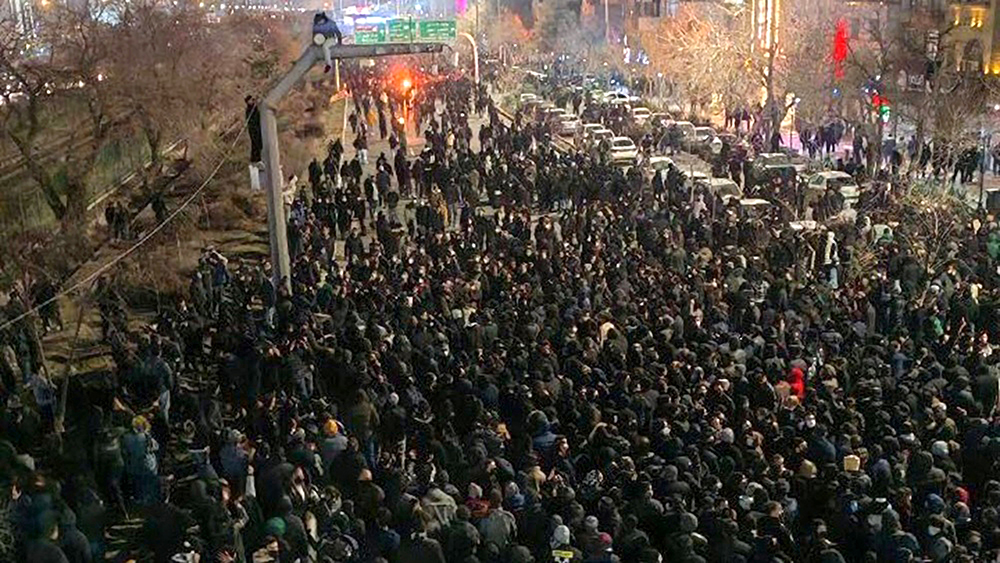
The streets of Iran, long accustomed to fear and repression, are now echoing with a new, more devastating sound: despair. Not the explosive fury of revolt alone, but a quieter, more corrosive anguish—one shaped by shattered expectations, crushed hope, and the growing belief that even the outside world has turned away.
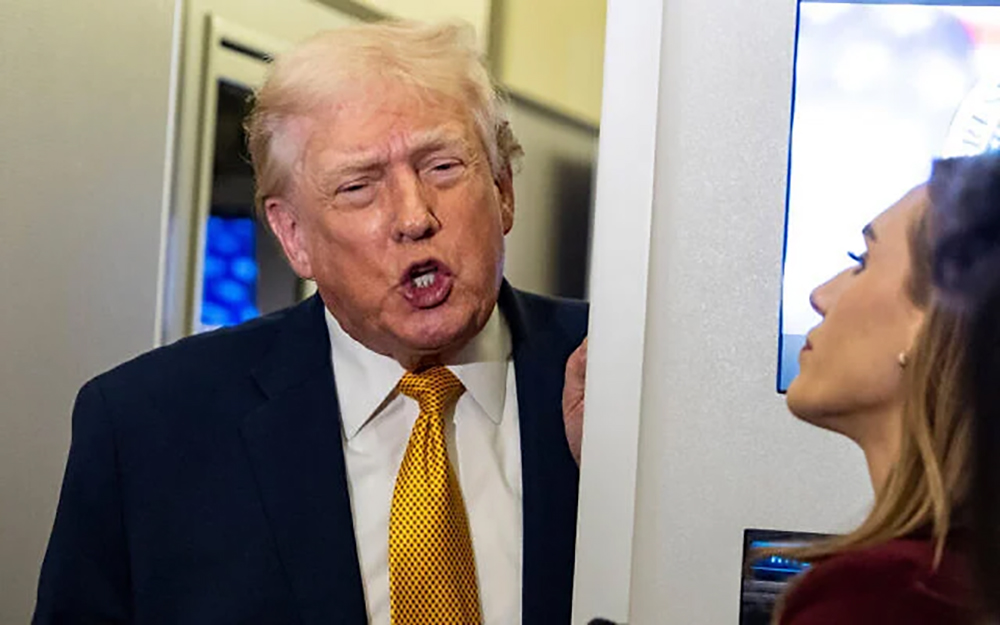
According to a report that appeared on Monday at Israel National News, voices emerging from Iran’s protest movement are no longer directed solely at the Islamic Republic’s clerical regime. Increasingly, they are aimed outward—toward the international community and, in particular, toward the United States and President Donald Trump, whom many Iranian protesters now accuse of abandoning them at their most desperate hour.
“He betrayed us,” one protester told the British Guardian in a statement that reverberated across opposition channels and was cited by Israel National News. “Trump betrayed us more than Supreme Leader Khamenei does, because Khamenei’s ideology and that of the Islamic Revolutionary Guards is clear. Trump promised and repeated the promise that he would strike anyone who fires at us.”
The words are raw, anguished, and psychologically revealing. For many Iranians, the betrayal they describe is not simply political—it is existential. The sense of abandonment is layered atop trauma, mass death, and a collective psychic rupture that has followed one of the most violent crackdowns in the modern history of the Islamic Republic.
“The bodies are intact, but the hearts and minds are broken,” the same protester said in words quoted by Israel National News. “For a moment, you feel happy that you finally managed to access the internet. And then immediately guilt hits you—why are you happy about this? Why are you still breathing? You are a useless person.”
These are not slogans. They are not chants. They are confessions. They speak to a population psychologically scarred not only by repression, but by prolonged isolation. Iran’s nationwide internet blackout, imposed during the crackdown, severed the country from the outside world, creating an informational darkness that mirrored the physical violence unfolding in the streets.
When the internet flickered back on, the emotional collision was devastating: relief at reconnection, immediately followed by survivor’s guilt.
Protesters articulated something even more disturbing—a collapse of political imagination itself.
“We are really feeling self-pity,” another protester said, according to the Israel National News report, “because we have become so miserable that we wait impatiently for another country to attack our land, hoping it will save us. And even then, there is no guarantee that it will happen.”
It is an extraordinary statement. A people reduced to hoping for foreign military intervention—not as conquest, but as rescue. Not as imperialism, but as salvation. It reflects a profound loss of faith in internal reform, international diplomacy, and moral pressure alike.
The emotional devastation unfolding inside Iran is inseparable from the scale of violence that produced it. While Tehran’s official narrative minimizes casualties and frames the unrest as foreign-instigated “riots,” independent reporting tells a radically different story.
As Israel National News has documented extensively, human rights organizations and opposition networks have reported tens of thousands of deaths linked to the regime’s suppression of the protests. The demonstrations, which began in early January over soaring living costs, rapidly transformed into one of the most serious challenges to the Islamic Republic’s clerical leadership in years.
The state responded with overwhelming force.
The government-imposed internet blackout ensured that the crackdown unfolded largely unseen by the global public in real time. What information has since emerged paints a picture of systematic violence, mass killings, and ruthless repression.
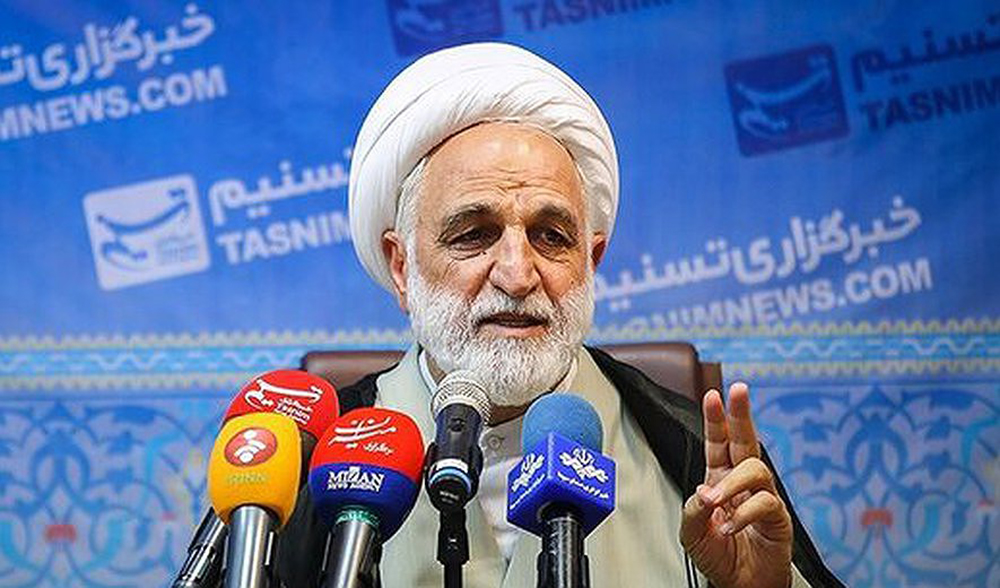
Iran’s judiciary chief, Gholamhossein Mohseni Ejei, made the regime’s posture unmistakably clear. Speaking through the official Mizan news portal and cited by AFP, he declared that those involved in the protests would face punishment “without the slightest leniency.”
“The people rightly demand that the accused and the main instigators of the riots and the acts of terrorism and violence be tried as quickly as possible and punished if found guilty,” he said, according to the information provided in the Israel National News report. He added that “the greatest rigor must be applied in the investigations,” insisting that justice required “judging and punishing without the slightest leniency the criminals who took up arms and killed people, or committed arson, destruction and massacres.”
The language is telling. The regime frames protesters as terrorists. Resistance as arson. Dissent as massacre. This linguistic inversion serves a political purpose: it transforms mass repression into “law enforcement” and mass killing into “justice.”
Tehran claims that 3,117 people were killed during the unrest, including 2,427 individuals it labels “martyrs”—a term reserved for security forces and bystanders, as opposed to “rioters,” whom it accuses of being incited by the United States and Israel. This framing, reported by Israel National News, reflects the regime’s effort to control both narrative and memory.
But independent figures diverge sharply.
The U.S.-based Human Rights Activists News Agency (HRANA), whose reporting has been repeatedly cited by Israel National News, published an updated assessment estimating 5,459 confirmed deaths, the vast majority of them demonstrators. More chilling still, HRANA noted that over 17,000 additional deaths remain under review, bringing the estimated total to approximately 22,490 fatalities linked to the suppression of the unrest.
Even more staggering figures emerged from Iran International, which reported—based on classified documents and testimonies from medical teams and families—that more than 36,500 Iranian civilians were killed in Tehran alone during just two days in early January.
Whether the true figure is twenty thousand, thirty thousand, or more, the scale is catastrophic. The term “crackdown” begins to feel insufficient. What emerges instead is the image of mass slaughter—a state deploying overwhelming force against its own population.
Dr. Eyal Hulata, former head of Israel’s National Security Council, did not mince words in an interview cited in a report on Sunday by Israel National News.
“This is a mass slaughter on a scale we haven’t seen within just a few days,” he said. “The fact that this is happening in our region should shake the foundations.”
At the center of Iranian protesters’ anger stands President Trump. His rhetoric had raised expectations. His warnings had sounded unequivocal. He had repeatedly threatened military intervention if Iran executed protest detainees. He had publicly stated that executions would trigger consequences.
When Trump claimed Tehran had paused more than 800 planned executions, his tone softened. But even then, he announced the deployment of a “massive fleet” toward Iran “just in case,” as Israel National News reported following his return from Davos.
To many Iranians, the message was confusing at best, and deceptive at worst.
Dr. Hulata offered a sober strategic interpretation. According to his analysis, as reported by Israel National News, Trump has not yet made a decision to attack Iran, and significant deliberations are still underway.
“It doesn’t look like Trump has made a decision,” Hulata said. “This is not how you organize an attack—when you talk about it so much. The Americans would also need an element of surprise, at least tactically. The fact that everyone is talking about it nonstop is a sign that it’s not really happening.”
This assessment spotlights a brutal reality: geopolitical signaling is not the same as action. Military posturing is not the same as intervention. And rhetorical threats do not necessarily translate into force.
Hulata suggests that U.S. pressure may instead be aimed at forcing Tehran back to negotiations, particularly over its nuclear program.
“Perhaps, as a result of the pressure, they will manage to get the Iranian leader to say he agrees to their terms, come to the negotiating table, and halt the nuclear program, including enrichment,” he said. “He is weak right now and has no cards to play—so everything is a matter of power equations.”
But for Iranians bleeding in the streets, power equations offer little solace.
One of the most haunting elements of Hulata’s analysis is his warning that the moment for decisive action may already have passed.
“The protests have been completely crushed,” he told Israel National News. “There are apparently tens of thousands of Iranian fatalities, and the public has been driven back into their homes. If this ends without a coup and without success, it’s not good for President Trump.”
He continued: “There was an American window of opportunity that was significant both for the Iranian public and for catching the regime before it organized and hid its assets—and it’s possible that window has passed.”
This is the strategic tragedy at the heart of the crisis. Revolutions, uprisings, and mass movements depend on momentum, visibility, and external pressure. Once repression succeeds in isolating, fragmenting, and terrifying a population, the political terrain shifts.
The Iranian regime has survived not because it is loved, but because it is feared—and because it has proven capable of absorbing international condemnation without fundamental consequences. The regional dimension further complicates the picture. Any American strike on Iran would carry massive geopolitical implications, including the risk of regional escalation.
When asked whether an American attack would necessarily trigger Iranian retaliation against Israel, Hulata responded with strategic clarity. “Necessarily is a strong word,” he said. “I think it would be a very big mistake on their part to attack Israel in response to an American strike. Israel would respond forcefully, and those would be very expensive and critical infrastructure targets for the Iranian regime and economy. Israel would be freer to act in this regard than the Americans.”
This calculus, as reported by Israel National News, highlights Israel’s deterrent posture and its operational freedom of action compared to U.S. constraints. But it also underscores the broader reality: any military move against Iran would not remain contained. It would reshape the regional order.
What remains, above all, is the human dimension—the psychological devastation of a population that feels simultaneously crushed by its rulers and abandoned by the world.
The protesters’ words reflect not only rage, but humiliation. Not only anger, but internalized despair. Not only fear, but self-erasure. The statement “why are you still breathing, you are a useless person?” reveals a society where survival itself has become a source of guilt. And the line “we wait impatiently for another country to attack our land” reveals a collapse of national agency—a people who no longer believe they can shape their own destiny.
As Israel National News reported, the Iranian people are not the regime. The state and the society exist in a permanent state of tension. The Islamic Republic governs through coercion, not consent. Yet history shows that regimes sustained by fear often outlast moments of uprising, especially when the international community hesitates.
This crisis exists at the intersection of strategy and morality, power and suffering, diplomacy and death. It is shaped by calculations in Washington, Tehran, Jerusalem, and regional capitals—but it is lived in alleyways, hospitals, prisons, and homes across Iran. For the protesters, geopolitics is not abstract. It is measured in funerals. In disappearances. In shattered families. In unmarked graves.
For the world, Iran is often discussed in terms of nuclear enrichment, regional influence, proxy wars, and strategic balance. For Iranians, it is a daily struggle for dignity, survival, and voice.
The tragedy is that both realities coexist—and often collide.
As the Israel National News report documented, the massacre of Iran’s protesters is not merely a domestic Iranian issue. It is a global moral test: of whether mass repression can proceed without consequence, whether authoritarian violence can be normalized, and whether human suffering can be subordinated to diplomatic caution.
The streets of Iran may be quieter now. The protests may have been crushed. The internet blackout may have lifted. But silence does not mean peace. It means trauma. It means fear.
And it means a population waiting—no longer for reform, no longer for negotiation, no longer even for justice—but for the world to decide whether their lives matter enough to act.
In that silence, the most devastating sound is not gunfire. It is abandonment.
