



|
Getting your Trinity Audio player ready...
|
By: Fern Sidman
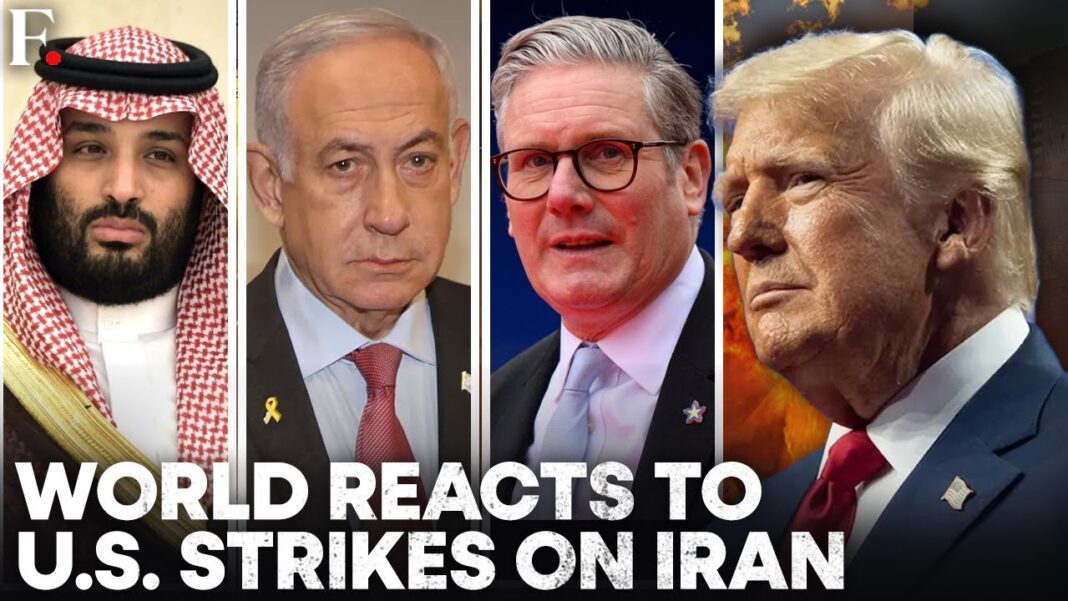
In a bold move that has sent seismic reverberations across the globe, President Donald J. Trump authorized direct U.S. airstrikes on three of Iran’s core nuclear facilities on June 21, marking the most significant American escalation against Tehran in recent memory. In a nationally televised address on Saturday night, Trump declared the attacks a “complete and total obliteration” of Iran’s nuclear enrichment infrastructure and issued a stark ultimatum: “Iran, the bully of the Middle East, must now make peace. If they do not, future attacks will be far greater and a lot easier.”
As reported in TIME.com, the strikes represent a historic convergence of U.S. and Israeli military efforts against Iran’s nuclear program. They have drawn an urgent chorus of global reactions—from cautious support to outright condemnation—highlighting just how volatile the Middle East crisis has become.
According to the information provided in the TIME.com report, Iran’s government has responded furiously, with Foreign Minister Abbas Araghchi warning of “everlasting consequences” and accusing the United States of violating the U.N. Charter and the Nuclear Non-Proliferation Treaty (NPT). Tehran has requested an emergency meeting of the United Nations Security Council, seeking to marshal international censure.
The United Nations, meanwhile, expressed alarm at the implications of the strike. Secretary-General António Guterres issued a strongly worded statement calling it “a dangerous escalation in a region already on the edge,” and urged all parties to de-escalate immediately. “There is no military solution,” Guterres said via TIME.com, stressing that only diplomacy could restore stability.
European reactions have largely leaned toward caution and calls for restraint. European Commission President Ursula von der Leyen, in a post cited by TIME.com, reiterated that Iran “must never acquire the bomb” but insisted that “the negotiating table is the only place to end this crisis.” France echoed this view, opposing Iran’s nuclear ambitions while condemning the strikes as a dangerous disruption to diplomatic channels.
The United Kingdom, under Prime Minister Keir Starmer, took a firmer stance on Iran’s culpability, labeling its nuclear program “a grave threat to international security,” and urging Tehran to return to negotiations.
Czechia, however, broke with broader EU consensus, defending the U.S. strikes as “an understandable effort to prevent Tehran from developing nuclear weapons,” a sentiment reported in the TIME.com report.
The U.S. strike has provoked a spectrum of responses from across the Americas. The TIME.com report noted that Argentine President Javier Milei, a known Trump ally, tacitly endorsed the attack by amplifying a post celebrating it as “a great day for Western civilization.”
By contrast, Chilean President Gabriel Boric condemned the operation as a violation of international law. “Having power does not authorize you to use it in violation of the rules we have established as humanity,” Boric declared. Mexico and Canada issued similarly reserved responses. While Canadian Prime Minister Mark Carney acknowledged that “Iran can never be allowed to develop a nuclear weapon,” he emphasized the need to return to diplomacy immediately.
In an ironic twist, Pakistan, which had recently announced plans to nominate Trump for the Nobel Peace Prize, condemned the strikes as “violations of international norms,” according to the report at TIME.com. Islamabad insisted Iran had the right to defend itself.
From China to the Gulf States, the reaction has largely skewed negative. Chinese state media condemned the operation as a violation of the U.N. Charter, accusing the U.S. of exacerbating instability. India, attempting to walk a diplomatic tightrope, urged “immediate de-escalation” and reportedly reached out directly to Iranian leadership in the aftermath of the attacks.
Perhaps most revealing were the muted yet significant statements from Saudi Arabia and Oman—two nations often caught between supporting U.S. strategy and fearing the consequences of regional conflict. Riyadh, in a statement reported by TIME.com, expressed “deep concern” and called for restraint. Oman, which had been quietly facilitating backchannel talks between Washington and Tehran, denounced the strikes and warned of a potential breakdown in future diplomacy.
In Jerusalem, however, the response was one of unambiguous gratitude. President Trump personally thanked Israeli Prime Minister Benjamin Netanyahu during his address, revealing the deep coordination behind the strike. Netanyahu responded with characteristic directness: “President Trump and I often say peace through strength. First comes strength, then comes peace.”
Israeli President Isaac Herzog added that the strikes were a “decisive moment” in the global fight against terrorism. “This brave step serves the security and safety of the entire free world,” Herzog said, urging further action toward releasing Israeli hostages in Gaza.
As the TIME.com report observed, this moment has solidified a strategic alignment between Washington and Jerusalem that has now shifted from rhetoric to action.
As the U.N. prepares for emergency deliberations and world capitals recalibrate, one reality looms large: the possibility of retaliatory strikes from Iran or its proxies. The Pentagon has already elevated its alert posture, and 40,000 U.S. troops in the region remain on standby, according to the report at TIME.com.
But while military analysts assess operational outcomes, world leaders are increasingly focused on the path forward. Spain, Ireland, and India all reiterated the need for diplomacy. Ukraine, preoccupied with its own wartime evacuations, remained neutral but noted it had conducted successful civilian evacuations from Israel and Iran.
The TIME.com report indicated that the June 21st strike represents more than just a tactical military operation; it is a geopolitical gambit that tests the international order’s resilience in the face of preemptive force. For supporters, it is the decisive intervention that may stall Iran’s nuclear ambitions. For critics, it is a violation of global norms with potentially catastrophic consequences.
As the world braces for Tehran’s response and diplomats race to reassemble the wreckage of dialogue, one truth emerges with clarity: the balance of power in the Middle East has shifted. Whether that shift marks the beginning of a new stability or the descent into wider war is now a question for both generals and negotiators—and the answer may be found not in missiles, but at the negotiating table.
