



|
Getting your Trinity Audio player ready...
|
By Fern Sidman
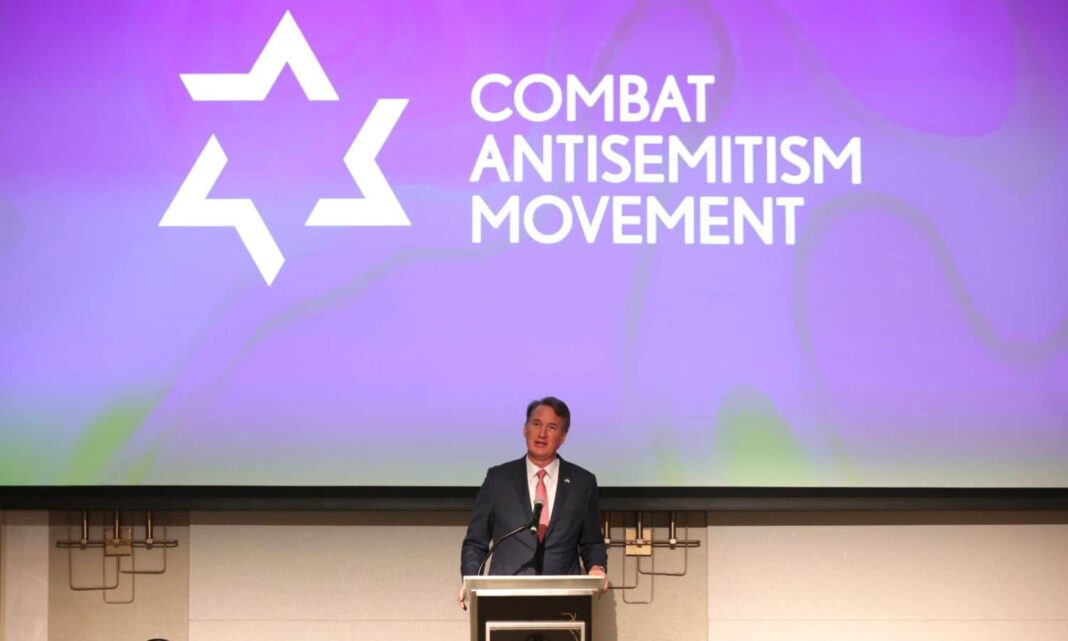
In a sobering and unprecedented warning to the international community, the Combat Antisemitism Movement (CAM) has released its 2024 Annual Report, documenting what it calls the worst global wave of antisemitism since the Holocaust. According to the data compiled by CAM’s Antisemitism Research Center (ARC), a staggering 6,326 incidents of antisemitism were recorded worldwide in 2024—marking a 107.7% increase over 2023, which had already seen a 58.6% rise over the previous year.
“This is the most severe wave of antisemitism since the end of the Second World War,” said Sacha Roytman, CEO of CAM. “Jewish communities around the world are under siege from all sides, facing violence, harassment, and systemic discrimination. The international failure to address this crisis is endangering Jewish life globally.”
The CAM report offers a deeply granular look at the ideological, geographic, and institutional vectors of contemporary antisemitism. Its findings point to a radical shift in the global nature of anti-Jewish hate, now increasingly led by far-left ideologies under the guise of social justice activism, particularly through anti-Zionist rhetoric and movements on university campuses.
Perhaps the most striking revelation in the report is the 324.8% surge in far-left-motivated antisemitic incidents, which now account for 68.4% of the global total. These incidents are overwhelmingly tied to radicalized political discourse, particularly those targeting the Jewish state of Israel. According to ARC’s data, 96.4% of far-left incidents were explicitly linked to anti-Zionist and Israel-related narratives.
Terms such as “Israeli apartheid,” “settler-colonialism,” and “genocide” featured prominently in slogans and social media posts connected to incidents. CAM’s report warned that such language has shifted from criticism of Israeli policies into rhetorical frameworks that seek to delegitimize Jewish identity and Jewish self-determination.
In contrast, far-right antisemitic incidents dropped by 54.8%, although the CAM report noted that such cases were more prone to physical violence, vandalism, and the use of explicitly neo-Nazi rhetoric.
Islamist-motivated antisemitism also saw a significant 44.3% increase, fueled by Middle Eastern conflicts, online incitement, and diaspora-based extremist networks. The CAM report connected this trend to the exploitation of regional conflicts—especially in Gaza and Lebanon—for global propaganda purposes.
Equally concerning, CAM noted a sharp increase in unattributable antisemitism—acts of hate that did not stem clearly from any particular ideological source. This trend, the report warned, points to the mainstream normalization of antisemitic attitudes in global media, pop culture, and online spaces.
To better analyze this shifting landscape, ARC introduced the “CHAI” categorization system in 2024—an acronym that classifies antisemitic incidents by their rhetorical expressions: Classical Antisemitism, Holocaust Denial or Trivialization, Anti-Zionism as Antisemitism, Islamist Propaganda, and Unattributable Hate.
This framework, CAM says, is critical for capturing the rhetorical complexity of modern antisemitism, which increasingly merges traditional tropes with coded ideological language.
Universities emerged as the epicenter of far-left antisemitism in 2024. CAM tracked 1,069 campus-based antisemitic incidents in the United States alone—a 120.8% increase from 2023. Student groups such as Students for Justice in Palestine (SJP), Faculty for Justice in Palestine (FJP), and Jewish Voice for Peace (JVP) were cited as key organizers of anti-Israel encampments, vandalism, and targeted harassment of Jewish students.
More than 150 university campuses across the United States hosted anti-Israel protest encampments in the spring of 2024, many of which became incubators for antisemitic hate speech, intimidation, and physical threats. The CAM report described these encampments as ideological hubs where criticism of Israel crossed the line into classic forms of antisemitic demonization.
CAM also raised alarm over the institutional spread of antisemitism in European academia. In 2024, five Norwegian universities and 76 Spanish institutions—under the umbrella of CRUE (Conference of Rectors of Spanish Universities)—cut ties with Israeli universities, aligning with the Boycott, Divestment, and Sanctions (BDS) movement.
According to CAM’s report, these decisions reflect a dangerous precedent: the transformation of activist boycotts into official policy, where Jewish identity and academic exchange with Israel become grounds for institutional exclusion.
Geographically, the United States and Western Europe accounted for 70.6% of all recorded antisemitic incidents in 2024, with alarming concentrations in several key regions.
In the United States, the states of New York, California, Washington, D.C., Illinois, and Pennsylvania made up more than half of all cases, with many clustered around major urban universities.
In Western Europe, over 80% of incidents took the form of hate speech, often disseminated via social media or at public demonstrations, but increasingly accepted within mainstream political discourse.
CAM: A Global Coalition Against the World’s Oldest Hatred
Founded to unify efforts against antisemitism in all its modern forms, the Combat Antisemitism Movement (CAM) works with over 850 partner organizations and reaches a global audience of more than five million people. As noted in the report, CAM is non-partisan, interfaith, and inclusive, committed to creating a future free of bigotry for Jews and all humanity.
Sacha Roytman concluded the report’s presentation with a grave warning and a call to action: “This isn’t just a Jewish problem—it’s a moral crisis for the world. The rise in antisemitism is a barometer of broader social decay. If we fail to stop it now, we risk the unraveling of the very principles of tolerance, democracy, and human dignity.”
As CAM’s 2024 report makes clear, antisemitism is no longer the purview of fringe ideologies—it is now embedded in cultural, academic, and political institutions, weaponized through activism, and perpetuated by silence. Unless governments, universities, and civil societies confront this growing threat head-on, Jewish communities around the world may face an increasingly hostile and isolating future.
