



|
Getting your Trinity Audio player ready...
|
By: Fern Sidman
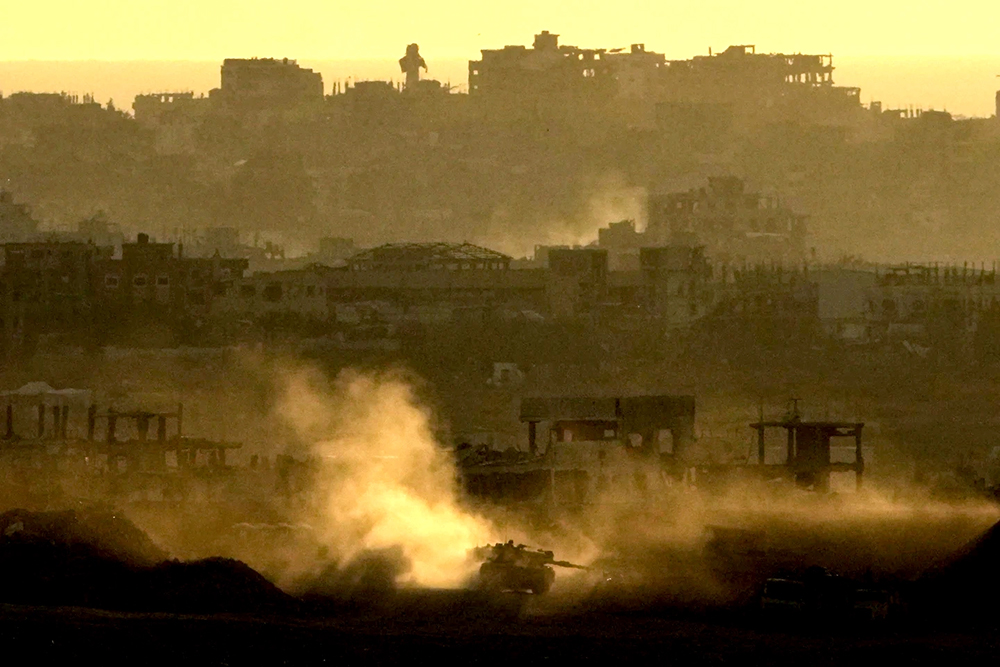
In a major escalation of its war strategy, Israel’s Security Cabinet voted unanimously on Sunday night to dramatically expand its military offensive against Hamas in the Gaza Strip, signaling what may be a pivotal new phase in the nearly two-year-long conflict. According to a report on the Jewish News Syndicate (JNS) web site, the new operational directive includes not only intensifying strikes but also a bold and controversial plan to occupy and hold Gaza territory for an extended period.
The Cabinet’s vote, described in the JNS report as unanimous, came amid mounting public pressure to resolve the fate of remaining Israeli hostages and deliver a definitive blow to the Hamas terror organization, whose October 2023 atrocities still reverberate across the country.
A senior source in the Prime Minister’s Office told reporters that the new military objectives include “powerful strikes” on Hamas infrastructure and a coordinated plan to physically hold territory inside Gaza—a stark departure from prior limited incursions and air-based campaigns. As the JNS report noted, the vote reflects a deepening national consensus that military pressure, combined with territorial leverage, may be the most viable route to achieving Israel’s core objectives: the defeat of Hamas and the safe return of Israeli captives.
Earlier that day, IDF Chief of Staff Lt. Gen. Eyal Zamir delivered a clear message to troops during a visit with the elite Flotilla 13 naval commandos: the war effort is entering a new, more intensive phase. “This week, we are issuing tens of thousands of call-up orders to our reservists in order to intensify and expand our operation in Gaza,” he said, as reported by JNS.
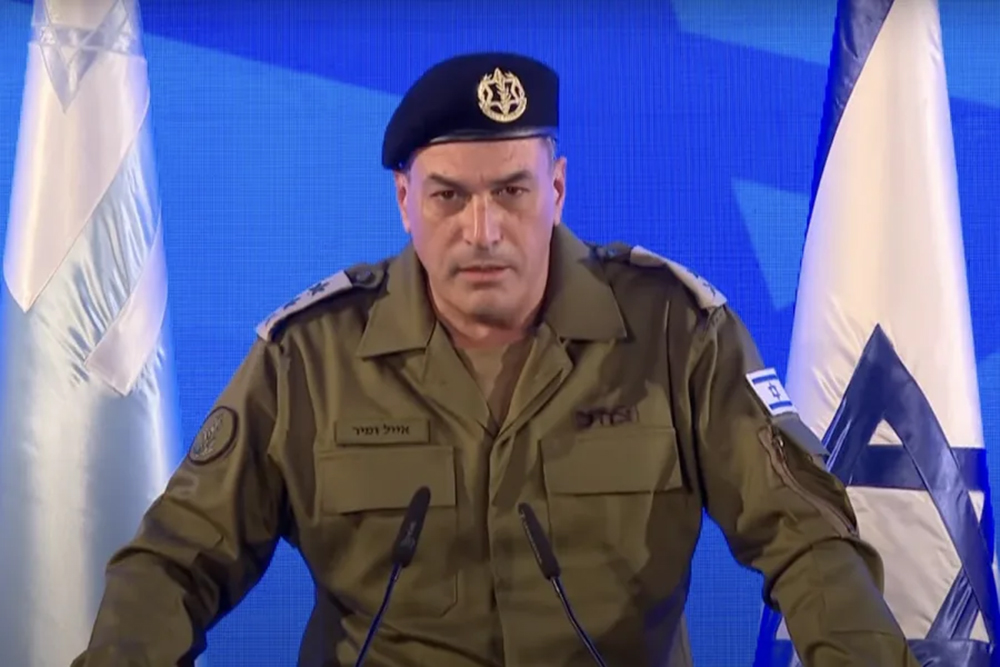
Zamir added that Israeli forces will operate in additional areas, “destroy all infrastructure above and below ground,” and “increase the pressure” to both dismantle Hamas and bring hostages home. According to the report on JNS, this new mobilization represents one of the largest troop call-ups since the outbreak of the war 19 months ago. Reservists are already being integrated into field operations and retraining programs in preparation for large-scale maneuvers.
The timing of the ground escalation, however, will likely hinge on diplomatic developments. An Israeli official cited by the Walla news outlet—also referenced in JNS’s reporting—indicated that the expanded operation will most likely commence after President Trump concludes his upcoming visit to the Middle East next week. The delay reflects a tactical calculation to avoid overshadowing or complicating high-level diplomatic engagement between Jerusalem and Washington.
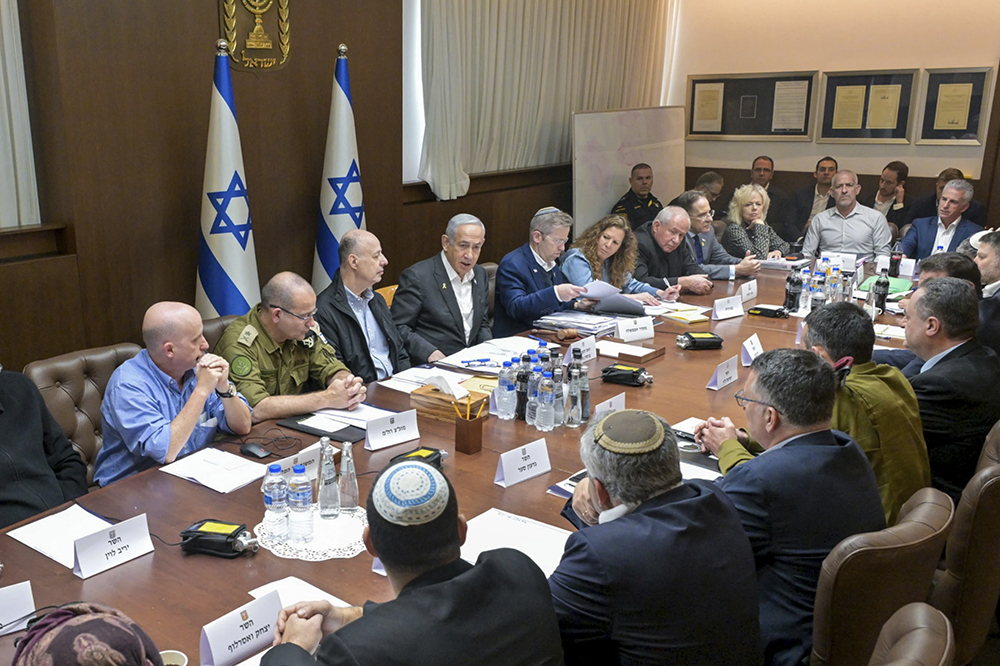
At the Cabinet meeting that formalized the expansion, Prime Minister Benjamin Netanyahu outlined the guiding principles of the next phase of the war. “I cannot detail [the plan] here, but we are focusing on two things: returning our hostages and defeating Hamas,” he said, according to the report at JNS. “Military pressure works—and this is what will work now as well.”
Netanyahu’s remarks come as the number of hostages rescued alive has risen to 147, a figure cited by the Prime Minister during the Cabinet session. The emphasis on hostages reflects both the human toll of the conflict and the political sensitivity surrounding the fate of Israeli captives still held by Hamas in tunnels beneath Gaza.
JNS also reported that the Cabinet approved a tentative plan to resume humanitarian aid to Gaza, pending the establishment of a secure international framework that would prevent Hamas from intercepting the supplies. The plan, which involves American security companies previously used during the January–March ceasefire, was backed by all ministers except National Security Minister Itamar Ben-Gvir, who has repeatedly expressed opposition to any aid entering Hamas-controlled territory.
In a separate military statement released concurrently with the Cabinet decision, the IDF confirmed that its ground, air, and naval forces continue to operate across multiple sectors of Gaza. As JNS reported, the 205th “Iron Fist” Reserve Armored Brigade has been particularly active in the southern city of Rafah, where it destroyed Hamas positions above and below ground and eliminated dozens of terrorists. One weapons depot discovered by Israeli forces was located just 260 feet from a former school and 330 feet from a former hospital—evidence, Israeli officials say, of Hamas’s use of human shields.
Meanwhile, in Gaza City, the IDF’s Jerusalem Brigade—operating under the command of the 252nd “Sinai” Division—has been engaging Hamas fighters in the densely populated Shejaiya neighborhood. Working in coordination with the Israel Security Agency (Shin Bet), troops uncovered extensive tunnel systems, seized weapons, and dismantled command-and-control infrastructure.
According to the JNS report, the Israeli Air Force has simultaneously ramped up its aerial campaign, striking over 100 targets in recent days, including tunnel shafts, weapons depots, and command centers. A particularly critical airstrike took place in the Khan Yunis area, where launch-ready Hamas rocket platforms aimed at Israeli territory were destroyed. Secondary explosions observed after the strike confirmed the presence of multiple prepared munitions.
Despite the IDF’s assertive posture, intelligence assessments indicate that Hamas still retains at least two fully functioning brigades capable of launching counterattacks. However, Israeli officials emphasized that the group’s fighting capability is deteriorating rapidly. As the JNS report noted, battlefield pressure combined with disrupted humanitarian access has weakened Hamas’s ability to regroup, and increasing numbers of its fighters are reportedly surrendering.
Israeli Strategic Affairs Minister Ron Dermer, who has been instrumental in negotiating hostage release deals, addressed the complexity of Israel’s dual objectives at the recent JNS International Policy Summit. “There are people in Israel who say, forget about the hostages—just finish the war. Others say, forget about the war—just bring them home,” he told the JNS audience. “We’re not going to do that. That’s not where Prime Minister Netanyahu is. It’s not where I am.”
Dermer affirmed that Israel is pursuing a “dual-track” strategy: continue dismantling Hamas militarily while applying pressure to secure the release of captives. He predicted that within 12 months, Israel would have not only ended the multi-front war but emerged victorious. His remarks, as reported by JNS, encapsulate the Israeli government’s broader strategic outlook: that sustainable peace will only come when Hamas no longer poses a political or military threat.
As the war enters its most decisive phase, Israel’s stated objectives remain unchanged: the dismantling of Hamas as a governing force, the safe return of all hostages, and the prevention of Gaza from serving as a launchpad for future attacks against Israeli citizens.
The report on JNS indicated that the Security Cabinet’s unanimous vote signals a rare moment of political alignment across party lines. With tens of thousands of troops being readied, airstrikes continuing to hit strategic targets, and new international arrangements for aid distribution under discussion, the Israeli leadership appears to be executing a comprehensive and multidimensional strategy aimed at both military victory and humanitarian responsibility.
In other related news, the Israeli Air Force launched a series of powerful retaliatory strikes on targets in Yemen Monday evening, following a bold ballistic missile attack by Iran-backed Houthi terrorists on Ben Gurion Airport the previous day. According to Israeli officials, the strikes are targeting the infrastructure of the Houthi organization, which operates as a well-documented proxy for Tehran’s military ambitions in the region.
This latest escalation marks a dangerous extension of the conflict beyond Israel’s immediate borders, signaling that the war ignited in Gaza has now fully metastasized into a regional confrontation involving multiple Iranian-linked factions.
The retaliatory strikes, confirmed by a senior Israeli official on Monday night, come less than 24 hours after a long-range missile was launched from Yemeni territory toward central Israel. The missile—fired by Houthi terrorists —triggered sirens and forced a temporary suspension of flights at Ben Gurion Airport, one of the most closely guarded civilian infrastructures in the country.
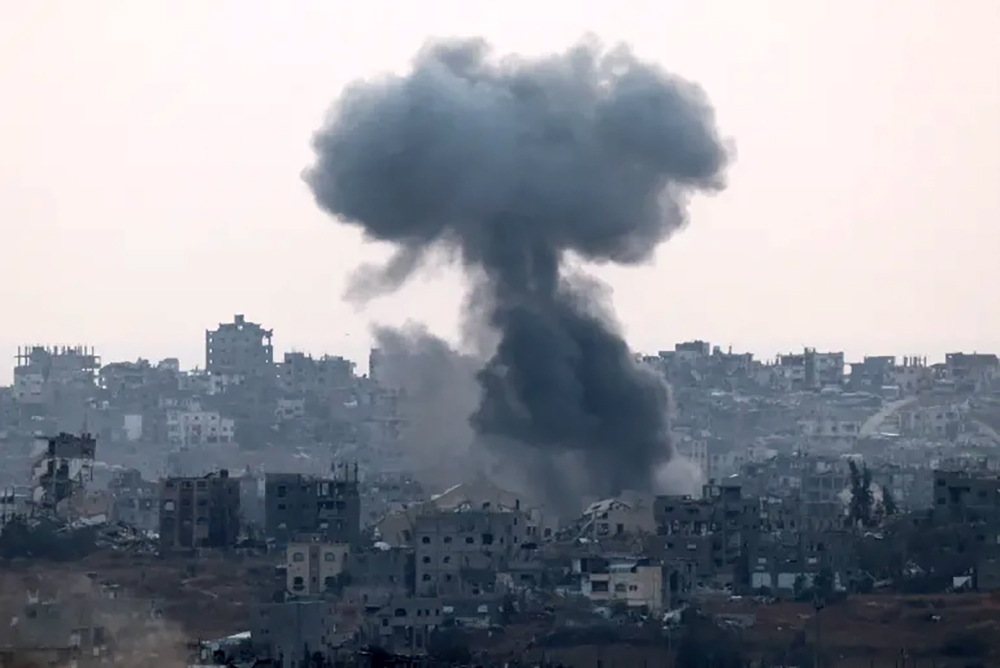
Al Jazeera reported that in a televised address earlier on Monday, Houthi military spokesman Yahya Saree warned that Ben Gurion Airport was “no longer safe for air travel,” a direct threat aimed at undermining Israel’s civilian air operations and economy. Although the missile did not result in casualties or major damage, its symbolic and strategic implications are profound: this was the first time since the Gaza war began that Israel’s main airport came under direct missile threat from such a long distance.
Prime Minister Benjamin Netanyahu wasted no time in attributing responsibility for the attack to the Islamic Republic of Iran, which provides funding, weapons, and strategic direction to the Houthi movement, also known as Ansar Allah. Israel National News reported that in a statement released on social media, Netanyahu declared: “Israel will respond to the Houthi attack against our main airport AND, at a time and place of our choosing, to their Iranian terror masters.”
The Prime Minister’s words signal more than just an Israeli retaliation against a Yemeni militia—they point to a widening Israeli-Iranian shadow war that now stretches from Lebanon and Syria to Iraq and Yemen. Netanyahu’s statement also reaffirms Israel’s longstanding doctrine: that any aggression carried out by Iranian proxies will be treated as an extension of Tehran’s war against the Jewish state.
According to Al-Arabiya, over 30 Israeli aircraft participated in Monday evening’s airstrikes on Houthi positions across Yemen. The attacks reportedly focused on the coastal city of Hodeidah, a critical logistical hub for the Houthis on the Red Sea. Houthi sources claimed both Israeli and U.S. forces were involved in the attack, although U.S. defense officials have not confirmed American participation at this time.
The Israeli Air Force’s targets likely include missile storage depots, launch sites, and command centers belonging to the Houthis. While official Israeli military sources have not disclosed the full list of objectives, experts suggest that neutralizing Yemen-based ballistic launch capabilities is now a national priority.
“This is not a symbolic response,” said one Israeli defense analyst in a televised interview. “When a missile strikes near your capital’s main airport, you are no longer dealing with marginal players—you are dealing with an axis of terror stretching across the region, fueled and coordinated by Iran.”
The Houthis, who control large swaths of Yemen including the capital Sana’a and major Red Sea ports, have stepped up their attacks against Israel since the outbreak of the war in Gaza. Their leadership has repeatedly stated that their operations are in “solidarity” with Palestinians and against what they describe as Israel’s “siege and bombardment” of the Gaza Strip.
While the Houthi rhetoric may be cloaked in pan-Arab solidarity, Israeli intelligence and Western defense officials maintain that their true motivations align with Tehran’s regional objectives: namely, to encircle Israel with hostile firepower and destabilize moderate Arab regimes aligned with the West.
“This is Iranian strategy 101,” an Israeli military spokesperson said Monday night. “Iran is outsourcing the battlefield to its militias—from Hezbollah in Lebanon and Syria, to Iraqi Shia militants, and now increasingly to the Houthis in Yemen.”
The timing of the Houthi missile attack may also reflect coordination with other Iranian proxies, particularly Hezbollah, which has also increased its cross-border activity along Israel’s northern frontier.
While the missile itself caused limited physical damage, its psychological and strategic impact was significant. The short suspension of takeoffs and landings at Ben-Gurion forced at least three inbound aircraft to circle in holding patterns, and ripple effects led to significant delays throughout the day. JNS reported that virtually all international airlines canceled flights to Tel Aviv through Tuesday as they await for further clarification on the threat environment.
Israeli Transportation Minister Miri Regev addressed the crisis Sunday night, telling the public that her office was working closely with aviation authorities and foreign airlines to resume regular operations. “We are committed to ensuring the safety of travelers and will coordinate with all relevant bodies to restore confidence in Israel’s airspace,” she said.
Security officials have since elevated the threat level at the airport, and additional anti-missile defense units, including Iron Dome and David’s Sling batteries, have been repositioned to reinforce central Israel’s airspace.
The scope and intensity of Israel’s retaliatory strikes in Yemen raise critical questions about the direction of the wider Middle East conflict. With Iran’s proxy network becoming increasingly emboldened—and with Israel now directly engaging targets in Yemen, Lebanon, and Syria—the danger of a full-scale regional war looms large.
U.S. officials have expressed support for Israel’s right to defend itself but have also called for restraint in escalation with Iran. However, as long as Iranian-backed militias continue to operate with impunity across the region, Israel appears determined to enforce its red lines.
Prime Minister Netanyahu’s vow to strike Iran “at a time and place of our choosing” leaves open the possibility of future direct action against Iranian assets or leadership, particularly if further long-range attacks are carried out from Yemen or elsewhere.
The Israeli Air Force’s retaliatory campaign in Yemen is more than a tactical response—it is a clear message to Iran and its proxy network that attacks on Israeli territory, particularly on critical infrastructure such as Ben Gurion Airport, will not go unanswered.
By drawing a straight line from the Houthi missile to Tehran’s Revolutionary Guard Corps, Netanyahu is placing responsibility for this dangerous escalation squarely on the Iranian regime. Whether this marks the beginning of broader regional hostilities or serves as a deterrent remains to be seen, but the battle lines—both ideological and geographical—have now been fully drawn.
