



|
Getting your Trinity Audio player ready...
|
By: Fern Sidman
The political crisis unfolding in France this week—marked by the dramatic ousting of Prime Minister François Bayrou, violent riots in major cities, and worsening diplomatic ties with Israel—has drawn a cautious and uneasy response from France’s Jewish community.
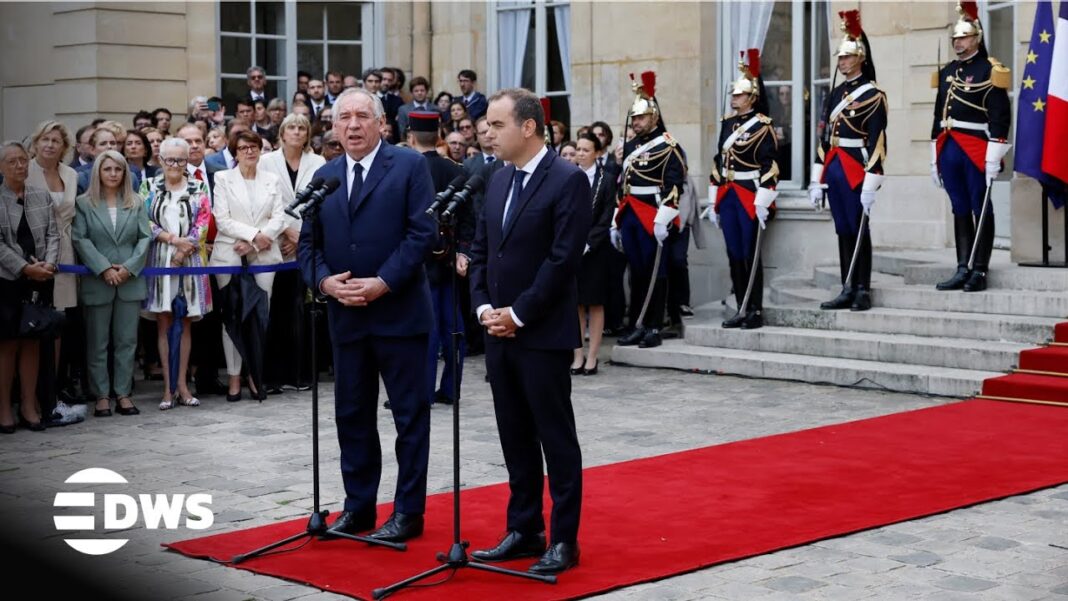
Sébastien Lecornu, the newly appointed prime minister, was sworn in on Tuesday following a no-confidence vote that toppled Bayrou’s government. His arrival at Matignon Palace comes at a time when France is grappling with austerity protests that spiraled into riots, leaving hundreds arrested, police injured, and property torched in Paris and other cities. For French Jews, however, Lecornu’s elevation is not only about domestic stability but about the trajectory of French foreign policy and the state’s posture toward antisemitism and Israel.
As The Jewish News Syndicate (JNS) reported on Thursday, Jonathan Arfi, president of CRIF, the umbrella organization representing French Jewish communities, issued a carefully worded statement congratulating Lecornu. “I offer him my best wishes for success in serving all French people. CRIF will stand by his side in the urgent fight against antisemitism as well as in the battle against all hatreds that fracture society,” Arfi said.
The optimism was tempered, however, by long-standing concerns about Lecornu’s record and the broader orientation of President Emmanuel Macron’s administration.
Bayrou’s downfall came in the wake of escalating unrest tied to his austerity measures, introduced under Macron’s direction. A general strike called by the far left on September 10 spiraled into rioting, with mobs torching buildings and clashing violently with security forces.
Yet Bayrou’s departure also followed a controversy of his own making. During a televised interview, the prime minister remarked that “What’s happening in Gaza is a stain not only on the history of Israel, but on a part of the history of the Jews of the world.”
The comment was widely condemned, particularly among Jewish leaders, as an example of the “new antisemitism,” where Jews are collectively targeted over Israel’s actions. As JNS observed, such remarks landed with particular severity amid a surge of antisemitic attacks in France in recent months, many perpetrated by extremists invoking Gaza as justification.
Lecornu’s appointment is viewed with mixed feelings by French Jews. While some welcome a potential reset, others note that Lecornu, as former minister of the armed forces, was instrumental in imposing France’s arms embargo on Israel—a policy widely criticized by Jewish groups.
Prominent French-Jewish journalist Yoann Taïeb pointedly reminded CRIF’s Jonathan Arfi that Lecornu was “the minister who ordered the boycott of Israeli defense firms and the embargo on arms sales to Israel.” His comment, posted on X, highlighted the skepticism with which many in the community view the new premier’s willingness to alter course.
Bruno Benjamin, former head of CRIF’s Marseille chapter, was similarly blunt in his assessment to JNS. “I do not see, at this stage, any major departure from the line followed until now. His past in the state apparatus does not suggest a radical change,” Benjamin remarked.
Macron himself has contributed to the climate of anxiety. On Wednesday, the French president condemned Israel for its precision strike in Qatar that targeted senior Hamas leaders. “These strikes are unacceptable. I condemn them,” Macron wrote, emphasizing France’s “commitment to the sovereignty and security of Qatar” while praising Doha’s efforts in hostage negotiations.
The condemnation, delivered both in French and Arabic, drew sharp responses from Israeli officials. Amichai Chikli, Israel’s minister for diaspora affairs and combating antisemitism, replied directly in Arabic on X, quipping that Qatar had not only bought Paris Saint-Germain football club but “also bought Macron.”
For many French Jews, Macron’s posture illustrates a deeper problem: France’s eagerness to cultivate ties with Arab states, particularly Qatar, often at the expense of Israel’s security concerns. As JNS noted, Macron’s administration has already recognized Palestine diplomatically and placed a sweeping embargo on Israeli arms imports—moves that have triggered sharp pushback from Washington. U.S. Ambassador to France Charles Kushner has been among the most vocal critics of Paris’s approach.
French Jews interviewed by JNS expressed skepticism that Lecornu’s appointment will meaningfully shift France’s policy. Instead, many anticipate continuity under Macron’s firm hand.
“In my opinion, as long as Emmanuel Macron remains president and the war continues, France’s support for Israel will remain fragile and often compromised,” said Bruno Benjamin. “Gestures of friendship will happen occasionally, but the political line will remain ambivalent, as it seeks above all to accommodate all parties, sometimes at the cost of injustice to Israel.”
Benjamin also warned that France’s growing polarization—between far-left movements sympathetic to the Palestinian cause and far-right elements hostile to immigrants—will likely shape government discourse. “The government, under pressure from the public and certain ideological sources, will likely opt for a discourse that appeases domestic public opinion, even if it means hurting Israel,” he told JNS.
The broader context for these political debates is a rising tide of antisemitism in France. Jewish schools and synagogues have faced attacks, and Jewish individuals have been assaulted on the streets. Authorities report spikes in antisemitic hate crimes every time conflict flares in the Middle East.
Jonathan Arfi of CRIF stressed that combating antisemitism must remain central to Lecornu’s agenda. “We will stand by his side in the urgent fight against antisemitism,” Arfi pledged. Yet skepticism lingers about whether France’s political leadership will prioritize Jewish security while attempting to placate restive segments of the Muslim population.
JNS has frequently highlighted the precarious position of French Jews, who number around 450,000—the largest Jewish community in Europe. Many have already emigrated to Israel, citing insecurity and lack of confidence in the French state’s protection.
Lecornu assumes the premiership at a time when France-Israel relations are at their lowest ebb in decades. Macron’s repeated criticisms of Israel’s Gaza operations, his embargo on arms sales, and his push for recognition of a Palestinian state have alienated Jerusalem.
The situation has also strained Paris’s relationship with Washington. As JNS reported, U.S. officials have grown increasingly alarmed at France’s alignment with positions seen as sympathetic to Hamas or its backers. Macron’s robust defense of Qatar, in particular, stands in stark contrast to the Trump administration’s recent support for Israel’s strikes against Hamas leaders in Doha.
For French Jews, these tensions carry direct implications. Diplomatic hostility toward Israel often translates into heightened antisemitism at home, as critics of Israeli policy target Jewish institutions and individuals.
Whether Lecornu can stabilize France politically while recalibrating its foreign policy remains an open question. His past record suggests continuity more than change, but the intensity of the current crisis may demand recalibration.
For now, Jewish leaders such as Arfi are extending cautious goodwill, while grassroots voices remain skeptical. As the JNS report noted, the community’s response is shaped as much by lived experience of rising antisemitism as by abstract policy disputes in Paris.
The riots of September 10, sparked by domestic austerity but inflamed by broader societal grievances, underscored the fragility of French social cohesion. For Jews, already disproportionately targeted in times of unrest, the riots were another reminder that political instability often comes at their expense.
The appointment of Sébastien Lecornu as France’s new prime minister has been met with a blend of guarded optimism and deep skepticism among French Jews. While CRIF’s leadership has extended an olive branch, warning signs abound: Lecornu’s prior role in enforcing an arms embargo on Israel, Macron’s outspoken criticism of Israeli military operations, and the entrenched currents of antisemitism coursing through French society.
As JNS reported, French Jews remain wary of rhetoric that undermines Israel while emboldening its adversaries. For them, Lecornu’s premiership will be judged not by symbolic gestures but by tangible actions—whether in protecting Jews on French streets, recalibrating France’s foreign policy, or resisting the corrosive spread of antisemitism masquerading as political critique.
Until then, optimism will remain cautious, fragile, and overshadowed by the memory of riots, the echo of Bayrou’s controversial remarks, and the persistent uncertainty of France’s stance toward Israel.
 |
|
