



|
Getting your Trinity Audio player ready...
|
By: Fern Sidman
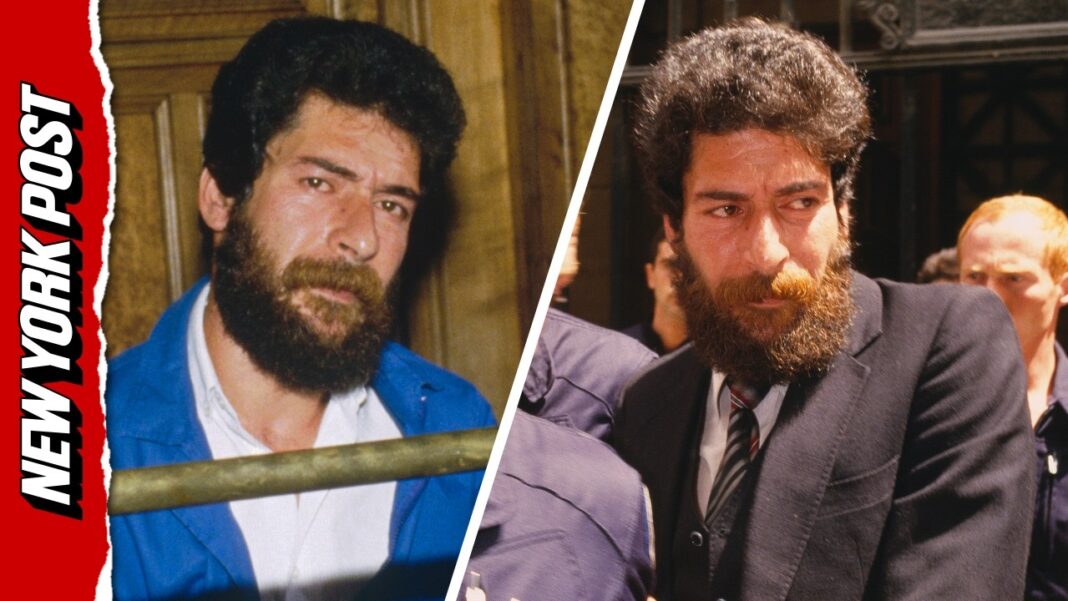
In a decision drawing significant international scrutiny, the Paris Court of Appeal ruled on Thursday to grant parole to Georges Ibrahim Abdallah, a Lebanese terrorist convicted in the 1980s of orchestrating and carrying out deadly attacks on Israeli and American diplomats. As reported on Thursday by World Israel News (WIN), the court’s ruling, delivered after a closed-door session, orders Abdallah’s release from prison by July 25, 2025—nearly four decades after his initial incarceration.
Abdallah, 74, the founder of the Lebanese Armed Revolutionary Factions (LARF), has long been a figure of notoriety within international counterterrorism circles. The World Israel News report noted that Abdallah, a Maronite Christian and self-identified far-left activist, first became involved in militant operations during the late 1970s. Following Israel’s 1978 Operation Litani—a military incursion into southern Lebanon—Abdallah aligned himself with the Popular Front for the Liberation of Palestine (PFLP), a well-known Palestinian terror group.
In 1979, Abdallah broke from the PFLP to establish the LARF, a group dedicated to violent anti-Western and anti-Israeli operations. According the information provided in the World Israel News report, the group soon launched a series of high-profile terror attacks in France, directly targeting representatives of the United States and Israel.
The first of these attacks occurred in January 1982, when Abdallah personally gunned down Charles Robert Ray, an American military attaché, on the streets of Paris. Later that same year, a LARF operative murdered Yaacov Barsimantov, the second secretary of the Israeli Embassy in France, in a Paris suburb. Both attacks sent shockwaves through diplomatic and intelligence communities, prompting heightened security protocols for foreign missions operating in France.
LARF’s campaign of terror continued in 1984 with a failed assassination attempt on an American diplomat in Strasbourg. The botched operation led to the discovery of a clandestine arms depot in Paris, traced directly back to Abdallah. His arrest in October of that year brought an end to LARF’s operations in France, culminating in his 1987 conviction and life sentence for the attacks.
However, as the report at World Israel News indicated, French legal provisions made Abdallah eligible for parole just 12 years after his sentencing. Despite early denials in 1999 and 2001, a French court briefly granted his parole request in 2003. That decision was overturned following vigorous objections from both the United States and France’s justice ministry—a reversal that represents a critical moment in Abdallah’s long legal saga.
The issue resurfaced in November 2024, when a French court again accepted a petition for Abdallah’s release, tentatively scheduling his freedom for December of that year. However, legal appeals delayed the implementation of that ruling, sending the matter back for judicial review.
As World Israel News reported, the Paris Court of Appeal has now upheld the November 2024 decision, finalizing Abdallah’s parole on the condition that he be immediately deported to Lebanon upon release. The decision ends years of legal back-and-forth but reopens wounds for those impacted by LARF’s violent legacy.
Throughout his four decades in French custody, Abdallah has maintained a controversial stance regarding his involvement in the attacks. Although he consistently denied personal participation in the killings, He never disavowed his leadership role in LARF nor the group’s acts of terror. Instead, Abdallah characterized the assassinations as legitimate “acts of resistance” against Israel and the United States—a position he has reiterated throughout his incarceration.
The World Israel News report also pointed to the international reactions that have accompanied Abdallah’s parole decisions over the years. Both Washington and Jerusalem have repeatedly expressed concern over the prospect of his release, citing his unapologetic endorsement of terror and the precedent such a move could set for other convicted terrorists seeking parole in Western jurisdictions.
The Paris Court of Appeal’s ruling comes amid continued geopolitical tensions in the Middle East, particularly concerning Iran-backed terrorist organizations operating across the region, including in Lebanon. The World Israel News report emphasized that the decision is likely to provoke further criticism from Israel and the United States, both of which have long opposed Abdallah’s release on security grounds.
The parole of a man once considered one of Europe’s most dangerous terrorists reopens critical questions about justice, accountability, and the long-term consequences of political violence.

Why is he not being extradited to the US for trial here?
were you wondering about the lsIamization of France?