



|
Getting your Trinity Audio player ready...
|
By: Russ Spencer
A storm of indignation has erupted in France following reports that an outdoor adventure facility in the country’s south barred entry to a large group of Israeli children, citing what its manager described as his “personal convictions.” The incident, which unfolded near the mountain town of Porté-Puymorens, has drawn condemnation from Jewish leaders, French prosecutors, and Israeli officials, who see in it not merely an isolated lapse of judgment but a troubling indicator of the wider normalization of antisemitic discrimination across Europe.
According to a report on Friday at The Jewish News Syndicate (JNS), the group of approximately 150 Israeli children, aged between 8 and 16, had reserved a visit to Parcours aérien Tyrovol, a facility renowned for its aerial zipline course and high-rope challenges. The reservation, made well in advance, was honored in principle until the moment of arrival, when the manager intervened and declared the group unwelcome on the basis of his “personal convictions.”
French media outlets, citing the Perpignan Public Prosecutor’s Office, confirmed that the facility’s manager was taken into police custody. He now faces suspicion of “discrimination based on religion in the provision of goods or services” — a serious offense under French law carrying a maximum penalty of three years in prison.
As reported by JNS, French prosecutors acted swiftly, underscoring that in a nation legally committed to laïcité (secularism) and equal treatment in public services, the denial of access to minors based on their national or religious identity cannot be tolerated. The case now proceeds through the judicial system, and legal authorities have hinted that they will pursue the matter rigorously in order to send a message against creeping antisemitism.
French Jewish institutions reacted with fury to the exclusion of the Israeli youths. Yonathan Arfi, president of CRIF, the Representative Council of French Jewish Institutions, issued a blistering statement on social media, portions of which were reproduced by JNS.
“Who will be able to find the words to explain to [the children] the hatred that forbids them entry to a leisure park?” Arfi asked pointedly. He added that the refusal was not some subtle political critique but rather “an expression of violent hatred toward Israel, using a conflict 3,000 kilometers away as a pretext to discriminate against children.”
Arfi concluded with a demand for resolute action: “The punishment must be exemplary.” His remarks captured the sense of betrayal felt by Jewish parents and leaders — that innocent children, far removed from geopolitics, should be subjected to humiliation in a public venue ostensibly devoted to recreation and fun.
The timing of the incident has only heightened tensions between Jerusalem and Paris. Earlier in the week, Israeli Prime Minister Benjamin Netanyahu penned a letter to French President Emmanuel Macron criticizing France’s declared intention to recognize a Palestinian state at the upcoming United Nations General Assembly session in September. Netanyahu, as noted by JNS, warned that such recognition would “pour fuel on the fire of antisemitism.”
Macron’s office swiftly rejected Netanyahu’s accusation as “abject,” insisting that France’s foreign policy decisions are rooted in its own strategic calculations, not in any animus toward the Jewish people. Yet the juxtaposition of Macron’s stance with the discrimination in Porté-Puymorens has given Netanyahu’s warning new resonance. For many, the denial of entry to Israeli children appears less an isolated aberration than an ominous echo of deepening hostility toward Jews in French public life.
The episode at Parcours aérien Tyrovol is hardly the first instance in which French Jews — or Israelis visiting France — have felt the sting of exclusion. JNS has chronicled a worrying rise in antisemitic incidents across Europe since Hamas’s October 7, 2023, massacre in Israel, which triggered both solidarity rallies and anti-Israel demonstrations throughout the West.
In France, home to Europe’s largest Jewish community, synagogues have faced repeated threats, Jewish schools have required heightened security, and Jewish students report feeling unsafe on university campuses. Against this backdrop, the denial of access to Israeli minors in a leisure park feels particularly galling: it transplants the conflict of the Middle East directly into the realm of childhood play.
Observers fear that such acts of discrimination normalize antisemitism, embedding hostility to Jews and Israelis into everyday encounters. As JNS commentators have noted, once it becomes acceptable to exclude Jewish children from a ropes course in the Pyrenees, the precedent is set for broader exclusions in schools, workplaces, and civic institutions.
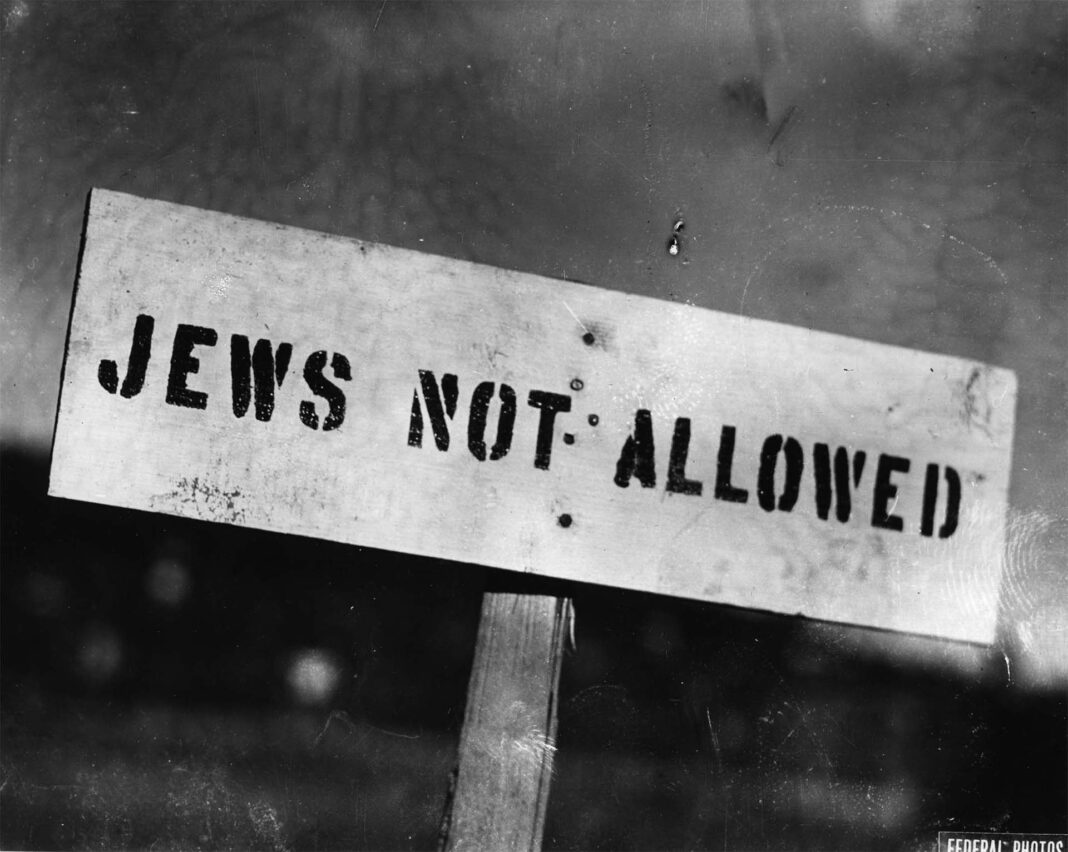
Jewish historians and commentators cited by JNS have pointed out the disturbing historical resonance of the incident. Europe has a long and tragic history of barring Jews from public spaces — from guilds and universities in the Middle Ages to cafés, theaters, and swimming pools under Nazi occupation.
Although today’s France is a democracy grounded in human rights, the symbolic power of a gatekeeper denying Jewish children access to a leisure facility cannot be dismissed. It awakens bitter memories of exclusion and persecution, magnified by the fact that the children in question were visiting from Israel — a state founded, in part, as a refuge for Jews facing precisely such discrimination.
International Jewish organizations quickly rallied in condemnation. The European Jewish Congress (EJC) called the incident “a stark example of antisemitism masquerading as political conscience.” The Anti-Defamation League (ADL) in the United States issued a statement emphasizing that targeting Jewish or Israeli children for exclusion was “the very definition of hate.”
As the JNS report underscored, what unites these reactions is a recognition that political disagreements about the Middle East can never justify collective punishment of Jewish individuals — and especially not minors engaged in recreational activities.
The management of Parcours aérien Tyrovol has not released a formal statement beyond confirming that the manager cited “personal convictions” in turning away the children. The phrase, however, has only amplified outrage: personal convictions cannot be a legitimate reason to deny access to paying customers based on their nationality or religion.
With police investigation ongoing, the future of the facility itself may be in jeopardy. Local officials in Porté-Puymorens are reportedly alarmed by the international scrutiny and the potential reputational damage to tourism in the region. The Pyrenees, prized for their alpine sports and adventure tourism, now face unwelcome headlines of antisemitism tied to one of their attractions.
In its coverage, JNS emphasized that the case is likely to become a test for French authorities. If prosecutors secure a conviction and impose significant penalties, it may serve as a deterrent against future acts of discrimination. But if the case ends with minimal consequences, critics fear it will embolden those who seek to cloak antisemitism in the language of political conscience.
Jewish leaders insist that vigilance is required. As Yonathan Arfi and others have argued, what happened in Porté-Puymorens must not be dismissed as an isolated act of bigotry. Rather, it reflects a larger societal challenge: ensuring that Jews in France, and Israelis visiting France, can live, study, and play without fear of being singled out or humiliated.
The denial of access to Israeli children at Parcours aérien Tyrovol has become more than a local scandal. It is a microcosm of the global struggle against antisemitism, a reminder of how quickly political conflicts can metastasize into personal prejudice, and how even the innocence of childhood is not immune.
As JNS has repeatedly underscored, the true test lies not only in public outrage but in the firmness of institutional response. France must decide whether it will tolerate antisemitism dressed up as personal conviction, or whether it will act decisively to defend the principle of equal access — for Jews, for Israelis, and for all.
Until then, the image of 150 disappointed children turned away at the gates of an adventure park in southern France will stand as a stark symbol of the challenges yet to be overcome.
