



|
Getting your Trinity Audio player ready...
|
By: Fern Sidman
The shockwaves from the deadly antisemitic terror attack that struck a Hanukkah celebration in Sydney, Australia, on Sunday have extended far beyond the country’s shores, reaching deep into the heart of France. As reported on Sunday by Israel National News, French Minister for Europe and Foreign Affairs Jean-Noël Barrot confirmed on Sunday evening that a French citizen was among those murdered when terrorists opened fire on Jewish families gathered on Bondi Beach to mark the first night of Hanukkah.
The announcement cast the tragedy into sharp international relief, transforming what was already a searing national trauma for Australia’s Jewish community into a moment of global mourning. In a solemn statement cited by Israel National News, Barrot conveyed France’s collective grief and outrage, underscoring the gravity of an attack that deliberately targeted a religious celebration defined by its message of resilience, faith, and public affirmation of Jewish identity.
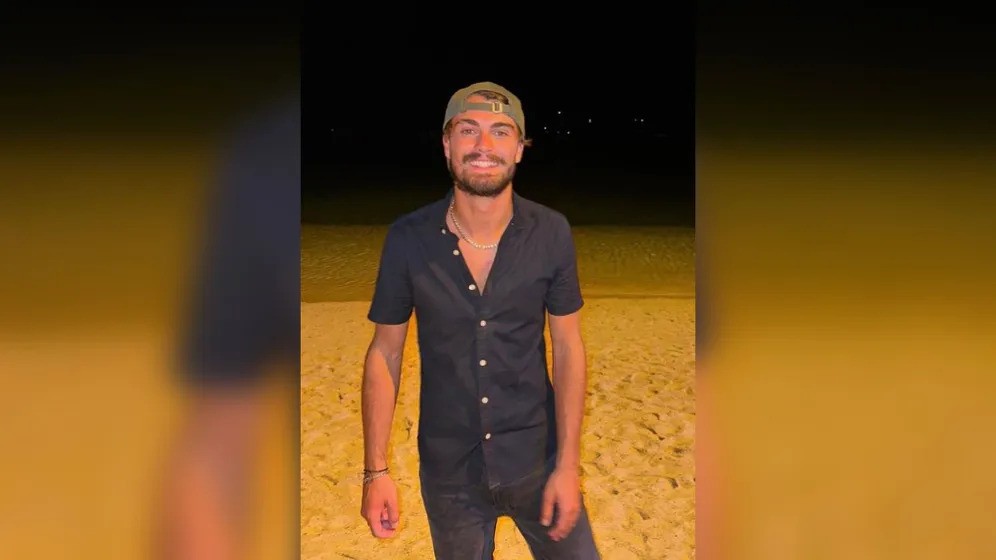
“It is with immense sadness that we learned that our compatriot Dan Elkayam was among the victims of the vile terrorist attack that struck the Jewish families gathered on Bondi Beach in Sydney on the first day of Hanukkah,” Barrot wrote. His words reflected not only personal sorrow but also a broader recognition of the symbolic violence inflicted by the attack.
Barrot emphasized that France mourns alongside Elkayam’s family and loved ones, as well as with the Jewish community and the bereaved Australian people. In doing so, he framed the massacre as an assault not merely on individuals, but on shared democratic values and the universal right to practice one’s faith without fear. As the Israel National News report noted, the French foreign minister’s remarks were notable for their clarity in identifying the ideological nature of the crime.
“This ignoble act is a new tragic manifestation of an outrageous outpouring of antisemitic hatred to which we must put a stop,” Barrot added, drawing a direct line between the Sydney attack and the broader global resurgence of antisemitism. His language reflected mounting concern among European leaders that antisemitic violence is no longer episodic or isolated, but increasingly normalized within extremist discourse.
Hanukkah occupies a unique place in Jewish life as the most publicly celebrated of Jewish holidays, marked by the open lighting of menorahs in homes, public squares, and communal gatherings. As Israel National News observed in its coverage, the deliberate targeting of a Hanukkah celebration is laden with symbolic intent. It is an attempt to intimidate Jews into retreating from public life and to extinguish the visible expressions of Jewish faith.
That Dan Elkayam was killed while participating in such a gathering has resonated deeply in France, a nation that is itself home to one of the largest Jewish populations in the world and one that has, in recent years, grappled with its own wave of antisemitic attacks. The news, as reported by Israel National News, has intensified debate within France about the transnational nature of extremist violence and the shared vulnerability of Jewish communities worldwide.
In his statement, Barrot went beyond expressions of condolence, issuing a firm pledge that France would intensify its efforts to confront both antisemitism and terrorism wherever they appear. “France will spare no effort to root out antisemitism wherever it emerges, and to combat terrorism in all its forms,” he said, according to the Israel National News report. The commitment echoed long-standing French policy, but carried renewed urgency in light of the Sydney massacre.
Barrot concluded his remarks with a powerful invocation of Hanukkah’s enduring symbolism: “The lights of Hanukkah must not go out and will not go out.” As the Israel National News report highlighted, this declaration has become a refrain among leaders responding to the attack—a collective insistence that acts of terror will not succeed in silencing Jewish life or erasing its public presence.
French President Emmanuel Macron swiftly added his voice to the chorus of condemnation and mourning. In a statement reported by Israel National News, Macron said he had learned “with deep sadness” of the death of Dan Elkayam during what he explicitly described as an “antisemitic terrorist attack” in Sydney. The president extended “the full solidarity of the Nation” to Elkayam’s family and loved ones, underscoring that the loss of a French citizen abroad is felt as a national wound.
Macron’s language was deliberate. By naming the attack as antisemitic terrorism, he aligned France’s highest office with those insisting that ideological clarity is essential in confronting such violence. As Israel National News has documented in its broader coverage of the Sydney massacre, Jewish leaders and analysts alike have warned that euphemistic language and moral equivocation only embolden extremists.
The killing of Dan Elkayam has drawn attention to a grim reality emphasized repeatedly by Israel National News: antisemitic terror is a global phenomenon, unbounded by geography or nationality. Jews gathering peacefully in Sydney, Paris, Jerusalem, or New York face increasingly similar threats, fueled by extremist ideologies that circulate freely across borders.
For France, the news has been particularly poignant. The country has witnessed deadly antisemitic attacks over the past two decades, including the murders at a Jewish school in Toulouse and a kosher supermarket in Paris. As the Israel National News report noted, the Sydney attack has revived painful memories while reinforcing fears that Jews remain a primary target for ideologically motivated violence.
As tributes to Dan Elkayam pour in, French Jewish organizations have joined their Australian counterparts in mourning a life lost to hatred. While details of Elkayam’s personal story have not yet been fully made public, his death has already assumed broader significance as a symbol of the indiscriminate cruelty of antisemitic terror.
According to the information provided in the Israel National News report, community leaders in France have called for heightened vigilance during Hanukkah events and other Jewish gatherings, even as they urge communities not to retreat into invisibility. The balance between security and openness remains fraught, yet many insist that withdrawing from public Jewish life would amount to a victory for terror.
In the final analysis, the response from France’s leadership reflects a determination to confront both the immediate horror of the Sydney attack and the deeper currents that made it possible. The statements from Jean-Noël Barrot and Emmanuel Macron are part of a broader international reckoning—one that recognizes antisemitism as a direct threat to democratic societies and pluralistic values.
As Hanukkah candles continue to be lit around the world, including in France and Australia, the memory of Dan Elkayam stands as both a source of sorrow and a call to action. The message echoed by French leaders and amplified by Israel National News is unmistakable: terror may strike, but it will not define the future. The lights of Hanukkah, and the principles they represent, will endure.