



|
Getting your Trinity Audio player ready...
|
By: Fern Sidman – Jewish Voice News
Newly revealed intelligence documents have exposed a sprawling Hamas financial apparatus operating in central Turkey under the direct guidance of Iran, shedding light on one of the most intricate and consequential terror-financing pipelines uncovered since the October 7 attacks. The documents, disclosed by IDF International Spokesperson Lt. Col. Nadav Shoshani, reveal how a network of exiled Gazan currency exchangers has been systematically exploiting segments of Turkey’s financial system to move vast sums—amounting to hundreds of millions of dollars—into the hands of Hamas leadership and its military wing.
The exposé underscores what Israeli officials have warned for years: that even as Hamas’ territorial control in Gaza fractures under the weight of war, the organization is rapidly rebuilding and repositioning its global infrastructure, with Turkey emerging as its most crucial financial staging ground. According to the documents, this covert network not only channels Iranian funds to Hamas but also stores and disburses money with the explicit purpose of sustaining the group’s military operations and its senior officials abroad.
At the center of the network, three operatives have now been publicly identified: Tamer Hassan, a senior official in Hamas’ Finance Office operating in Turkey, and two prominent currency exchangers, Khalil Farwana and Farid Abu Dair, who facilitated transactions critical to the flow of Iranian money. Hassan allegedly works under Khalil al-Khiya, himself a longtime Hamas financial strategist tied to the organization’s foreign headquarters.
According to the intelligence assessment, the network functions as both a financial laundromat and a logistical artery, receiving Iranian funds, concealing their origin through commercial and personal channels, and transferring them into accounts and operations directly connected to Hamas’ militant hierarchy. Israeli defense officials say the network has sustained Hamas at key moments when international pressure or banking restrictions threatened to restrict the group’s access to liquidity.
Lt. Col. Shoshani, in a statement accompanying the release, emphasized the global scope of Hamas’ post-Gaza operations. “Hamas is attempting to reestablish itself outside Gaza,” he said. “We will continue to operate against their terror, no matter the distance.”
Iran’s role, while long suspected, is detailed with unusual clarity in the disclosed documents. Tehran, according to the intelligence, exercises direct oversight of the financial routes, determining not only the scale of transfers but also the specific Hamas officials to whom they are distributed. This revelation provides new insight into how Iran has managed to maintain Hamas’ operational resilience in the months following Israel’s extensive military campaign.
For years, Tehran has used proxy networks to circumvent sanctions and international scrutiny, but the Turkey-based currency-exchange model reflects a more adaptive strategy. Turkey’s geographic positioning, combined with a bustling financial sector and a large population of Palestinian expatriates, has made it an ideal venue for discreet, high-volume transfers.
The Turkish government has not been directly implicated in the documents released by Israeli officials, and there is no allegation of state complicity. However, the discovery raises difficult questions for Ankara at a time when Turkey seeks to strengthen diplomatic standing while maintaining political ties with Hamas—ties that Israeli officials claim enable Hamas to operate too freely on Turkish soil.
Israel has repeatedly urged Turkey and other regional partners to tighten enforcement against terror financing networks. Yet Ankara has historically adopted a political approach that views Hamas as a legitimate actor within the Palestinian national movement, complicating efforts to fully dismantle Hamas-linked entities within its borders.
These latest revelations may intensify international pressure on Turkey to act decisively. Western intelligence officials have previously warned that lax enforcement in Turkey enables illicit financial and logistical networks—often disguised as charitable operations or commercial businesses—to operate with relative ease.
With Gaza under sustained Israeli military pressure, Hamas has been shifting key operational centers abroad. Officials say Turkey, Qatar, and Lebanon have become crucial for housing exiled leadership and managing global financial flows.
But the Turkish network appears particularly vital. According to the intelligence released, the exchangers identified—Farwana, Abu Dair, and others whose names remain undisclosed—ran an exchange and transfer system that moved cash from hand to hand with minimal traceability. These mechanisms shielded Iranian involvement and ensured Hamas retained a stable financial backbone.
A senior Israeli security officer, speaking off record, described the network as “the beating heart of Hamas’ foreign financing.”
With Iranian funds pouring into Turkey and from there into Hamas’ external branches, the network played a central role in paying operatives, purchasing materiel, sustaining foreign headquarters, and facilitating the travel and housing of senior officials. Disrupting that network, the officer noted, represents one of the most significant blows Israel can deliver outside the battlefield.
The exposure of the financial network arrives at a sensitive geopolitical moment. Israel is deepening intelligence cooperation with Western countries seeking to isolate and pressure Iranian proxy groups. The documents provide concrete evidence of Iran’s direct orchestration of Hamas activity far from the battlefield—evidence that may strengthen international efforts to add new sanctions or financial monitoring protocols targeting individuals and institutions complicit in the network.
The United States, which has already intensified counterterror finance efforts against Hamas following the October 7 massacre, is likely to examine the newly released intelligence closely. Washington has previously sanctioned Hamas-associated financial institutions in Turkey, Malaysia, and Lebanon, though Israel argues these steps have not gone far enough.
Meanwhile, Israeli defense officials are expected to continue directing covert and diplomatic initiatives to dismantle the network’s remaining infrastructure. “Distance does not protect terrorists,” Lt. Col. Shoshani said, signaling Israel’s intent to pursue Hamas’ global avenues of support even as the military campaign in Gaza winds down.
The exposure of the Iran-directed Hamas financing network is a critical reminder that terrorism today is sustained not only by ideology and weaponry but by complex cross-border financial systems engineered to evade detection. As Hamas attempts to rebuild itself outside Gaza, the battle increasingly shifts to bank accounts, exchangers’ offices, and shadowed transactions across multiple continents.
For Israel—and for the broader international community seeking to contain Iranian influence—the revelations call attention to a sobering reality: the war against Hamas cannot be won solely on the battlefield. It must also be waged in the financial corridors that enable its global reach, from Doha to Istanbul and beyond.
And now, with names, documents, and operational details laid bare, the pressure on Turkey, Iran, and the international banking community is set to intensify dramatically.
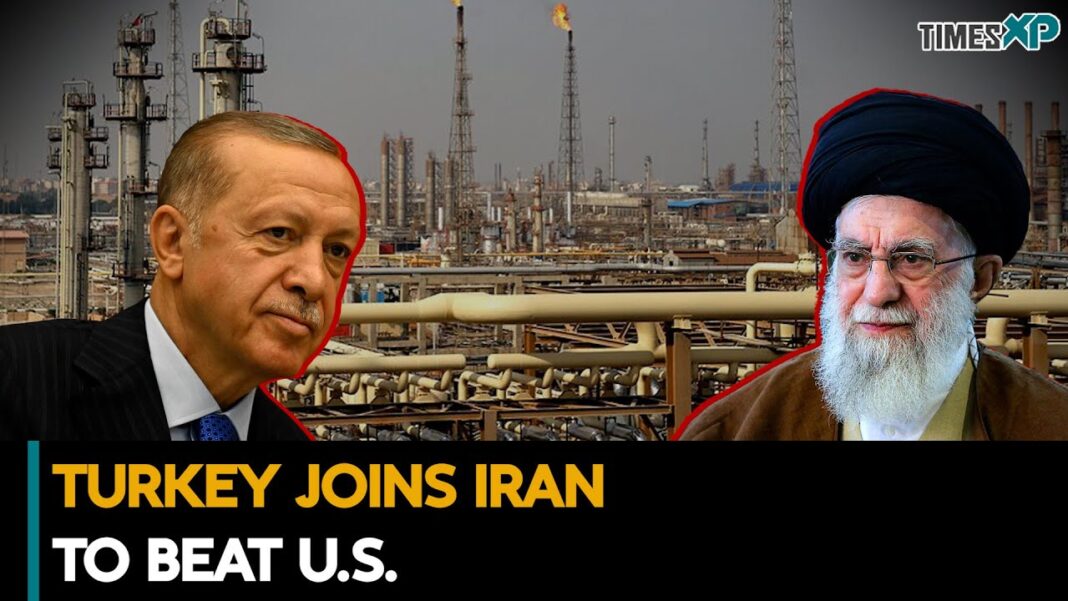
If you are going to broadcast YouTube video from an unknown source such as “Times XP”, you MUST identify its source. This appears to be some fringe propaganda from Indian “news“. These unidentified Indian YouTube channels are often anti-Israel propaganda. TJV’s management is doing a grave disservice to its readers by simply re-publishing obscure foreign propaganda!
There is nothing wrong with the video, what is wrong with it, becides you( who wats to be the editor) not liking it? The videos are enbedded for a reason, it is called engagement and time spent on the site