



|
Getting your Trinity Audio player ready...
|
By: Fern Sidman
A growing chorus of Jewish leaders from across Europe is pressing the European Union to take immediate action against Belgium in response to recent police raids on the homes of several mohels — religious practitioners trained in the ritual of circumcision. The raids, which have triggered sharp criticism and renewed fears over the erosion of religious freedoms in Europe, are now at the center of a coordinated campaign spearheaded by the European Jewish Association (EJA.
The Algemeiner reported on Thursday that a group of sixty rabbis and Jewish community leaders, led by the EJA, sent a formal letter to European Commission President Ursula von der Leyen on Wednesday. The letter urged von der Leyen to demand that the Belgian government address the escalating concerns among Jewish communities following the controversial law enforcement actions.
In their letter, the signatories argued that the Belgian police’s operations “represent a breach of an EU fundamental right, that of freedom of religion.” The leaders further warned that such actions evoke troubling parallels to historical episodes of religious persecution in Europe. “This alarming action directly targets Brit Milah — a sacred commandment that has been safely practiced by the Jewish people for thousands of years across the world,” the EJA emphasized in a statement posted on X, formerly Twitter.
The Algemeiner report noted that the EJA characterized its campaign as “urgent and coordinated,” driven by a deep concern for the preservation of religious rights and the protection of Jewish communities throughout Europe. The association reiterated its commitment to defending Brit Milah, describing the ritual circumcision as a core element of Jewish identity and religious practice.
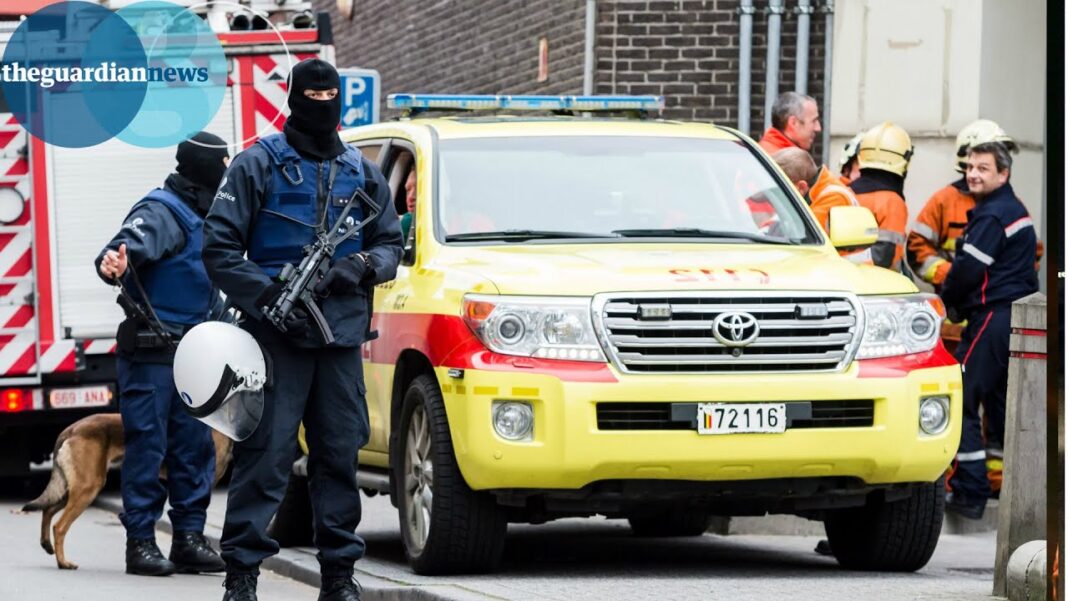
The controversy erupted in May when Belgian authorities conducted raids on the residences of several mohels in Antwerp, a city in northern Belgium with a significant Jewish population. The raids, carried out under judicial orders, involved the confiscation of circumcision tools from the homes of practitioners, including the well-known Rabbi Aharon Eckstein. Eckstein, a prominent figure within Antwerp’s Jewish community, is recognized for his expertise and longstanding service as a mohel.
According to the information provided in The Algemeiner report, the raids were initiated following a complaint filed in 2023 by Rabbi Moshe Aryeh Friedman, a known anti-Zionist activist with a controversial reputation. Friedman, who has faced accusations of Holocaust denial in the past, alleged that six mohels had endangered infants by performing the metzitzah b’peh ritual — a traditional practice wherein the mohel uses oral suction on the circumcision wound.
However, The Algemeiner reported that Rabbi Eckstein, along with other accused mohels and the parents of children circumcised by them, categorically denied performing the metzitzah b’peh practice. They insisted that they adhere strictly to safe and regulated procedures and rejected any suggestion of malpractice.
In Antwerp, Friedman is known for his public criticism of various customs held dear by the city’s ultra-Orthodox Jewish community. Antwerp’s Jewish population numbers approximately 18,000, with the majority belonging to ultra-Orthodox sects. Friedman’s actions, including his allegations against fellow Jewish leaders, have made him a controversial and polarizing figure within the community.
In the joint letter, European Jewish leaders emphasized the profound religious significance of circumcision within Judaism. “Circumcision is much more than a key tenet of Judaism,” the letter declared. “It is what defines the Jewish male, a religious commandment.” The statement further emphasized that the practice represents a “core pillar” of the Jewish faith, performed over millennia by “meticulous and highly-trained mohalim” without incident.
As The Algemeiner reported, the EJA also attached to their appeal an open letter signed by nineteen medical professionals from across Europe. These doctors defended the practice of male circumcision, affirming that its benefits significantly outweigh potential risks when performed by qualified practitioners.
“In our shared experience, those performing the circumcision — known as Mohalim within the Jewish communities — have studied extensively, are proficient in anatomy and hold the required medical experience,” the doctors wrote. They emphasized that mohels possess intergenerational expertise passed down over centuries, making them exceptionally capable of performing the procedure safely.
The raids in Belgium have rekindled longstanding debates over the status of religious rituals in Europe, particularly those associated with minority communities. The Algemeiner report noted that despite repeated efforts by various political groups to restrict or ban ritual circumcision in Europe, the practice remains legally protected in all European Union member states.
However, certain countries, including Belgium, have imposed regulations that require ritual circumcision to be performed by licensed medical professionals, often within clinical or synagogue settings. These restrictions have prompted concern among Jewish communities that their religious freedoms are being incrementally eroded under the guise of public health or child welfare considerations.
Jewish leaders fear such legal and procedural constraints could set dangerous precedents, leading to further encroachments on religious liberties. The European Jewish Association’s recent campaign reflects a broader apprehension within Jewish communities about the future of traditional practices in increasingly secularized European societies.
The European Jewish Association’s appeal to the European Commission is part of a broader strategy to secure institutional support against what it sees as an infringement on fundamental rights, according to The Algemeiner report. The EJA’s leadership has stressed that the right to religious freedom is enshrined in the European Union’s Charter of Fundamental Rights and must be upheld across all member states without exception.
In its letter to President von der Leyen, the EJA expressed hope that the European Commission would not only address the specific situation in Belgium but also reaffirm its commitment to defending religious freedom for all communities in Europe. This initiative reflects a growing sentiment among Jewish leaders that supranational advocacy is necessary to safeguard their rights amid shifting societal attitudes.
While the Belgian government has yet to issue a formal response to the EJA’s demands, Jewish leaders across Europe remain vigilant and committed to defending Brit Milah and other religious practices. The EJA’s campaign continues to gather support from religious figures, legal experts, and human rights advocates concerned about the broader implications of the Belgian police raids.
For now, the situation remains a flashpoint in the ongoing discourse on religious freedom, community rights, and state authority in Europe. As The Algemeiner report observed, this case may set a critical precedent for how religious minorities are treated within the European Union and how fundamental rights are interpreted in practice.
With European Jewish communities watching closely, the outcome of this dispute — and the European Commission’s response — will likely resonate far beyond Antwerp, shaping the future landscape of religious freedom across the continent.

Belgium is another Nazi state.