



|
Getting your Trinity Audio player ready...
|
By: Fern Sidman – Jewish Voice News
In a development that could dramatically reshape the geopolitical landscape of post-war Gaza, Turkey is reportedly preparing to deploy thousands of soldiers to the enclave as part of an international stabilization force—a move that has been met with stiff resistance from Israel and cautious reluctance from Washington. The plan, first detailed in reports by Middle East Eye and Turkish state-aligned outlets, has been further analyzed by The Algemeiner, which noted Ankara’s unmistakable determination to secure a role in Gaza’s postwar administration despite mounting diplomatic pushback.
According to these reports, over 2,000 Turkish troops have already been mobilized across multiple bases in preparation for potential deployment. The proposed mission would take place under the framework of an International Stabilization Force (ISF)—a multinational peacekeeping initiative that the United States, under President Donald Trump’s renewed Middle East peace plan, is seeking to formalize through a forthcoming UN Security Council resolution.
Under the draft resolution, as reported by The Algemeiner on Monday, the ISF would be tasked with monitoring and enforcing a ceasefire between Israel and Hamas, securing Gaza’s borders with both Israel and Egypt, maintaining humanitarian corridors, and—perhaps most controversially—overseeing the disarmament of Hamas. The proposed mission would span a minimum of two years and could be extended depending on security conditions and international consensus.
However, Turkey’s aspirations to participate in the peacekeeping coalition have drawn immediate opposition from Jerusalem. Israeli officials insist that Ankara’s involvement would constitute a grave breach of trust, given its long-standing political and financial ties to Hamas and its increasingly aggressive posture toward the Jewish state.
On Sunday, the Israeli government issued an unequivocal statement rejecting any Turkish presence in Gaza. “There will be no Turkish boots on the ground,” declared Shosh Bedrosian, spokesperson for the Israeli Prime Minister’s Office, in remarks cited in The Algemeiner report. The statement followed days of intense speculation within diplomatic circles that Ankara might attempt to leverage its relationship with Washington to gain entry into Gaza under the guise of humanitarian or peacekeeping operations.
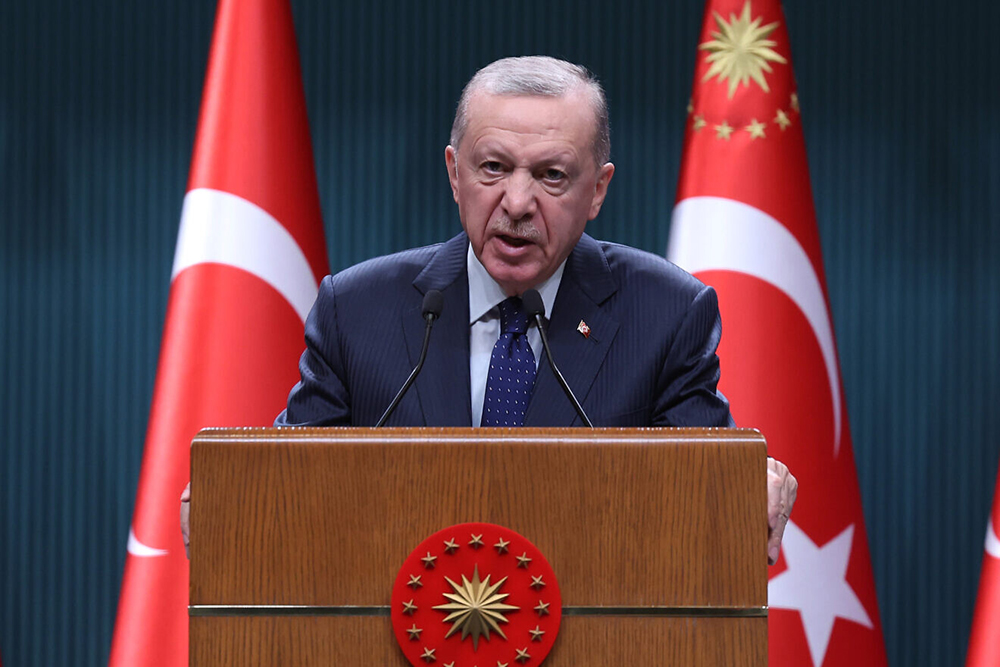
Israeli security officials, according to The Algemeiner report, view the Turkish initiative as a thinly veiled attempt to secure Hamas’s political survival under the pretext of international oversight. Turkey’s Islamist-leaning government, led by President Recep Tayyip Erdoğan, has consistently positioned itself as a patron and protector of the Palestinian cause—frequently at the expense of its relations with Israel.
Over the past decade, Ankara has provided safe haven to senior Hamas operatives, allowed the group to fundraise and coordinate logistics on Turkish soil, and extended diplomatic channels that have facilitated Hamas’s global outreach. In one notable instance, The Algemeiner report recalled that Turkish officials reportedly helped Hamas leaders obtain Turkish citizenship, enabling them to travel freely and raise funds without detection.
“Ankara’s track record demonstrates that it cannot be viewed as a neutral party,” a senior Israeli intelligence analyst told The Algemeiner. “Its role as a state sponsor of Hamas makes it inherently disqualified from participating in any postwar security arrangement.”
While Turkey’s ambitions have unsettled Jerusalem, the reaction from Washington has been more measured—tinged with hesitation and strategic caution. U.S. officials have confirmed that discussions over the composition of the ISF are ongoing and that no final list of participating countries has been agreed upon.
According to the information provided in The Algemeiner report, the Trump administration has privately signaled that Israel’s consent will be a precondition for the participation of any foreign troops. A senior U.S. diplomat told the outlet that “coordination with Israel remains the cornerstone of this mission,” emphasizing that Washington will “not impose peacekeepers on an ally’s borders against its will.”
However, the same source acknowledged that the White House faces growing pressure from regional actors, including Qatar and Turkey, both of which seek to reassert influence in Gaza’s reconstruction and political reordering. “Ankara is pushing hard,” said the official, “but the administration recognizes that Turkey’s involvement could complicate rather than stabilize the situation.”
President Recep Tayyip Erdoğan’s rhetoric in recent months has veered toward outright hostility, deepening the chasm between Ankara and Jerusalem. As The Algemeiner report documented, Erdoğan has repeatedly praised Hamas as “freedom fighters” and accused Israel of committing “genocide” in Gaza—a charge that Israeli officials and Western allies have condemned as blatantly false and inflammatory.
In a move that further escalated tensions, Turkey’s Justice Ministry last week issued arrest warrants for 37 Israeli officials, including Prime Minister Benjamin Netanyahu, accusing them of war crimes in Gaza. Israeli Foreign Minister Gideon Sa’ar dismissed the warrants as “the latest PR stunt by the tyrant Erdoğan,” while Defense Minister Israel Katz delivered a sharper rebuke, telling Turkish officials via X (formerly Twitter) to “take those ridiculous warrants and get the hell out of here.” Katz accused Erdoğan of hypocrisy, citing Turkey’s military operations against the Kurds as evidence of Ankara’s own human rights violations.
“The only thing Erdoğan will see of Gaza is through binoculars,” Katz wrote—a remark that captured the depth of Israeli outrage over Turkey’s escalating provocations.
Amid these diplomatic hostilities, reports surfaced this week—first carried by regional media and later confirmed in The Algemeiner report—that Turkey had attempted to broker a clandestine deal to evacuate 200 Hamas operatives trapped in Rafah’s underground tunnels. According to sources familiar with the matter, Ankara allegedly proposed facilitating their escape in exchange for the repatriation of the remains of Lieutenant Hadar Goldin, the IDF soldier killed during Operation Protective Edge in 2014.
The proposal, however, fell apart. Hamas ultimately returned Goldin’s body to Israel on Sunday as part of a U.S.-brokered ceasefire arrangement, while rejecting Turkey’s attempt to secure passage for the militants. Hamas reportedly insisted that the 200 fighters be released into Gaza’s remaining strongholds rather than into Israeli-controlled areas—a condition Israel flatly rejected.
As The Algemeiner report observed, the episode illustrates how Turkey’s interventions often blur the line between diplomacy and interference, raising concerns that Ankara’s participation in any peacekeeping force could undermine Israel’s counterterrorism objectives.
Under the first phase of Trump’s revised peace plan, Israel agreed to withdraw to a demarcation known as the “yellow line,” relinquishing direct control over approximately 47 percent of Gaza’s territory while retaining operational authority in the remaining 53 percent. This partial withdrawal was designed to allow international actors to facilitate humanitarian aid and civil administration in Gaza’s densest population centers.
However, as The Algemeiner reported, Hamas quickly reasserted control over much of the territory vacated by Israeli forces, launching a brutal internal crackdown to consolidate power. For Israeli policymakers, this outcome vindicates their skepticism about foreign-led stabilization efforts—particularly those involving nations sympathetic to Hamas.
“Any arrangement that includes Turkish forces risks turning Gaza into a proxy theater for Ankara’s regional ambitions,” said an Israeli security official quoted in The Algemeiner report. “Israel cannot and will not allow a foreign military that actively supports our enemies to operate a few miles from our southern border.”
For Turkey, however, the stakes extend far beyond Gaza itself. Erdoğan’s government views participation in the ISF as a means to reassert Turkey’s relevance in Middle Eastern diplomacy, countering the influence of Egypt, Saudi Arabia, and the United Arab Emirates—all of whom have taken a hard line against Hamas since October 2023.
As The Algemeiner report noted, Ankara has been attempting to reposition itself as a power broker between the Muslim world and the West, portraying its involvement as a humanitarian mission while seeking to legitimize its longstanding ties to Hamas. Analysts warn that this strategy, if successful, could normalize Hamas’s political role under international cover—a prospect Israel finds intolerable.
“Erdoğan is playing a dangerous double game,” an Israeli intelligence analyst told The Algemeiner. “He presents himself as a mediator to the Americans, while simultaneously acting as Hamas’s patron and apologist. The goal isn’t peace—it’s influence.”
As deliberations continue at the United Nations Security Council, the composition of the proposed International Stabilization Force remains uncertain. While Turkey has publicly committed troops, several Western diplomats told The Algemeiner that Ankara’s participation remains “highly unlikely” without explicit Israeli approval.
In Washington, administration officials are reportedly weighing alternative troop contributors, such as Jordan, Morocco, and Albania, which maintain strong ties with the U.S. and have demonstrated willingness to coordinate with Israel. “Turkey’s involvement is a non-starter,” one U.S. official told The Algemeiner. “We’re not going to jeopardize Israeli security for the sake of Ankara’s political theater.”
For now, the Israeli government remains unyielding. Any final decision regarding the Rafah prisoners, the structure of Gaza’s postwar administration, or the deployment of international troops will be made “in full coordination with the Trump administration,” Jerusalem said in a statement.
As The Algemeiner report noted, the coming weeks will determine whether Turkey’s ambitions in Gaza represent a genuine bid for regional cooperation—or a new front in Erdoğan’s long-running campaign to undermine Israel’s sovereignty under the guise of peacekeeping.
Either way, Israel’s position is clear: Gaza will not be a foothold for Ankara’s ambitions, and Turkish soldiers will not cross its borders.
The sad, infuriating, reality is that all these problems stem back to Israel itself for, intentionally, not recognizing itself and what it is especially after The Six Day War when Israel should have ANNEXED its own lands, recognized under International Law, of Judea, Samaria, Gaza while extirpating Islam from within its full borders which, subsequently, could have included the entire Sinai peninsula.
Had Israel made anymore, failed, “Land for Peace” deals that included the transfer of ALL of the so-called “Palestinians” out to any of the over 20, once non, Arabian/Islamic lands they choose in return for giving the Sinai to Egypt.
Israel didn’t do the above and continually placates, or aids in the propagation and validation of a purely ahistorical, communist invented antisemitic genocidal “Palestinian” mythology. This “Palestinian” mythology, along with Israel basing its political directives off of Socialism and not base Judaism, will be Israel’s downfall in the end.
Israel must ANNEX all of its lands and extirpate both Islam and Communism from within its borders while initiating a ‘No Proselytizing” policy within its borders whether it be Judaism, Christianity, Islam or Socialism….
Israel must find itself if it intends to be a surviving Jewish nation no matter what the Bible does or does not say and whether the Bible is, or is not, true….