



|
Getting your Trinity Audio player ready...
|
Edited by: TJVNews.com
With the guns finally quiet after nearly two weeks of regional war, a new diplomatic chapter may be opening — this one centered on the fates of dozens of Israeli hostages still held in Gaza. Egypt, long a key intermediary in Israel-Hamas negotiations, has formally requested that Israel dispatch a delegation to Cairo to discuss a potential hostage deal, i24NEWS has learned in an exclusive report.
“There are no more excuses for Israel not to send a delegation now that the war with Iran is over,” a senior Egyptian official told i24NEWS under condition of anonymity. The source emphasized that the regional de-escalation following the U.S.-brokered ceasefire between Israel and Iran has removed the primary barrier to resuming talks on the Gaza hostage crisis.
According to the information provided in the i24NEWS report, the request from Cairo follows the arrival of a Hamas delegation in the Egyptian capital, signaling the group’s own apparent readiness to resume dialogue over a potential exchange or repatriation framework. The timing is poignant: just days ago, the Israel Defense Forces (IDF) recovered the bodies of three Israeli captives from the Gaza Strip, deepening the urgency to address the status of the approximately 50 individuals still held by Hamas — including both living hostages and the bodies of the deceased.
As i24NEWS has reported since the October 2023 cross-border attack by Hamas that reignited major hostilities, Israeli intelligence believes that 50 hostages remain in Hamas custody. Of these, the IDF has officially confirmed that at least 28 are deceased. Among the dead is believed to be the body of Staff Sgt. Oron Shaul, an IDF soldier killed during Operation Protective Edge in 2014 and long considered to be held by Hamas as a bargaining chip.
The recent recovery of three Israeli bodies — retrieved during a high-risk IDF operation near Khan Younis — appears to have intensified pressure on both the Israeli government and international stakeholders to bring resolution to the prolonged hostage standoff. Prime Minister Benjamin Netanyahu, who has faced increasing public scrutiny over his handling of the hostage situation, has so far remained noncommittal about sending a team to Cairo.
Yet behind closed doors, officials acknowledge that Egypt’s overture is not one Israel can afford to dismiss lightly. “The war with Iran provided political cover to delay negotiations,” a senior Israeli diplomat told i24NEWS. “That cover is now gone. Egypt’s request is not only timely, it’s strategic.”
Egypt’s role as a mediator between Israel and Hamas is rooted in both geography and diplomacy. Sharing a border with Gaza, Cairo maintains regular communication channels with Hamas’ political bureau — often more so than Western governments — and has been instrumental in brokering nearly every major ceasefire and prisoner exchange between the two sides over the last decade.
Cairo believes that now, in the post-war quiet, a humanitarian-focused negotiation may have a higher likelihood of success, according to i24NEWS. The regional focus has shifted, and the international community is now expected to throw its weight behind reconstruction efforts in Gaza and regional stabilization — both of which could be imperiled by the continued detention of Israeli civilians.
In the Egyptian capital, the mood is cautiously optimistic. An Egyptian intelligence official briefed on the matter told i24NEWS that the Hamas delegation arrived “prepared to discuss serious proposals,” including a phased deal in which deceased hostages might be repatriated first, followed by live captives in exchange for Palestinian prisoners held in Israeli jails. The same official emphasized, however, that no deal would be possible unless both sides showed “maximum flexibility” on core demands.
Israel’s calculus is more complicated. While public opinion remains sharply focused on securing the release of all hostages, any appearance of granting concessions to Hamas could trigger backlash — particularly in the aftermath of a war in which Israel portrayed itself as confronting Iranian-backed terror on multiple fronts.
In interviews with i24NEWS, Israeli officials acknowledged the dilemma: resume talks now and risk criticism for negotiating with a terrorist group, or delay and risk losing the fragile momentum Egypt has created. The recent recovery of the three bodies from Gaza has stoked fears among the families of remaining hostages that time is running out.
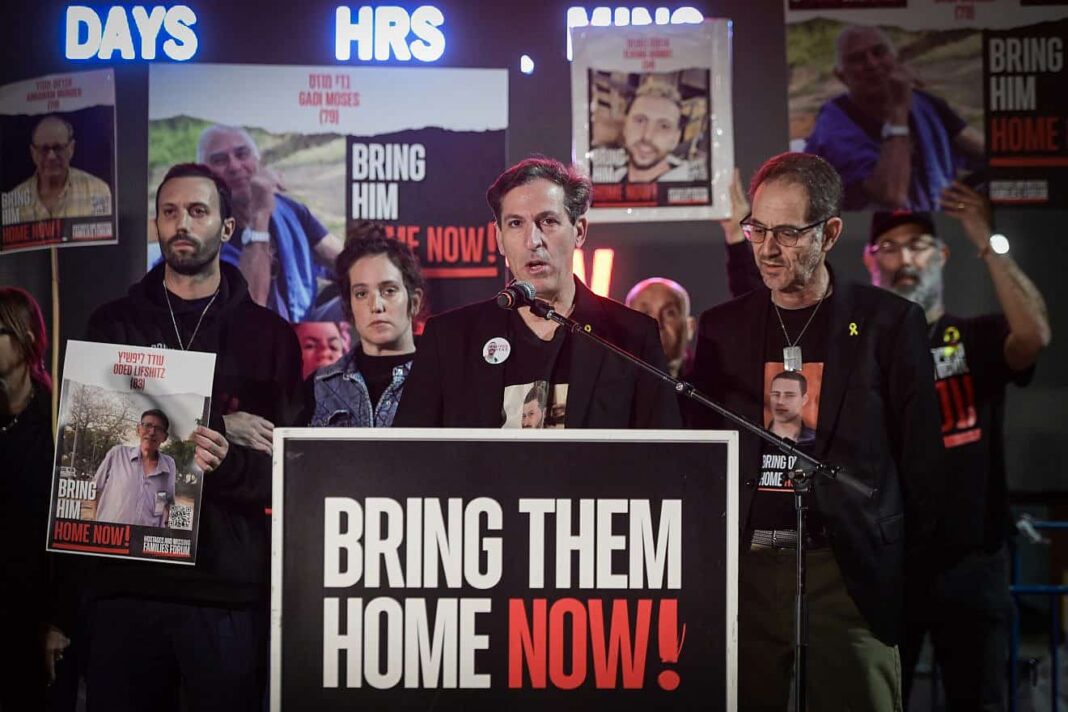
“We’ve waited too long already,” said Meirav Goldfarb, whose brother Gadi was kidnapped from Kibbutz Nir Oz and is believed to be among the remaining living captives. “The prime minister promised to make the hostages a top priority — this is the moment to prove it,” she told i24NEWS.
The renewed momentum toward talks is not occurring in a vacuum. Qatar — another key broker in past hostage negotiations — is expected to play a parallel role alongside Egypt should a formal negotiation track open in Cairo.
i24NEWS reported that Qatari officials have quietly urged Hamas to approach the talks in “good faith,” particularly given the reputational fallout from their alignment with Iran during the recent hostilities. While Hamas has not commented publicly on its goals for the Cairo meeting, senior figures inside the group have told Arab media outlets that the organization seeks to leverage the hostages for significant concessions — including the release of hundreds of high-profile prisoners and long-term guarantees against further Israeli military incursions into Gaza.
For Israel, the decision on whether to send a delegation to Cairo will test not only its diplomatic will but also its moral responsibility. The report at i24NEWS emphasized in a Monday night broadcast that Egypt’s offer presents a “rare and possibly fleeting opportunity” to resolve what has become an open wound in the Israeli national psyche.
“This is about more than politics,” said i24NEWS Middle East analyst Eli Zohar. “This is about the nation’s soul. You either bring them home — or you risk losing the public’s faith forever.”
As of Tuesday morning, there has been no official response from the Prime Minister’s Office regarding Egypt’s invitation. But the pressure is building — from within Israel, from families of hostages, and from international partners who see the post-war window as a fragile but precious opening to do what war could not: bring the captives home.
