



|
Getting your Trinity Audio player ready...
|
Descendants of Jewish Baghdad Elite Sue France Over Stolen Ancestral Home, Demand Justice for Decades of Injustice
By: Fern Sidman
In a case that has drawn attention to the broader quest for justice among dispossessed Jews of the Middle East, the descendants of two prominent Iraqi Jewish brothers—Ezra and Khedouri Lawee—have launched a historic legal claim against the French government, alleging it owes the family more than $20 million in unpaid rent for a stately mansion in Baghdad that has served as the French Embassy since the 1960s. As VIN News reported on Wednesday, this lawsuit, led by Canadian physician Dr. Philip Khazzam, grandson of Ezra Lawee, represents one of the rare moments in which a Western democracy is being called to account for benefiting from the nationalized property of exiled Jews.
According to details shared in the VIN News report, the Lawee family estate—known as Beit Lawee—was among the most luxurious private residences in mid-20th-century Baghdad. With its classical columns, marble fountains, fruit-laden date palms, and a garden that sloped gently toward the Tigris River, the mansion stood as a proud testament to the wealth and prominence of Iraq’s Jewish bourgeoisie before the community’s devastating collapse.
The Lawees were part of a thriving Jewish population in Baghdad that, before World War II, numbered around 150,000, according to the report at VIN News. These Jews, with roots stretching back nearly 2,700 years to the Babylonian exile, once comprised nearly a third of Baghdad’s population, living in peaceful coexistence with their Muslim and Christian neighbors. The Lawees were respected businessmen, having secured the General Motors dealership for a wide section of the Middle East and employing cooks, drivers, and domestic staff in a lifestyle that mirrored Jewish elites in Vienna or Krakow.
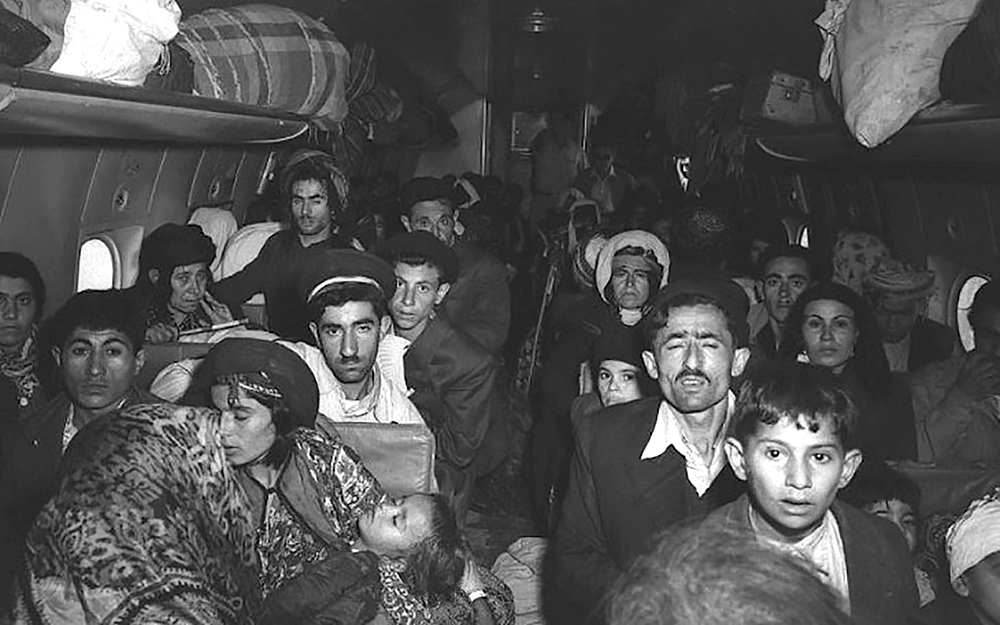
But that world collapsed almost overnight. As the VIN News report recounted, the situation changed drastically in 1951 when a climate of rising antisemitism and political turmoil culminated in the mass airlift of more than 100,000 Jews from Iraq to Israel under Operation Ezra and Nehemiah. Many of Iraq’s Jews, including members of the Lawee family, were stripped of their citizenship, had their assets frozen, and were forced to leave the only homeland they had ever known.
Unlike most of their contemporaries who fled to Israel, Ezra and Khedouri Lawee brought their families to Montreal, where they became successful real estate developers and proud Canadians. But the memories of Baghdad—and their beloved Beit Lawee—remained seared into the family’s identity. Now, more than seven decades later, Ezra’s grandson, Dr. Philip Khazzam, is seeking not only financial redress, but also moral recognition of what was lost.
What sets this case apart, according to the information provided in the VIN News report, is the defendant: not the Iraqi regime that seized Jewish property, but the French government, which has occupied Beit Lawee since the 1960s. Initially, France paid rent to the Lawee family, recognizing them as the rightful owners. But this changed in the 1970s under pressure from Saddam Hussein’s regime, which insisted that France pay rent directly to the Iraqi treasury. France complied, and for over 50 years has been occupying the Lawee estate without compensating its true owners.
“You have France sitting in a house for 55 years, not paying rent to the family that owns it,” Dr. Khazzam told The Globe and Mail, as also reported by VIN News. “This is a world leader in human rights, and this is what they do?”
The legal claim, which demands back rent, damages, and recognition of property rights, now poses a deeply uncomfortable question for the French Republic: Will a nation that proudly declares itself the birthplace of human rights acknowledge and correct its role in profiting from a Jewish family’s dispossession?
As the VIN News report indicated, the Lawee family’s case represents a rare opportunity for restitution among the hundreds of thousands of Jews expelled or forced out of Arab countries in the mid-20th century. While regimes in Egypt, Syria, Iraq, and Libya systematically confiscated Jewish-owned businesses, homes, and personal assets, few if any compensations have ever been made. The possibility of a Western power like France being held accountable offers a precedent-setting model.
“There are billions of dollars of Jewish assets that were simply taken, never returned, never compensated,” said an attorney involved in the Lawee case, as quoted by VIN News. “But when it comes to democratic nations occupying or benefiting from those confiscated properties, there’s a chance for justice. France should know better.”
Though the legal value of the lawsuit stands at over $20 million, the symbolic value of Beit Lawee looms even larger. For Dr. Khazzam and his cousins, it is not just about bricks and mortar. “It’s not just a house,” he said. “All of us are so proud of our Iraqi heritage. For a long time, it was a magical place for our families to live.”
VIN News reported that remarkably, the mansion has survived war, dictatorship, and occupation. Its survival stands as a testament not just to architectural resilience but to the enduring spirit of a once-thriving Jewish civilization in the Arab world. For the descendants of Ezra and Khedouri Lawee, reclaiming ownership or receiving compensation is about reclaiming history—about reminding the world that their family, and their people, once flourished in Baghdad before being erased from the map.
The story of the Lawee family offers a compelling illustration of the broader Jewish exodus from the Middle East—a narrative too often neglected in discussions of displacement and justice in the region. Whether France chooses to honor its human rights legacy or hide behind diplomatic pragmatism remains to be seen. But for the Lawees and countless others, the demand is clear: history cannot remain unpaid.
