



|
Getting your Trinity Audio player ready...
|
Defiance in Tehran: Iran’s New Supreme Leader Vows to Close the Strait of Hormuz and Escalate Confrontation With the West
By: Jason Ostedder
In his first public remarks since assuming the mantle of Iran’s supreme leadership, Ayatollah Mojtaba Khamenei delivered a stark message on Thursday to the international community: the Islamic Republic intends to continue its aggressive posture in the escalating regional war and will not hesitate to wield its most powerful geopolitical weapon—the potential closure of the Strait of Hormuz, the world’s most critical oil transit corridor.
The statement, carried through official Iranian media channels and widely analyzed by international observers, signals that the newly installed leader intends to pursue an uncompromising strategy in the ongoing conflict involving Iran, the United States, and Israel. According to reporting and analysis cited by The New York Times on Thursday, Mojtaba Khamenei declared that Tehran would maintain what he described as an “effective and regret-inducing defense,” while explicitly affirming that “the lever of blocking the Strait of Hormuz must also continue to be used.”
Those words, coming at a moment when global energy markets are already experiencing unprecedented volatility, immediately sent shockwaves through diplomatic circles and financial markets alike.
The Strait of Hormuz, a narrow maritime passage connecting the Persian Gulf with the Gulf of Oman and the Arabian Sea, has long been regarded as one of the most strategically important waterways on earth. Roughly 20 percent of the world’s oil supply typically passes through the strait each day.
According to assessments highlighted by The New York Times, the possibility that Iran could disrupt or block this vital shipping route represents one of the most significant geopolitical risks facing the global economy.
Tehran has repeatedly threatened to target oil tankers and commercial shipping in the waterway during periods of heightened confrontation with Western powers. However, Mojtaba Khamenei’s explicit endorsement of using the strait as leverage marks one of the most direct confirmations yet that Iran intends to continue employing this strategy.
Energy analysts warn that even partial disruptions could have dramatic consequences for global markets.
Indeed, the tensions have already begun to manifest in real-world incidents. As The New York Times reported, two oil tankers were attacked off the coast of Iraq, leaving both vessels burning and forcing regional authorities to temporarily close nearby export terminals.
The attacks prompted Iraq and Oman to halt operations at key oil facilities on Thursday as a precautionary measure.
The escalating conflict has triggered what the International Energy Agency (IEA) described as the largest disruption in global oil supply in modern history. According to reporting referenced by The New York Times, the ongoing war in the Middle East has already caused energy prices to surge sharply, despite coordinated efforts by Western governments to stabilize markets.
In recent days, the United States and several major economic powers have announced plans to release emergency oil reserves in an attempt to cushion the shock to global energy supplies.
Yet these measures have done little to calm investor fears. Energy traders remain deeply concerned that further attacks on shipping lanes—or a deliberate Iranian effort to block the Strait of Hormuz—could trigger a catastrophic supply shortage.
Such a development could drive oil prices dramatically higher and ripple across global economies already grappling with inflationary pressures.
Despite the rising energy prices, President Trump has signaled that the United States is prepared to endure the economic consequences if doing so weakens Iran’s strategic capabilities. In remarks cited by The New York Times, Trump dismissed concerns about rising oil prices, arguing that the United States’ position as the world’s largest oil producer could actually produce economic benefits.
“The United States is the largest Oil Producer in the World, by far,” Trump wrote on social media. “So when oil prices go up, we make a lot of money.”
But Trump emphasized that the central objective of the ongoing campaign against Iran is strategic rather than economic. “Of far greater interest and importance to me, as President, is stopping an evil Empire, Iran, from having Nuclear Weapons,” he wrote. The comments reflect Washington’s determination to continue the joint U.S.-Israeli military campaign targeting Iran’s military infrastructure and nuclear program.
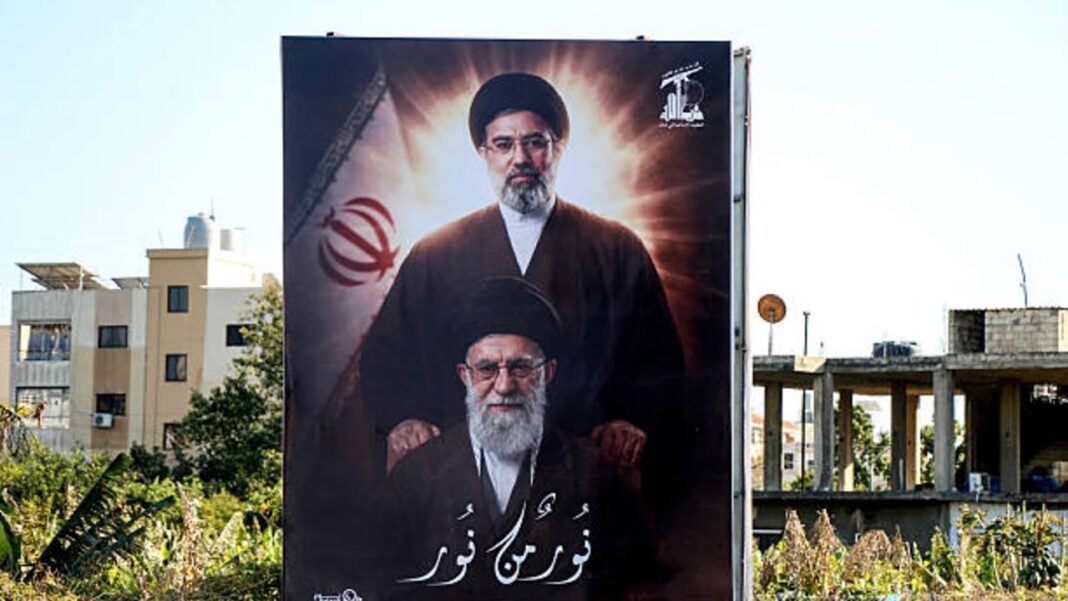
Mojtaba Khamenei’s defiant remarks come only days after he assumed leadership of the Islamic Republic under extraordinary circumstances. The 56-year-old cleric became Iran’s new supreme leader following the death of his father, Ayatollah Ali Khamenei, who was killed in Israeli airstrikes at the outset of the current war.
As The New York Times has reported, the elder Khamenei was among several senior Iranian officials eliminated during the opening phase of the U.S.-Israeli bombing campaign. The strikes also killed members of Mojtaba Khamenei’s immediate family, including his mother, wife, and daughter, in what Iranian authorities described as a devastating blow to the country’s leadership.
Mojtaba himself was reportedly injured during the initial airstrikes, though the extent of his wounds remains unclear.
According to both Iranian and Israeli officials cited by The New York Times, he has not yet appeared publicly on video since assuming power. Instead, his first message to the nation and the world was delivered through written statements broadcast by Iranian state media.
In addition to his warnings regarding the Strait of Hormuz, Mojtaba Khamenei also issued a direct threat toward American military installations across the Persian Gulf region. Several countries in the region—including Qatar, Bahrain, Kuwait, and the United Arab Emirates—host major U.S. military bases that serve as strategic hubs for American operations in the Middle East.
According to remarks cited by The New York Times, Khamenei accused these nations of facilitating American aggression. Countries hosting U.S. bases, he said, “must have realized that America’s claim of establishing security and peace has been nothing more than a lie.” The comments suggest that Iran may consider targeting those facilities as part of its broader retaliation strategy.
Indeed, tensions appear to be escalating rapidly. Qatar announced on Thursday that its air defense systems had successfully intercepted a missile attack, while Saudi Arabia reported that it had destroyed two drones headed toward the massive Shaybah oil field, one of the kingdom’s most important energy facilities.
Beyond the geopolitical maneuvering, the war has already produced a severe humanitarian crisis. According to figures cited by The New York Times, the conflict has displaced as many as 3.2 million people within Iran. The United Nations refugee agency reported Thursday that millions of civilians have been forced to flee their homes as airstrikes and military operations intensify across the country.
Approximately 2,000 people have been killed since the start of the U.S.-Israeli campaign, the majority of them within Iran. Cities across the country have experienced repeated bombardments targeting military installations, government facilities, and infrastructure linked to Iran’s nuclear program.
The conflict shows no signs of abating. The Israeli military announced Thursday that it had launched another wave of airstrikes across Iran, targeting key government infrastructure and strategic military sites. According to The New York Times report, Israeli officials described the operation as part of a sustained effort to degrade Iran’s military capabilities and prevent the regime from continuing its nuclear development program.
Iran, for its part, has vowed to retaliate. Iranian state media reported that the country’s armed forces had launched missile attacks targeting Israeli military bases and security installations.While details of those strikes remain limited, the exchange underscores the increasingly dangerous trajectory of the conflict.
As the war enters its second week, the Middle East appears to be moving ever closer to a broader regional confrontation. Mojtaba Khamenei’s fiery rhetoric suggests that Iran’s new leadership intends to pursue a strategy of confrontation rather than conciliation. By threatening to disrupt the Strait of Hormuz, strike U.S. bases, and escalate military operations against Israel, Tehran is signaling that it is prepared for a prolonged struggle.
For global leaders, the stakes could scarcely be higher. As The New York Times has emphasized in its coverage of the unfolding crisis, the conflict now extends far beyond the battlefield itself—touching energy markets, global trade routes, and the fragile geopolitical balance of the entire Middle East.
Whether diplomatic efforts can eventually halt the spiral toward wider war remains uncertain.
But one reality is already clear: the ascension of Mojtaba Khamenei has ushered in a new and potentially more volatile chapter in Iran’s confrontation with the West.

Iran’s New “Supreme Leader” Mojtaba Khamenei is a homosexual, who used mosques for his perversions (reminiscent of Yasser Arafat). Homosexuality is a crime and virtually every middle East Arab country, punishable by execution, imprisonment, etc.