



|
Getting your Trinity Audio player ready...
|
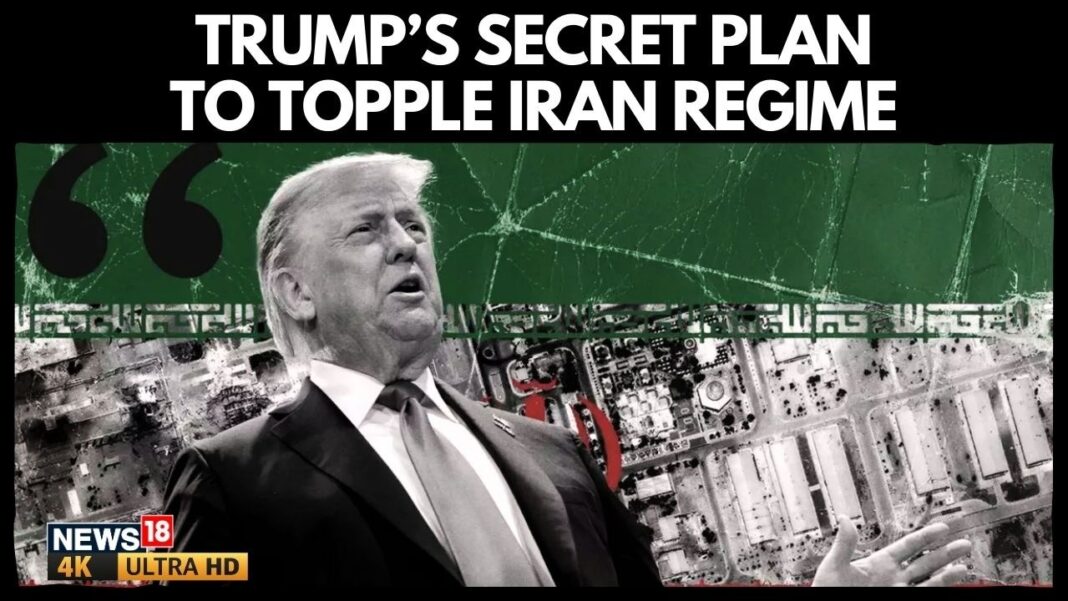
CIA, Mossad Supporting Kurdish Militias to Accelerate Collapse of Iranian Regime
By: Jeff Gorman
As the military confrontation between Iran and the U.S.-Israeli alliance intensifies, new developments along the mountainous frontier between Iran and Iraq suggest the possibility of a widening battlefield. Several Iranian Kurdish militant factions are reportedly positioning fighters along the border and deliberating whether to launch a ground incursion into northwestern Iran, a move that could dramatically reshape the trajectory of the conflict and open a volatile new front against the Iranian regime.
According to reports cited on Thursday by World Israel News, the groups involved are dissident Kurdish Iranian organizations that operate primarily from bases in Iraq. These factions, long opposed to the government in Tehran, recently consolidated their political and military coordination by forming a new alliance known as the Coalition of Political Forces of Iranian Kurdistan. The coalition was formally announced just six days before the outbreak of the current war, signaling an emerging effort among Kurdish opposition movements to capitalize on what they view as a moment of historic opportunity.
The alliance brings together multiple Kurdish factions that for decades have maintained a tense and often violent relationship with Iran’s central government. These groups have historically operated along the rugged borderlands separating Iran’s Kurdish-majority regions from the semi-autonomous Kurdistan Region of Iraq. Their leaders argue that Iran’s Kurdish population has long suffered discrimination, political repression, and economic marginalization.
Now, amid the ongoing U.S.-Israeli military campaign targeting Iranian strategic infrastructure, these organizations appear to be exploring the possibility of leveraging the broader conflict to challenge Tehran’s authority in the northwest of the country.
According to officials familiar with the matter cited in coverage by World Israel News, the militant groups maintain several thousand fighters positioned along the border area. In recent weeks, they have reportedly transferred hundreds of personnel from camps located in Iraqi Kurdistan into areas just inside Iranian territory. These movements, sources say, are part of preparatory measures for a potential offensive operation that could attempt to seize control of territory within Iran’s Kurdish region.
While the militants have not yet initiated such an assault, the mere possibility has captured the attention of policymakers and intelligence officials in Washington, Jerusalem, and across the Middle East. The emergence of a Kurdish front inside Iran could create additional pressure on Tehran at a moment when its military and security apparatus is already heavily engaged by external attacks.
Two U.S. officials and an Israeli official familiar with the discussions told reporters that the Kurdish militias are receiving some degree of assistance from Western intelligence services. According to the sources cited by World Israel News, both Israel’s Mossad intelligence agency and the U.S. Central Intelligence Agency have been involved in discussions regarding the potential role of Kurdish factions in the broader campaign against Iran.
One American official described the strategy under consideration as an attempt to seize and hold a defined area within Iran’s Kurdish region. Such a move could serve as both a symbolic and strategic challenge to the Iranian government, potentially encouraging unrest among other opposition groups inside the country.
“The war started with a kinetic phase by the U.S. and Israeli militaries,” an Israeli official reportedly said, according to a report highlighted by World Israel News. “But as the war continues there will be other efforts by the Mossad and the CIA.”
The suggestion that covert operations might accompany conventional military strikes reflects the increasingly complex nature of the conflict. While air and missile attacks have dominated the opening phase of the war, intelligence officials appear to be exploring additional avenues for destabilizing Iran’s ruling regime.
The idea of employing Kurdish militants as a force multiplier is not new. Kurdish groups have historically played significant roles in regional conflicts, particularly in Iraq and Syria, where they have frequently partnered with Western powers in campaigns against adversaries such as ISIS.
According to a second U.S. official cited by World Israel News, the concept of utilizing Iranian Kurdish factions to open a northern front against Tehran originated with Israeli Prime Minister Benjamin Netanyahu and the Mossad. American intelligence agencies reportedly joined the discussions later as the conflict escalated.
Nevertheless, the extent of direct U.S. involvement remains a matter of debate. Secretary of State Marco Rubio addressed the issue during a closed-door briefing with members of Congress earlier this week. Rubio reportedly attempted to clarify Washington’s official position while leaving open the possibility of independent Israeli actions.
“We’re not arming the Kurds,” Rubio told lawmakers, according to remarks cited by World Israel News. “But you never know with the Israelis.”
The comment reflects the delicate balance the United States is attempting to maintain as it coordinates closely with Israel while also managing broader regional sensitivities. Kurdish militias have long been a contentious issue in Middle Eastern geopolitics, particularly for neighboring countries that fear the rise of Kurdish separatist movements within their own borders.
The White House has sought to distance itself from any immediate plans to support a Kurdish ground invasion. Speaking to reporters on Wednesday, White House press secretary Karoline Leavitt stated that President Trump has not approved any proposal to back Kurdish militias in launching a ground assault inside Iran.
Diplomatic efforts have also been underway as the conflict threatens to spill across additional borders. According to the information provided in the World Israel News report, President Trump held a telephone conversation Sunday with two of the most influential leaders in Iraqi Kurdistan: Masoud Barzani and Bafel Talabani.
Barzani and Talabani represent rival political factions within Iraq’s Kurdish autonomous region but remain central figures in Kurdish political life. During the conversation, Trump reportedly discussed the ongoing war with Iran and explored potential future developments.
A U.S. official familiar with the call told reporters that both Kurdish leaders expressed caution about becoming directly involved in a ground invasion of Iranian territory. Their reluctance reflects concerns that such an operation could provoke retaliation from Tehran and destabilize the fragile political equilibrium in Iraqi Kurdistan.
In a separate diplomatic channel, Trump also reportedly spoke with Mustafa Hijri, the leader of the Democratic Party of Iranian Kurdistan. That organization is one of the militant groups participating in the newly formed coalition and has long advocated for greater autonomy for Iran’s Kurdish population.
Meanwhile, Iranian officials have been actively working to prevent Kurdish militant activity from expanding into a broader insurgency. Iranian Foreign Minister Abbas Araghchi raised the issue during a telephone conversation Wednesday with Iraqi Prime Minister Mohammed Shia al-Sudani.
According to statements cited by World Israel News, the Iraqi leader sought to reassure Tehran that his government would not permit Iraqi territory to be used as a staging ground for attacks against Iran.
“The Iraqi prime minister emphasized that the Iraqi government will under no circumstances allow any threat to be directed at Iran from Iraqi territory,” Iran’s foreign ministry said following the conversation.
Such assurances highlight the delicate position Iraq finds itself in as tensions escalate between Iran and its adversaries. While Iraq maintains close political and economic ties with Iran, the country also hosts American military forces and maintains relationships with Western allies.
At the same time, developments on the ground suggest that the Kurdish regions along the border are already experiencing the impact of the broader conflict. Iran’s Tasnim news agency reported Wednesday that the city of Bukan, located in northwestern Iran near the Iraqi frontier, was subjected to heavy bombing.
Although details about the strike remain unclear, the report underscores the increasingly volatile conditions in the region. Kurdish-populated areas of Iran have historically been flashpoints for unrest, and the presence of militant factions in the surrounding mountains has frequently led to clashes with Iranian security forces.
Despite the rising tensions, Kurdish factions have publicly stated that they have not yet launched a ground assault. Leaders within the coalition appear to be carefully weighing their options while monitoring developments in the wider war.
A Kurdish source familiar with the discussions told reporters that an offensive could begin later this week if Washington provides what he described as a “green light.”
Such a decision would carry profound implications for the region. A Kurdish incursion into Iran could potentially trigger broader uprisings among minority communities and opposition groups, further complicating Tehran’s efforts to maintain control during a period of intense external pressure.
At the same time, it could provoke severe retaliation from Iran, including military operations targeting Kurdish bases in Iraq and beyond.
For now, the situation remains fluid. As World Israel News has noted in its coverage of the unfolding war, the conflict between Iran and the U.S.-Israeli alliance is entering an increasingly complex phase in which covert operations, regional alliances, and insurgent movements may play a larger role alongside conventional military power.
Whether Kurdish militants ultimately decide to cross the border could determine whether the conflict remains primarily an air and missile campaign or evolves into a broader multi-front struggle within Iran itself.
