



|
Getting your Trinity Audio player ready...
|
By: Fern Sidman
The Middle East awoke this week to a familiar yet increasingly perilous rhythm: thunderous threats from Tehran paired with carefully calibrated hints of diplomacy. As senior Iranian officials escalated their rhetoric against Washington, warning of regional infernos and direct attacks on American interests, parallel signals emerged suggesting that talks—however fragile—might soon resume. The juxtaposition, as was reported on Monday by World Israel News, reflects a dual-track strategy that has become a hallmark of Iran’s posture at moments of acute tension: intimidate to deter, negotiate to buy time.
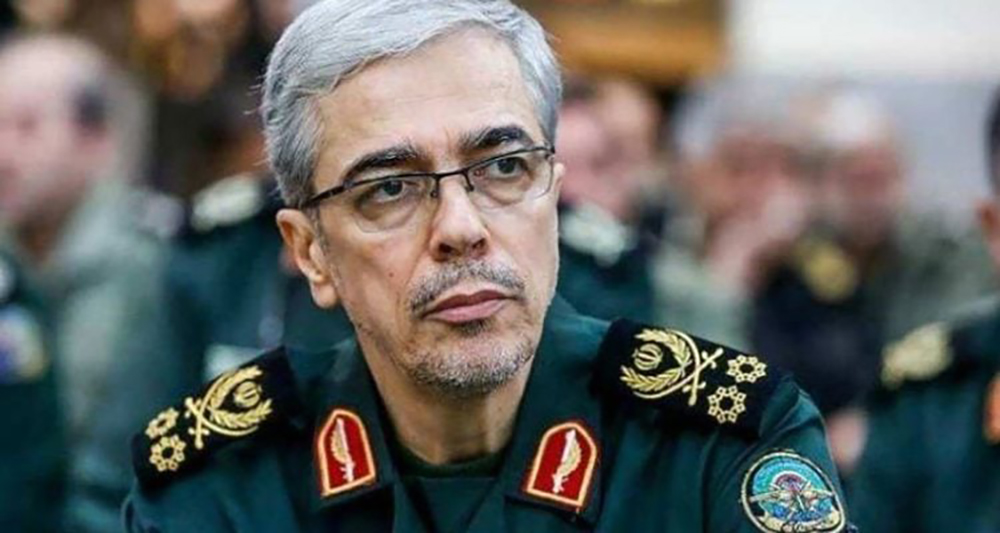
On Monday, Iran’s armed forces chief Mohammad Bagheri delivered one of the starkest warnings heard in recent months. His message to the United States was unambiguous and chilling. “Any small mistake will open our hands for action,” Bagheri said, according to remarks cited in the World Israel News report. “The world will see the other face of powerful Iran. Then no American will be safe, and the fire of the region will burn the United States and its partners.”
The language was not merely rhetorical flourish. Bagheri framed his warning as the product of a strategic reassessment following what Iranian officials have described as a recent 12-day conflict. In his telling, Iran has moved beyond a posture of reactive defense and has embraced an explicitly offensive doctrine. “After the 12-day war, Iran reviewed its defense doctrine and changed the approach of the armed forces to an offensive doctrine based on rapid, decisive, and sustained operations,” he declared. Iran, he added, is now “fully prepared for confrontation.”
The World Israel News report noted that this declaration represents a significant shift in tone, if not necessarily in substance. Iranian leaders have long emphasized deterrence through the threat of retaliation, but Bagheri’s remarks suggest a willingness to initiate or rapidly escalate military action should Tehran perceive a provocation. The warning that “no American will be safe” was particularly striking, signaling that U.S. personnel and assets across the region could be targeted in the event of conflict.
Yet even as Bagheri issued these threats, another branch of the Iranian government was striking a markedly different note. Iran’s Foreign Ministry spokesman indicated that Tehran is simultaneously examining “several diplomatic processes” and expects developments in the coming days. The comment, reported by World Israel News, suggested that Iran is keeping open the possibility of negotiations even as it rattles sabers.
This duality was reinforced by reporting later Monday from Tasnim News Agency, which said talks between Tehran and Washington could begin in the near future. According to Tasnim, the discussions might involve Abbas Araghchi on behalf of Iran and Steve Witkoff representing the United States, with Turkey mentioned as a possible venue. While no official confirmation has been issued by Washington, the report added another layer of complexity to an already volatile situation.
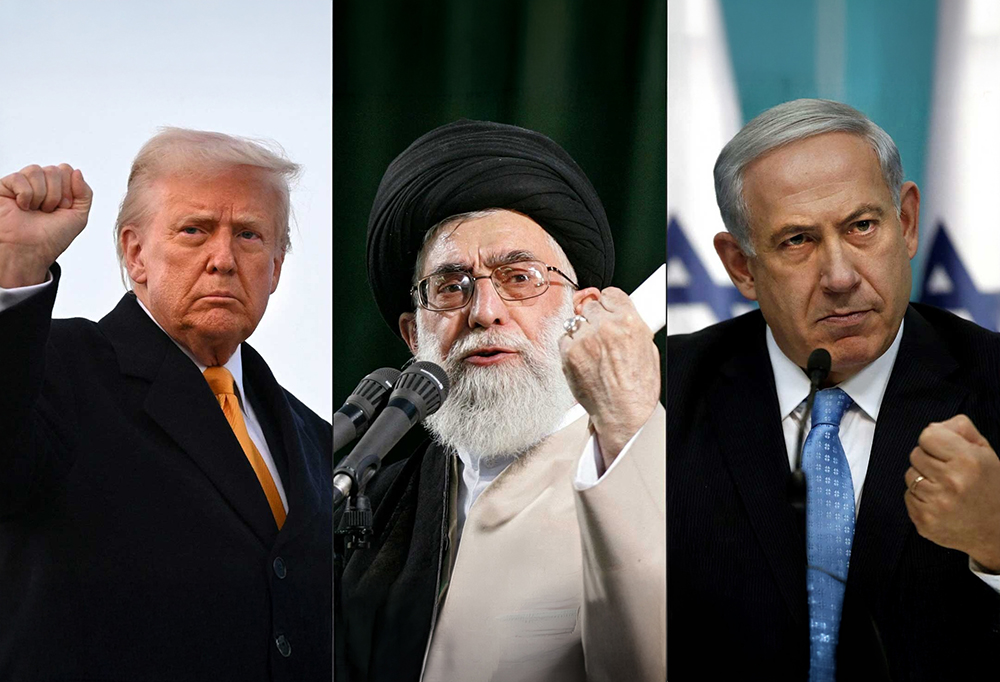
The backdrop to these developments is a series of warnings issued just a day earlier by Iran’s supreme leader Ali Khamenei. On Sunday, Khamenei cautioned that any U.S.-initiated conflict would not remain contained. “If the Americans start a war, this time it will be a regional war,” he said, a statement that World Israel News highlighted as one of his most direct threats to date. Notably, Khamenei also posted the remarks to his official Hebrew-language account on X, a move widely interpreted as a pointed message to Israel as well as to Washington.
Khamenei also accused foreign powers—specifically the United States and what he termed “Zionists”—of orchestrating the recent wave of unrest that shook the Islamic Republic. Casting the protests not as a domestic uprising rooted in social or economic grievances but as a meticulously engineered conspiracy, Khamenei insisted the turmoil was planned, directed, and managed from abroad. His remarks, reported on Monday by Israel National News, offer a revealing portrait of how Tehran’s leadership interprets dissent—and how it seeks to justify its response.
According to Khamenei, the unrest amounted to nothing less than a “sedition,” a term heavy with ideological significance in Iran’s political lexicon. He claimed that the plan behind the disturbances “was developed abroad, and it was managed from abroad,” asserting that Iran’s enemies had poured resources into destabilizing the country. In language that the Israel National News report described as unusually explicit, Khamenei alleged that he had been informed “through a certain channel” that the Central Intelligence Agency and Mossad had deployed “all of their resources into the field.” Despite this, he declared triumphantly, “they were defeated.”
These claims, which the Israel National News report noted were made without publicly presented evidence, fit squarely within a longstanding narrative employed by Iran’s leadership: that internal dissent is never organic, never spontaneous, and never legitimate. Instead, protests are framed as the work of external enemies exploiting discontent to weaken the state. By situating the unrest within a global conspiracy, Khamenei effectively absolves the regime of responsibility for the conditions that gave rise to the demonstrations in the first place.
Khamenei went further, arguing that U.S. involvement was evident not merely through intelligence assessments but through the words of the American president himself. Quoting remarks he attributed to the U.S. leader, Khamenei wrote that the president had explicitly encouraged the rioters, telling them, “Keep going, keep going. I’m coming [to help].” For Khamenei, this statement served as proof that Washington was not a distant observer but an active instigator. Such accusations reflect Tehran’s deep-seated conviction that the United States views regime change in Iran as an ultimate objective.
The Supreme Leader framed the unrest as part of a recurring pattern rather than an isolated episode. Iran, he wrote, is a country “in friction with the interests of global aggressors,” and therefore destined to face repeated attempts at destabilization. When he posed the question of how long such efforts would continue, his answer was characteristically defiant: they would persist “until the Iranian nation reaches a point where the enemy is left hopeless.” “And we will reach that point,” he added, projecting confidence that endurance and resistance would ultimately prevail.
The convergence of these messages—Bagheri’s warning of immediate retaliation, Khamenei’s prediction of regional conflagration, and the Foreign Ministry’s hints of diplomacy—illustrates the delicate balancing act underway in Tehran. On one hand, Iran seeks to project strength and deterrence, signaling that it will not be cowed by U.S. pressure or military posturing. On the other, it appears keenly aware of the costs of open war and is leaving the door ajar for negotiations that could de-escalate tensions or at least delay confrontation.
For Israel, these developments are being watched with acute concern. World Israel News reported that Israeli officials have confirmed that Steve Witkoff is expected to arrive in Israel shortly for consultations with senior leadership. The visit underscores Israel’s central role in any regional calculus involving Iran, particularly given Tehran’s repeated threats against the Jewish state and its support for armed proxies on Israel’s borders.

Israeli analysts cited by World Israel News note that Iran’s rhetoric often intensifies ahead of diplomatic initiatives, a pattern designed to improve Tehran’s bargaining position. By threatening catastrophic consequences for any U.S. “mistake,” Iranian leaders may be attempting to deter military action while simultaneously signaling that they are willing to talk—on their terms. The danger, critics warn, is that such brinkmanship increases the risk of miscalculation, especially in a region crowded with military assets and overlapping lines of communication.
Bagheri’s assertion that Iran has adopted an offensive doctrine is particularly unsettling in this context. While Iran has long relied on asymmetric warfare and proxy forces, an explicit shift toward rapid and sustained offensive operations suggests a readiness to escalate more directly. The World Israel News report emphasized that this posture could encompass missile strikes, cyber operations, and attacks on shipping or energy infrastructure—actions that would reverberate far beyond the immediate theater.
At the same time, the diplomatic overtures hint at internal debates within Iran’s leadership. The Foreign Ministry’s emphasis on “examining several diplomatic processes” suggests that not all factions are eager for confrontation. Economic pressures, domestic unrest, and international isolation have taken a toll, and some voices in Tehran may view negotiations as a necessary pressure valve. The World Israel News report observed that this tension between hardline and pragmatic impulses has characterized Iranian policymaking for decades, often producing contradictory signals.
The potential involvement of Turkey as a venue for talks adds another dimension. Ankara has sought to position itself as a regional mediator, maintaining channels with both Tehran and Washington. Whether such a role would be accepted by all parties remains uncertain, but the mere mention of a location suggests that preliminary discussions may already be underway behind the scenes.
For Washington, the challenge lies in interpreting Iran’s messages without falling prey to either intimidation or false reassurance. Bagheri’s threats cannot be dismissed as empty bluster, yet neither can the diplomatic hints be taken at face value without concrete steps. World Israel News has reported that U.S. officials remain wary of negotiations that serve primarily to buy time for Iran to advance its strategic capabilities.
As Witkoff prepares for consultations in Israel, coordination between Washington and Jerusalem is expected to intensify. Israeli leaders have consistently argued that any engagement with Iran must be accompanied by credible deterrence and clear red lines. The recent statements from Tehran, combining menace with overtures, only reinforce that assessment.
In the end, the current moment is defined by uncertainty—and by the narrow margin separating dialogue from disaster. Iran’s leaders are signaling readiness for both war and talks, daring their adversaries to guess which path will prevail. As the World Israel News report highlighted, the stakes could scarcely be higher. A single misstep, as Bagheri himself warned, could ignite a regional firestorm. Whether diplomacy can dampen the flames before that happens remains the unanswered question at the heart of this unfolding crisis.