



|
Getting your Trinity Audio player ready...
|
By: Fern Sidman
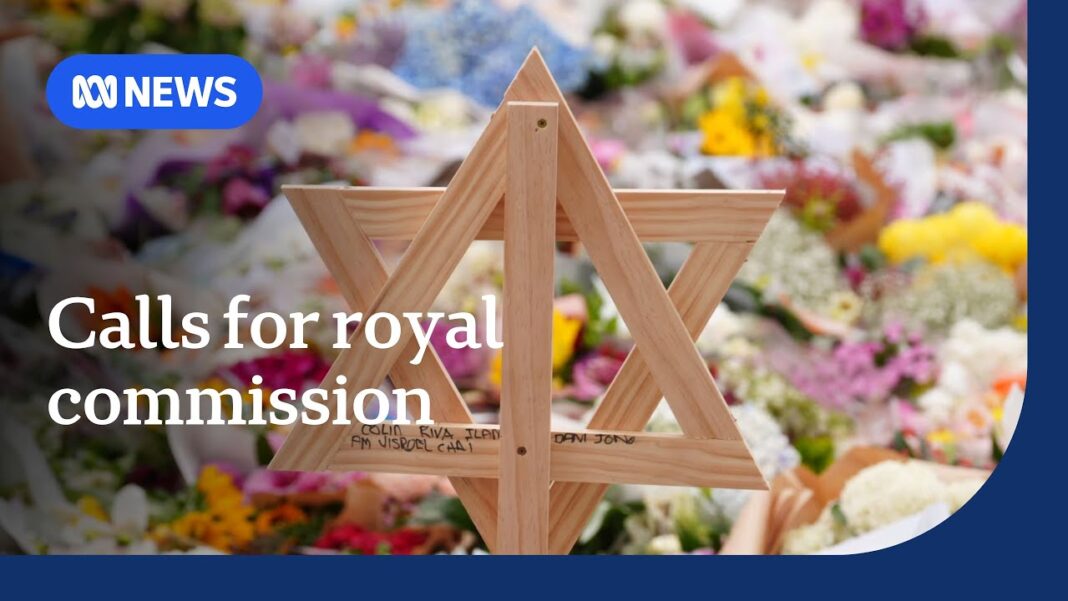
In the wake of one of the darkest days in Australian history, the bereaved families of the victims murdered at the Bondi Beach Hanukkah celebration have issued an anguished plea to Prime Minister Anthony Albanese: convene a Commonwealth Royal Commission to confront what they describe as the nation’s rapidly metastasizing antisemitism, or risk consigning more innocent Australians to the same fate.
According to a report that appeared on Monday at Israel National News (INN), the families’ letter—sent to Canberra earlier this week and echoed by international wire services—lays bare a sense of betrayal and urgency that is difficult to overstate. Fifteen people were killed and dozens more wounded when father and son Sajid and Naveed Akram unleashed gunfire on revelers celebrating the Festival of Lights on December 14 at Sydney’s Bondi Beach. The attack, now formally classified as an antisemitic act of terrorism, shattered any lingering illusion that Australia is immune to the violent convulsions of global Jew-hatred.
INN reported that the families’ correspondence to the prime minister is not merely a request for condolences or symbolic gestures. It is an indictment—of institutions, of policies, and of what they see as a catastrophic failure to heed warning signs that had been flashing red for months.
“We demand answers and solutions,” the families wrote in the letter. “We need to know why clear warning signs were ignored, how antisemitic hatred and Islamic extremism were allowed to dangerously grow unchecked, and what changes must be made to protect all Australians going forward.”
They called for the immediate establishment of a Commonwealth Royal Commission to investigate not only the massacre itself but also the broader systemic failures in intelligence gathering, law enforcement preparedness, and policy response that may have created the conditions for such an atrocity.
For the families, this is not an abstract policy debate. They lost parents, children, spouses, and grandparents—people who had gathered on Bondi Beach in an iconic public space that should have symbolized safety and pluralism. Instead, as the INN report noted, it became a killing field.
Prime Minister Albanese has thus far resisted calls for a federal royal commission, arguing that a New South Wales–led inquiry, coupled with federal cooperation, would suffice. He has framed the issue as one of urgency rather than bureaucratic delay, saying the country must focus on “action rather than division.”
But the families are unmoved. INN reported that they view a state-level commission as structurally incapable of addressing a phenomenon that transcends state borders and involves federal agencies, immigration policy, intelligence coordination, and national hate-speech legislation.
Canberra has announced a package of measures—proposed reforms to gun ownership laws, tighter hate-speech statutes, and reviews of intelligence and policing operations. Yet for those who buried their loved ones, these steps feel cosmetic, reactive, and inadequate.
“You owe us answers. You owe us accountability. And you owe Australians the truth,” the families wrote, according to the INN report. Their message is unambiguous: without a comprehensive national inquiry, the same failures that enabled the Bondi massacre will persist.
As Israel National News has reported, the Bondi Beach massacre did not erupt in a vacuum. It was the culmination of months of escalating antisemitic incidents that were, in hindsight, a harbinger of catastrophe.
Even before December 14, Jewish communities across Australia were reporting an unprecedented surge in vandalism, arson, and intimidation. The INN report recalled the firebombing of the Adass Israel Synagogue in Melbourne—a chilling reminder of Europe’s darkest chapters, now replaying in a country that prides itself on multicultural tolerance.
Days after that arson attack, Sydney’s Jewish neighborhoods were hit with a spate of crimes: a car set ablaze, properties daubed with anti-Israel graffiti in Woollahra, and vehicles defaced with the words “F— the Jews.” In early January, the Southern Sydney Synagogue in Allawah was vandalized, followed by the Newtown synagogue in the city’s inner west, where red swastikas were sprayed across the façade.
To the families of Bondi, these were not isolated acts of hooliganism. They were a continuum—a pattern of radicalization that was visible to anyone willing to look.
The INN report described the families’ characterization of the situation as stark: they call the rise of antisemitism a “national crisis.” Their warning is chilling in its simplicity: “The threat is not going away.”
They argue that Australia’s institutions have failed to grasp the ideological nature of the danger—one that blends imported Islamist extremism with locally incubated hatred, amplified by social media, international conflicts, and political rhetoric.
The families’ demand for a Commonwealth Royal Commission is therefore not merely procedural. It is philosophical. They want Australia to confront the uncomfortable truth that antisemitism is no longer a fringe pathology but a mainstream security concern.
According to the INN report, critics of the Albanese government have seized on the prime minister’s reluctance to launch a federal inquiry as emblematic of a deeper malaise—a fear of confronting politically sensitive issues, particularly where they intersect with immigration, religious extremism, and the policing of hate.
Opposition figures argue that the NSW inquiry, however well-intentioned, will inevitably be constrained by jurisdictional limits. Federal agencies such as ASIO, Border Force, and the Australian Federal Police operate across state lines; their role in identifying and disrupting extremist networks cannot be adequately scrutinized by a state-based process.
The families share this view. In their letter, they stress that only a Commonwealth Royal Commission can compel testimony from all relevant agencies and expose the full architecture of failure.
While the massacre targeted Jews, its implications extend to the entire nation. INN has repeatedly emphasized that the families are framing their appeal not as a parochial demand but as a patriotic one: an attempt to prevent Australia from descending into the kind of sectarian violence that has scarred so many other Western democracies.
“We have lost parents, spouses, children, and grandparents,” they wrote. “You cannot bring back our loved ones. But with a well-led Commonwealth Royal Commission and strong action, you may be able to save many more.”
This is the moral fulcrum of their argument: grief transformed into civic responsibility.
The INN report also situates the Bondi attack within the global reverberations of the October 7 Hamas massacre in Israel, which unleashed a tidal wave of antisemitism across the diaspora. Australian Jewish leaders have warned that rhetoric imported from Middle Eastern conflicts has been weaponized locally, turning synagogues, schools, and community events into symbolic targets.
The Bondi shooting, in this light, is not merely Australia’s worst terror attack—it is a manifestation of a worldwide contagion.
Supporters of the families’ campaign argue that a Commonwealth Royal Commission would serve three indispensable functions:
Expose institutional blind spots. Were there missed intelligence warnings? Did agencies fail to share information? Were community leaders’ concerns dismissed?
Interrogate the ecosystem of radicalization. How are extremist ideologies penetrating Australian society, and what role do online platforms, foreign funding, and international networks play?
Redefine national policy. From hate-speech laws to gun control and counter-extremism strategies, a federal inquiry could catalyze reforms that move beyond reactive policing to proactive prevention.
The INN report noted that previous royal commissions—into banking misconduct, child abuse, and institutional racism—have reshaped Australian public life. The families believe antisemitism deserves the same level of scrutiny.
Ultimately, the standoff between the Bondi families and the Albanese government is about more than bureaucratic form. It is a test of leadership—of whether Australia’s political class is prepared to confront the ideological roots of hatred rather than merely its violent endpoints.
As Israel National News reported, the families are not backing down. They have vowed to keep pressing for a national inquiry, to keep telling their stories, and to keep demanding that the candles of Hanukkah never again be extinguished by gunfire on an Australian beach.
For a nation that has long prided itself on harmony amid diversity, the choice is stark: heed the warnings etched in blood on the sands of Bondi, or allow complacency to pave the way for the next tragedy.