



|
Getting your Trinity Audio player ready...
|
By: Fern Sidman
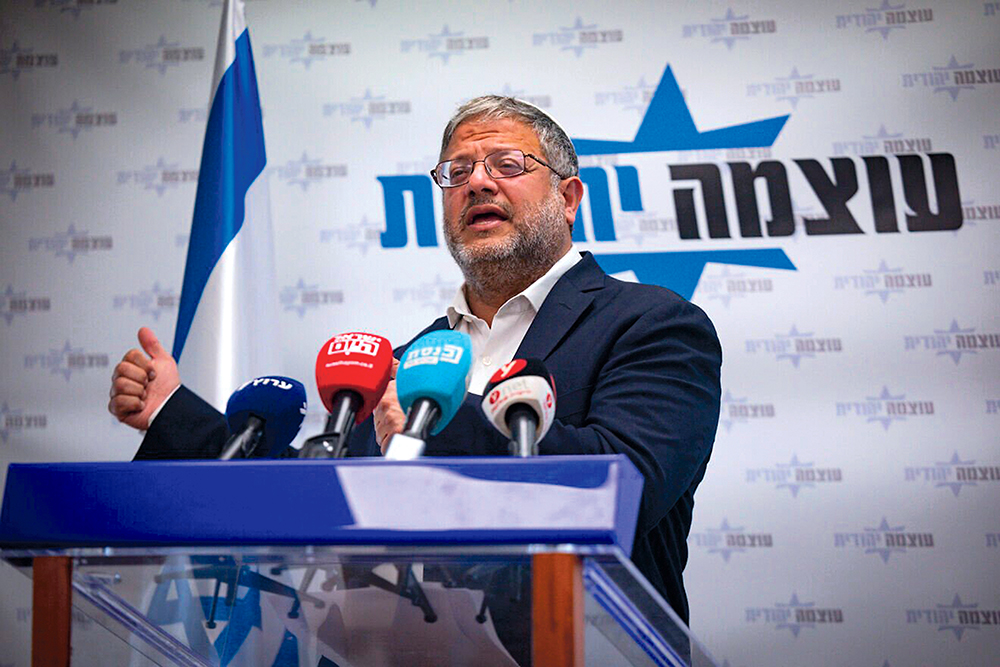
In a heated Cabinet meeting on Tuesday evening, Israel’s National Security Minister Itamar Ben Gvir leveled sharp criticism against the plan for ending the war in Gaza presented by President Donald Trump. His comments laid bare deep divisions within the Israeli government over the American-brokered framework and raised fundamental questions about Israel’s long-term security strategy.
According to report that appeared on Israel National News, Ben Gvir warned that the proposed agreement, though celebrated by some as a breakthrough for the release of hostages and a pathway toward stability, carries profound risks for the Jewish state.
“The agreement on the table is dangerous to Israel’s security,” Ben Gvir declared during the Cabinet session, his words echoing across a tense meeting room. “I will have much more to say about it, Mr. Prime Minister, but it must be said now: this plan undermines our security, is riddled with flaws, and fails to achieve the objectives we set for this war.”
His intervention, covered by Israel National News, marked one of the starkest public challenges to Prime Minister Benjamin Netanyahu’s endorsement of Trump’s framework.
Ben Gvir argued that the agreement would strip the IDF of operational control in Gaza, replacing Israel’s military presence with international monitors or peacekeeping forces. “Suddenly, a third party is supposed to ensure our safety, while granting amnesty to Hamas murderers—it’s simply unthinkable,” he charged. “I’m sorry to ruin the celebration.”
Ben Gvir also drew attention to what he described as the dangerous long-term consequences of the deal, particularly its implications for Palestinian statehood.
“What about the emigration plan? What about annexation?” he asked pointedly. “This terrible agreement has the potential to lead to the creation of a Palestinian state. I understand the pressure you were under, but you shouldn’t have brought forward an agreement so full of holes.”
The National Security Minister, one of the most outspoken advocates for extending Israeli sovereignty over Judea and Samaria, has consistently opposed internationalized solutions that, in his view, erode Israel’s ability to safeguard its citizens. His insistence that the agreement could “pave the way” for Palestinian statehood, as the Israel National News report highlighted, reflects the anxieties of Israel’s nationalist right wing, which sees Trump’s plan as a dangerous concession dressed up as a diplomatic victory.
Even while voicing strong opposition, Ben Gvir acknowledged the emotional weight of the hostage issue, a centerpiece of the Trump-Netanyahu framework.
“Yes, we’re all excited about the return of the hostages,” he conceded, “but the price here is unimaginable, and I will have more to say about this.”
The deal, as outlined by Trump, promises the return of Israeli hostages in exchange for sweeping concessions, including the phased withdrawal of IDF forces and the amnesty of Hamas operatives who surrender their weapons. For many Israelis, the safe return of captives remains an overriding national priority. But as the Israel National News report observed, Ben Gvir’s comments shine a proverbial spotlight on the agonizing trade-off: security assurances for the future weighed against the immediate and urgent imperative of rescuing Israeli lives.
At the same Cabinet meeting, Prime Minister Netanyahu sought to reassure his ministers and the Israeli public of the deal’s benefits.
“I just returned from the United States on a mission for the government and the citizens of Israel,” Netanyahu said. “At the UN, I presented the truth about the State of Israel, its citizens, and its soldiers.”
Referring directly to his discussions with Trump, Netanyahu continued: “In Washington, I reached an agreement with President Trump on a framework to secure the release of all our hostages and to achieve all the war objectives we set. I will provide a more detailed report to both the government and the Cabinet.”
Netanyahu’s emphasis on the dual priorities—liberating hostages while achieving Israel’s stated war goals—was reported by Israel National News. The prime minister presented himself as balancing the demands of diplomacy with the necessities of war, suggesting that the Trump framework provides Israel with both international backing and tangible outcomes.
Still, Ben Gvir’s sharp rebuke highlights the widening fissures within the Israeli leadership. As Israel National News has documented, the Cabinet is deeply divided between those who view Trump’s framework as a pragmatic opportunity to end a costly war and those who fear it risks squandering hard-won gains on the battlefield.
Finance Minister Bezalel Smotrich has echoed many of Ben Gvir’s concerns in recent days, warning that any agreement that fails to completely dismantle Hamas, secure long-term IDF presence in Gaza, and exclude the Palestinian Authority from governance is unacceptable. Together, Smotrich and Ben Gvir represent a powerful bloc of right-wing opposition within the coalition, and their criticism threatens to destabilize Netanyahu’s delicate political balancing act.
From a security perspective, the proposed agreement shifts some responsibility from Israel to international actors, a move that Ben Gvir argues is inherently flawed. Israel National News reported that the plan envisions foreign monitors or peacekeepers overseeing parts of Gaza after the IDF withdrawal, with Hamas militants receiving amnesty if they surrender their weapons.
For many in Israel’s security establishment, the idea of entrusting international bodies with such responsibilities revives bitter memories of ineffective peacekeeping missions in Lebanon and elsewhere. Skeptics argue that no outside force has the will or capability to confront Hamas and its allies as decisively as the IDF.
Ben Gvir’s reference to “southern Lebanon,” where Hezbollah continues to wield power despite international resolutions, reflects this historical skepticism. As the Israel National News report noted, the fear is that Hamas could regroup and rearm under the watch of international forces, leaving Israel vulnerable to another wave of terror.
Politically, the Cabinet clash carries significant implications for Netanyahu’s leadership. By aligning himself so publicly with Trump’s peace framework, Netanyahu has tethered his political fortunes to its success. Yet resistance from influential ministers such as Ben Gvir threatens to fracture the coalition and embolden opposition parties.
As the Israel National News report observed, Netanyahu has cultivated a reputation as a statesman capable of managing Israel’s delicate relationships with world powers. But his government’s survival often depends on maintaining the loyalty of right-wing partners who reject compromise on issues of sovereignty and security.
Public sentiment in Israel is likely to play a decisive role in shaping the outcome of this political dispute. For many Israelis, the fate of the hostages eclipses broader policy concerns, and there is widespread support for efforts that can secure their safe return. Yet, as Israel National News has reported, there is also deep skepticism about any agreement that appears to legitimize Hamas or leave Israel dependent on foreign guarantees.
The coming weeks will test whether Netanyahu can persuade the Israeli public—and his own Cabinet—that Trump’s plan represents a genuine step toward victory rather than a dangerous retreat.
The clash between Netanyahu and Ben Gvir, detailed in the Israel National News report, reveals the profound dilemmas facing Israel at this pivotal moment. On one side lies the promise of hostages returning home and international recognition of Israel’s war aims; on the other lies the risk of undermining hard-won security gains and opening the door to dangerous precedents.
Ben Gvir’s parting words—“Yes, we’re all excited about the return of the hostages, but the price here is unimaginable”—may yet resonate with large segments of Israeli society that fear the Trump framework represents short-term relief at long-term cost.
As Israel’s leadership grapples with the path forward, one truth remains: the Cabinet is divided, the stakes are enormous, and the debate over Trump’s Gaza plan is far from resolved.

Israel CANNOT be dependent on others. Only Israel can protect itself. That is Zionism by definition. Jews protecting Jews. This agreement makes Israel dependent on others. It will NEVER work.