



|
Getting your Trinity Audio player ready...
|
By: Fern Sidman
As European capitals grapple with the fallout of the Israel–Hamas war and the diplomatic aftershocks of the October 7, 2023 massacre, Belgium has emerged as the latest flashpoint in the debate over Palestinian statehood. Yet, as The Jewish News Syndicate (JNS) reported on Tuesday, the Belgian government’s posture toward recognizing “Palestine” is less straightforward than it first appeared.
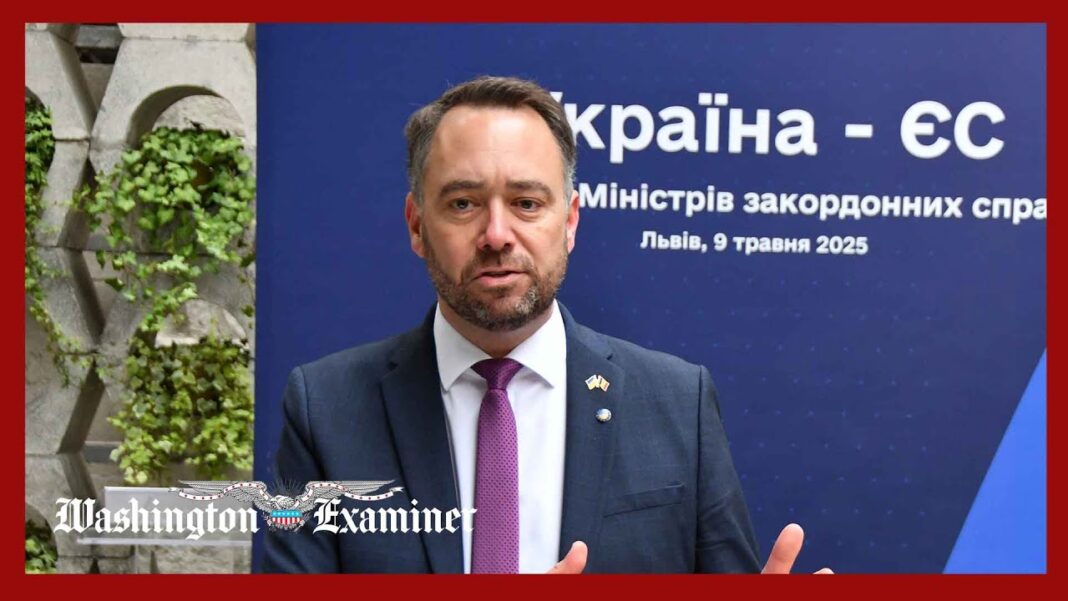
On Tuesday, Belgian Foreign Minister Maxime Prévot declared on social media that Brussels would join a French- and Saudi-backed initiative at this month’s United Nations General Assembly to recognize a Palestinian state. He described the measure as “a powerful political and diplomatic signal.” But buried in Prévot’s own statement and spelled out in internal government documents obtained by JNS, is a set of conditions that all but ensure such recognition will not materialize in the near future.
Prévot stated that recognition would occur only after Hamas is fully removed from power in Gaza and the 48 remaining hostages abducted on October 7 are released. “Belgium wishes to send a strong political and diplomatic signal,” read a memo from Prévot’s office, “but recognition and the establishment of diplomatic relations will be achieved on the condition of Hamas’s demilitarization and the renewal of the Palestinian government following presidential and legislative elections.”
Michael Freilich, a prominent Jewish politician from Belgium’s ruling New Flemish Alliance, immediately pointed out the contradiction. “Unlike what was said by the foreign minister, in fact, no recognition is going to take place,” he told JNS. In Freilich’s view, Prévot’s announcement amounted to political theater: the conditions he attached are so unlikely to be met that the proclamation itself is hollow.
Prime Minister Bart de Wever reinforced this interpretation during an August 26 press conference. “Hamas must disappear completely,” he said, before Belgium would consider recognition. “There must be a credible Palestinian Authority, an agreement on borders, and security guarantees for Israel. Otherwise recognition is pointless and counterproductive.”
Belgium’s foreign ministry appears to be attempting to walk a tightrope. On one hand, Prévot announced an expansive set of 12 measures aimed at punishing Israel, including:
A ban on imports from Jewish communities in Judea and Samaria.
Restrictions on consular services for Belgians living in those areas.
Prohibitions on government contracts with certain Israeli firms.
Entry bans on two “extremist” Israeli ministers, several settlers accused of violence, and Hamas leaders.
Advocacy within the European Union to suspend Israel’s association agreement and joint research projects.
Prévot insisted that “the point is not to sanction the Israeli people, but to ensure that its government respects international and humanitarian law.” But as JNS reported, the sanctions package is viewed in Jerusalem as part of an escalating campaign of unilateral moves by Western governments to pressure Israel while its war against Hamas rages on.
At the same time, by conditioning recognition of a Palestinian state on Hamas’s removal and the liberation of hostages, Belgium’s leadership ensured that the recognition gesture will remain suspended indefinitely. It is, in essence, a message designed to resonate with both audiences: to Arab states and left-leaning European allies, a sign of solidarity with the Palestinian cause; to Israel and Belgium’s domestic critics, a signal that actual recognition is off the table until impossible benchmarks are met.
The mixed messaging also reflects Belgium’s fragmented political landscape. Prévot hails from Les Engagés, a centrist party in the French-speaking region of Wallonia, which is junior to De Wever’s Flemish center-right New Flemish Alliance in the governing coalition. Freilich, the most vocal opponent of Prévot’s stance, has become an influential figure within the N-VA, channeling concerns about antisemitism and security that resonate in Flanders.
This duality—Walloon sympathy for the Palestinian cause versus Flemish caution—has long characterized Belgium’s approach to Middle Eastern policy. As the JNS report noted, the clash over recognition illustrates the degree to which foreign policy has become a proxy for Belgium’s own domestic divides.
Belgium is not acting in isolation. France has spearheaded efforts within Europe to push for recognition of a Palestinian state at the U.N. General Assembly. Spain and Ireland have already recognized “Palestine,” while the United Kingdom, Australia, and Canada are reportedly considering following suit.
But Jerusalem has pushed back forcefully. Israeli Prime Minister Benjamin Netanyahu warned in late July that “such a move rewards terror and risks creating another Iranian proxy, just as Gaza became. A Palestinian state in these conditions would be a launch pad to annihilate Israel—not to live in peace beside it.”
Strategic Affairs Minister Ron Dermer and Foreign Minister Gideon Sa’ar have privately warned European governments that recognition could spur Israeli annexation of Judea and Samaria’s Area C. As reported by Israel Hayom and cited in the JNS report, Sa’ar has said bluntly, “Unilateral moves against Israel will be met with unilateral moves by Israel.”
CNN recently reported that Netanyahu’s Security Cabinet has already discussed sovereignty measures in retaliation, though no decisions have been finalized. Nearly 70% of Israelis, according to a January poll, support extending Israeli sovereignty over disputed territories.
The report at JNS emphasized the contradictions within Belgium’s position: announcing recognition of Palestine while simultaneously conditioning it on events unlikely to unfold in the near term. Meanwhile, outlets such as The Algemeiner have chronicled the broader European push toward Palestinian statehood as a symbolic rebuke to Israel during its war with Hamas.
Belgium’s package of sanctions places it among the most aggressive European critics of Israeli policy. Yet the hesitance to recognize Palestine outright, as the JNS report underscored, demonstrates that even Brussels remains aware of the reputational and security risks of appearing to reward Hamas after October 7.
Recognition of a Palestinian state is, in diplomatic terms, largely symbolic. Without agreed borders, functioning institutions, or security guarantees, the declaration of “Palestine” as a sovereign entity remains aspirational. Belgium’s insistence on conditions such as Hamas’s removal highlights the gap between political rhetoric and geopolitical reality.
For Israel, the stakes are existential. Netanyahu and his ministers argue that premature recognition risks legitimizing terrorist actors and emboldening Iran’s regional network of proxies. For Belgium and its European peers, the gesture is less about immediate realities and more about sending a political message—domestically to restive constituencies, and internationally to assert moral leadership.
But as the JNS report observed, symbolism without substance risks emboldening extremists while undermining moderates. If Hamas remains entrenched in Gaza, and if recognition is extended nonetheless, the message to Israelis is clear: terrorism pays. If, on the other hand, European leaders insist on preconditions that can never be met, their recognition gestures amount to empty posturing.
Belgium’s foreign policy maneuver at the U.N. General Assembly illustrates the complexities of Western engagement with the Israeli-Palestinian conflict in the post–October 7 era. Foreign Minister Maxime Prévot’s tweet about recognition of Palestine may have captured headlines, but as internal documents reviewed by JNS revealed, the real policy is more cautious, hedged, and unlikely to translate into immediate action.
Prime Minister De Wever and allies such as Michael Freilich have stressed that without Hamas’s elimination, credible Palestinian governance, and security guarantees for Israel, recognition would be meaningless. For now, Belgium’s move seems designed to straddle competing demands: offering rhetorical support for Palestinian statehood while ensuring actual recognition remains beyond reach.
As the JNS report indicated, the broader European campaign to recognize Palestine has injected fresh volatility into an already fraught diplomatic environment. In Jerusalem, the reaction has been sharp: Israel may answer Europe’s gestures with its own unilateral measures, potentially annexing parts of Judea and Samaria. In Brussels, meanwhile, the dispute sheds light on the fractured nature of Belgian politics, where foreign policy is never far removed from domestic rivalries.
Ultimately, Belgium’s announcement may not alter realities on the ground in Gaza or in Judea and Samaria. But it reflects a deeper truth: in the ongoing struggle between Israel and its adversaries, even symbolic moves carry weight, shaping perceptions, alliances, and the fragile hopes for peace in a region still reeling from one of the darkest chapters in recent history.
