



|
Getting your Trinity Audio player ready...
|
By: Fern Sidman
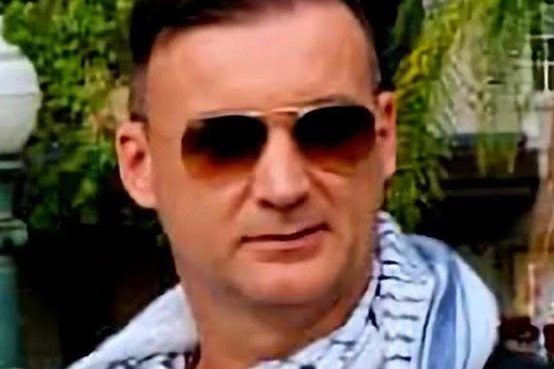
By any measure, the courtroom appearance of Muamer Nukic on Monday morning was not merely the arraignment of a single civil servant accused of abusing social media. It was, as VIN News reported on Monday, the ignition point of a national reckoning—one that sits at the volatile intersection of free speech, professional responsibility, and the deepening anxiety over antisemitism in Australia following the Bondi Beach terror massacre.
Nukic, a 50-year-old employee of the Queensland Police Service (QPS), appeared before a Brisbane magistrate charged with an extraordinary 41 criminal counts for allegedly using telecommunications services to menace, harass, or offend. The prosecution says the charges stem from nearly two years of incendiary online postings across multiple platforms—content described in court as not only antisemitic but ideologically hostile, with some comments allegedly trivializing or praising violence linked to the Bondi Beach attack that left 15 people dead, including a ten-year-old child.
As VIN News has reported, the case is one of the most serious attempts by Australian authorities in recent memory to draw legal boundaries around online extremism emanating from within the ranks of a government institution.
One of the most jarring elements of the prosecution’s narrative is geographic. Nukic was employed by Queensland Police, yet many of the posts referenced by prosecutors allegedly responded to images and discussions related to the Bondi Beach massacre in New South Wales—a tragedy that reverberated far beyond the state’s borders.
According to filings reviewed by VIN News, the prosecution alleges Nukic used online threads discussing the attack to disseminate messages that went far beyond political critique. A police prosecutor told the Brisbane court that the material reflected “a broader ideological hostility rather than isolated political commentary,” language that signals an intent to frame the case not as a debate over opinion but as an inquiry into conduct that crosses into menace.
The magistrate appeared persuaded by that framing. Defense lawyers sought to characterize Nukic’s posts as “political” in nature, emphasizing that he identified as anti-Zionist rather than anti-Jewish. But the court rejected that argument, ruling that the alleged content—if proven—would exceed protected political expression and could reasonably be interpreted as endorsing harm.
For Jewish community leaders who spoke to VIN News, that distinction is pivotal. In their view, the defense’s attempt to rebrand antisemitic invective as political critique is emblematic of a broader societal failure to confront how hostility toward Israel is increasingly weaponized against Jewish individuals.
While Nukic has not been accused of operational misconduct within Queensland Police, the symbolism of the case is devastating for an institution predicated on public trust. That a police employee is accused of disseminating rhetoric that prosecutors say menaced, harassed, or offended—especially in the aftermath of a terror attack—has triggered internal reviews and public outrage.
Queensland Police issued a brief statement, cited by VIN News, emphasizing that the charges remain allegations and that Nukic is entitled to the presumption of innocence. Yet the force also acknowledged the reputational damage such claims inflict, reiterating that the alleged conduct occurred between February 2024 and January 2026 and was “inconsistent with the values and standards expected of QPS employees.”
This is not merely a disciplinary embarrassment. It is a structural warning: law enforcement agencies across the democratic world are discovering that social media activity, once considered a private domain, is now inseparable from professional identity.
Despite the volume of charges, Nukic was granted bail—a decision that has drawn scrutiny from civil rights advocates and Jewish organizations alike. The magistrate cited his lack of prior criminal history and the fact that the case concerns online speech rather than direct incitement to violence in Australia.
Still, the conditions imposed are severe. Under the bail order, Nukic must reside at a nominated address, report weekly to police, use only a single mobile phone, and—most strikingly—avoid all social media platforms.
As the VIN News report observed, this digital prohibition amounts to a recognition that online conduct is not a peripheral matter but the core locus of the alleged offenses. The court has, in effect, placed the defendant under a form of electronic parole before a trial has even commenced.
The context in which this case unfolds is impossible to ignore. The Bondi Beach terror attack did not merely traumatize a nation; it reopened unresolved debates about radicalization, hate speech, and the capacity of democratic societies to regulate online extremism without strangling legitimate dissent.
Several of the alleged posts, prosecutors said, were reactions to images circulating in the wake of the massacre. The implication is chilling: that a tragedy which should have unified Australians instead became fodder for ideological provocation.
VIN News has extensively covered the post-Bondi spike in antisemitic incidents across Australia, including synagogue vandalism, harassment on university campuses, and online campaigns targeting Jewish public figures. In that climate, the notion that a police employee may have participated—however digitally—in rhetoric trivializing or endorsing violence has struck many as intolerable.
At the heart of the proceedings is a question that courts around the world are struggling to answer: when does political expression become criminal menace?
Defense counsel argued that Nukic’s online identity was rooted in political opposition to Zionism, not racial or religious hatred. But the magistrate’s ruling suggests a judicial unwillingness to allow that distinction to function as a shield when language veers into glorifying or minimizing real-world violence.
Legal scholars consulted by VIN News note that Australian law does not criminalize offensive opinions per se. What it criminalizes is the use of telecommunications services to menace, harass, or cause offense in a manner that is objectively unreasonable. The prosecution’s challenge will be to demonstrate that Nukic’s alleged conduct crossed that threshold.
For Australia, the Nukic case is more than a prosecution; it is a mirror reflecting uncomfortable truths about the radicalization pathways that now run through smartphones and comment threads rather than back alleys and secret meetings.
As VIN News reported, the court heard that the alleged conduct spanned nearly two years—suggesting not a momentary lapse but a sustained pattern of expression. That temporal dimension, prosecutors argue, points to ideological commitment rather than impulsive reaction.
No pleas have yet been entered. Nukic is expected to return to court later this year as the case proceeds through the pre-trial phase. In the meantime, he remains on bail, cut off from the digital ecosystems that prosecutors allege served as his platform.
The Queensland Police Service has not indicated whether it will pursue internal disciplinary action before the criminal case concludes, but observers told VIN News that termination proceedings are likely if the charges advance.
Ultimately, this case will test not only the boundaries of Australian criminal law but the moral architecture of its institutions. Can a society committed to free expression also enforce limits when speech corrodes communal safety? Can law enforcement agencies preserve credibility when their own employees are accused of contributing to ideological hostility?
For Australia’s Jewish community—and for all Australians still grappling with the legacy of Bondi—the answers will reverberate far beyond a single Brisbane courtroom.

“When does political expression become criminal menace?” That sounds like a question for Zohran Mamdani. The more important question is why did “Jewish“ New Yorkers vote for a muslim terrorist.
He looks like Hitler. Look at that snarl