



|
Getting your Trinity Audio player ready...
|
By: Fern Sidman
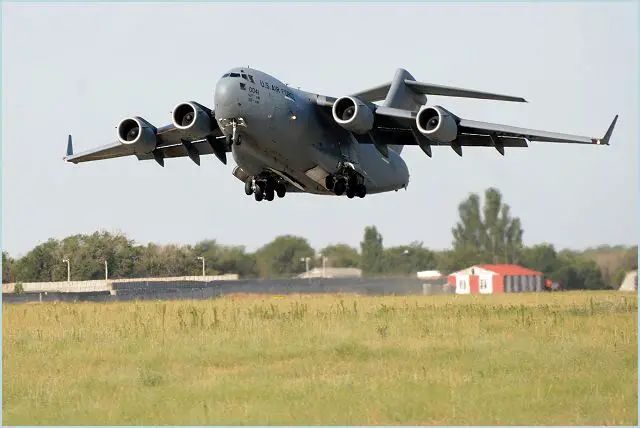
In the opaque world of modern geopolitics, where official statements are often delayed and strategic intent cloaked in deliberate ambiguity, patterns in the sky can speak louder than any press release. Over the past several hours on Tuesday evening, a striking movement of American military aircraft has been documented by independent aviation monitors — most prominently by the Visioner account on X.com — showing dozens of U.S. Air Force aerial refueling tankers and heavy transport aircraft departing bases in the United States and the United Kingdom and proceeding eastward toward the Middle East.
The Visioner account on X.com, which has built a reputation for closely tracking military aviation through open-source flight data, satellite imagery, and ADS-B transponder signals, has published a steady stream of charts, screenshots, and real-time observations indicating that KC-135 and KC-46 refueling tankers, along with C-5 Galaxy and C-17 Globemaster III transports, have lifted off in rapid succession from multiple American and allied airfields. While the U.S. Department of Defense has not issued any public explanation for the surge, the scale and coordination of the movements have fueled intense speculation among analysts.
It is essential to state clearly that no official confirmation has been given regarding any imminent military action. Yet as Visioner on X.com has emphasized repeatedly, the logistical footprint now unfolding in the air is far larger than what is typically associated with routine training or minor redeployments.
‼️‼️🇺🇲🇮🇷 BREAKING – Over the past several hours, dozens of U.S. Air Force aerial refueling tankers and heavy military transport aircraft of the C-5 and C-17 types have departed from the United States and from an American airbase in the United Kingdom, heading toward the Middle… pic.twitter.com/wUARsuGgso
— Visioner (@visionergeo) January 6, 2026
Aerial refueling tankers are not glamorous aircraft, but they are the arteries of American global power. Their purpose is singular: to extend the reach, endurance, and striking range of fighter jets and bombers across intercontinental distances. Heavy airlifters such as the C-5 and C-17, meanwhile, are designed to transport armored vehicles, missile systems, engineering units, humanitarian supplies, or large troop contingents.
Visioner on X.com has cataloged departures from stateside bases such as Travis Air Force Base in California, Dover Air Force Base in Delaware, and McConnell Air Force Base in Kansas, as well as from RAF Mildenhall and RAF Fairford in the United Kingdom — long-standing hubs for American refueling and strategic airlift operations in Europe. According to the Visioner account on X.com, many of these aircraft appear to be routing through traditional transit corridors toward staging points in the Eastern Mediterranean and the Gulf region.
The timing of these flights is what has drawn such intense scrutiny. Over a short window — described by Visioner on X.com as “a dense cluster rather than a trickle” — the number of tankers and transports in motion rose sharply, creating a pattern that aviation watchers say is inconsistent with scheduled rotational movements.
To the untrained eye, a KC-135 on a flight tracker may look no different from a commercial airliner. To military planners, it is a strategic enabler without which long-range operations are simply impossible. Modern U.S. air doctrine relies heavily on mid-air refueling to allow fighters to loiter, bombers to reach distant targets, and surveillance aircraft to remain on station for extended periods.
Visioner on X.com has repeatedly underlined this point, noting that mass deployments of tankers historically precede either major exercises or high-tempo operations. During the wars in Afghanistan and Iraq, similar tanker surges were observed in the days before air campaigns intensified. The Visioner account on X.com has compared the current pattern to past episodes when the U.S. quietly repositioned assets ahead of large-scale military engagements.
Equally telling, according to Visioner on X.com, is the presence of multiple C-5 and C-17 transports in the same outbound wave. These aircraft are among the largest in the world, capable of carrying Abrams tanks, Patriot missile batteries, or entire battalion-sized units in a single sortie. They are not typically dispatched en masse unless significant matériel is being repositioned.
The Visioner account on X.com has published imagery showing overlapping flight paths of these aircraft heading eastward within narrow time windows — a logistical choreography that suggests pre-planning at the highest levels.
The movements come amid rising regional tension, though officials have so far avoided linking the deployments to any specific crisis. Visioner on X.com has been careful to avoid making definitive claims about intent but has pointed out that the Middle East is currently the only theater where the U.S. maintains the combination of infrastructure, alliance networks, and contingency planning that would justify such a sudden logistical acceleration.
Analysts following the Visioner account on X.com note that while exercises are periodically conducted in Europe or the Indo-Pacific, they are usually announced in advance, often with multinational press statements and formal schedules. No such disclosures have accompanied the current airlift.
One of the most striking features of the present situation is the absence of official commentary. Pentagon briefings, when they occur, tend to describe such redeployments in broad and deliberately anodyne terms — “routine posture adjustments,” “force protection measures,” or “training rotations.” Yet Visioner has observed that the sheer volume of aircraft now airborne far exceeds what would normally be required for such activities.
This silence, paradoxically, has amplified the influence of open-source intelligence. Where governments withhold details, independent trackers like Visioner fill the vacuum with data points that, when assembled, reveal patterns otherwise hidden from public view.
It bears repeating that flight activity alone does not constitute proof of imminent military action. The United States frequently repositions assets for deterrence, signaling resolve without ever crossing into open conflict. Tankers and transports are instruments of readiness as much as war.
Yet Visioner has emphasized that the density, speed, and coordination of the current movement mark it as exceptional. The account has urged followers to watch not only where the aircraft are going, but whether the tempo continues — a sustained flow over days, rather than hours, would suggest the establishment of a forward logistics architecture rather than a temporary surge.
What this episode most vividly illustrates is the transformation of strategic awareness in the digital age. A decade ago, such deployments might have gone largely unnoticed outside intelligence circles. Today, they are charted in near-real time by accounts such as Visioner whose feeds have become required reading for journalists, defense analysts, and even policymakers.
The Visioner account has not claimed inside knowledge of operational plans. Instead, it has offered something arguably more powerful: a transparent record of observable reality, allowing the public to witness history unfolding in the skies.
Whether these aircraft presage diplomatic brinkmanship, military exercises, or something more consequential remains unknown. But one thing is certain: as long as Visioner on X.com continues to map the invisible geometry of modern power, the world will no longer learn about strategic shifts only after the fact.
As Iran convulses under the weight of swelling unrest, economic disintegration, and a generational revolt against clerical rule, a startling revelation reported on Monday by The New York Post has cast fresh light on the precariousness of the Islamic Republic’s supreme authority. According to intelligence sources cited in The New York Post report, Supreme Leader Ayatollah Ali Khamenei has quietly arranged an emergency escape route to Moscow—an option to be activated should his security apparatus fracture or the streets of Tehran finally overwhelm the regime’s defenses.
The report, first detailed in The New York Post, suggests that Khamenei, now 86 and increasingly isolated, has instructed aides to prepare a contingency plan modeled closely on the dramatic flight of former Syrian strongman Bashar al-Assad, who fled Damascus in December 2024 as rebel forces swept through the capital. Like Assad before him, Khamenei would not leave alone. The intelligence source said he would flee with an inner circle of approximately 20 trusted aides and family members, including his son—long rumored to be the supreme leader’s preferred successor.
The prospect of the Islamic Republic’s highest authority fleeing his own country is a measure of how deeply the regime is rattled.
The unrest gripping Iran is no passing tremor. As The New York Post has reported in multiple dispatches, demonstrations have now spread to 22 of the country’s 31 provinces, claiming at least 19 lives and echoing with chants of “Death to Khamenei.” These are not merely economic protests or symbolic gestures; they are existential challenges to a regime that has ruled through fear, indoctrination, and repression for more than four decades.
What has propelled the country into this crisis is a toxic convergence of environmental catastrophe and financial ruin. Iran is in the throes of the worst drought in decades. More than 10 million residents of Tehran alone now experience routine water shortages, an indignity that has made daily life unrecognizable for a capital accustomed to relative stability.
At the same time, the economy has entered freefall. The Iranian rial has collapsed to an almost unimaginable level—42,125 to the U.S. dollar—rendering wages worthless and wiping out middle-class savings. As The New York Post report noted, this hyperinflation has hollowed out the social contract that once allowed the regime to buy acquiescence with subsidies and public-sector employment.
In such conditions, the chants for Khamenei’s death carry a new ferocity. They are not rhetorical; they are revolutionary.
The intelligence source quoted by The New York Post said Khamenei and his circle have already begun “gathering assets, properties abroad and cash to facilitate their safe passage.” This quiet hoarding of wealth underscores the cynicism at the heart of the regime: while ordinary Iranians queue for water and bread, their supreme leader is allegedly arranging villas and bank accounts beyond the country’s reach.
The plan reportedly includes a direct flight from Tehran to Moscow, a city that has become a sanctuary for toppled autocrats. Bashar al-Assad’s arrival there last December set a precedent that Khamenei appears eager to emulate.
This is not merely about geography. It is about allegiance. The warming relationship between Tehran and Moscow has evolved into a strategic embrace since Russia’s invasion of Ukraine in 2022. Iran supplied Moscow with drones and other weapons systems, and even assisted in building an Unmanned Aerial Systems factory on Russian soil—an act that bound the two pariah states in mutual dependence.
In early 2025, the alliance was formalized with a sweeping 20-year strategic partnership treaty. Though Moscow carefully avoided any binding obligation to defend Iran militarily, the pact committed both nations to counter “unilateral coercive measures”—a euphemism for Western sanctions and diplomatic pressure.
As The New York Post reported, Khamenei is said to admire Russian President Vladimir Putin, not merely as a geopolitical partner but as a model of authoritarian resilience. Moscow, in his calculus, is not just an escape hatch—it is a political refuge.
The parallel with Assad is haunting. In December 2024, the Syrian leader fled his palace as opposition fighters breached Damascus, his once-feared security forces melting away. Within hours, the Syrian regime collapsed, leaving behind a hollowed state and a dictator in exile.
For decades, Khamenei has styled himself as the immovable axis of Iranian politics, a cleric-king presiding over a system that fuses theology with totalitarianism. Yet as The New York Post report underscored, even he now appears to recognize the fragility of his position.
“They have plotted an exit route out of Tehran should they feel the need to escape,” the intelligence source said, describing preparations that include logistics, finances, and coordination with Russian authorities.
The message is unmistakable: the Islamic Republic is no longer confident in its own survival.
Adding to the volatility, President Trump has injected the crisis with an unmistakable international dimension. Speaking as protests intensified, Trump declared that the United States would intervene “if Iran shoots and violently kills peaceful protesters,” describing such brutality as the regime’s “custom.”
The statement was interpreted in Tehran as a direct threat. Iranian officials responded with belligerence, vowing to treat U.S. troops as “legitimate targets” should Washington attempt any military action.
This exchange has elevated a domestic uprising into a potential flashpoint between nuclear-capable states. Iranian leaders reportedly fear that sustained unrest could provide the pretext for American or Israeli strikes—a nightmare scenario for a regime already struggling to contain dissent.
Perhaps the most unsettling element in The New York Post’s account is the regime’s fear of its own protectors. Khamenei’s escape plan is designed to be triggered not only if protesters overwhelm the army, but also if the security forces defect.
This anxiety is well-founded. Iran’s history is littered with examples of security units refusing orders or switching sides at decisive moments. The Shah’s fall in 1979 was precipitated not by mass protests alone, but by the army’s refusal to crush them.
Today’s Islamic Revolutionary Guard Corps (IRGC) remains formidable, but morale is reportedly deteriorating as soldiers face the same economic deprivation as the citizens they are ordered to suppress.
If Khamenei were to flee, it would mark the most consequential collapse in Middle Eastern politics since the Arab Spring. The Islamic Republic has been the principal sponsor of militant proxies across the region—from Hezbollah in Lebanon to militias in Iraq and Yemen. Its sudden decapitation would send shockwaves through a network of alliances built over four decades.
As The New York Post report observed, the very existence of a Moscow escape plan strips the regime of its mystique. Supreme leaders are not supposed to plan exits; they are supposed to be eternal.
Yet Tehran today is a city of dry taps, empty wallets, and angry streets. And somewhere behind its guarded walls, an aging ayatollah is reportedly measuring runways and flight times, contemplating a final journey into exile.
Whether he ever boards that plane remains to be seen. But the fact that the option exists at all is perhaps the clearest indication yet that the era of unquestioned clerical dominance in Iran may be approaching its end.
