



|
Getting your Trinity Audio player ready...
|
By: Fern Sidman
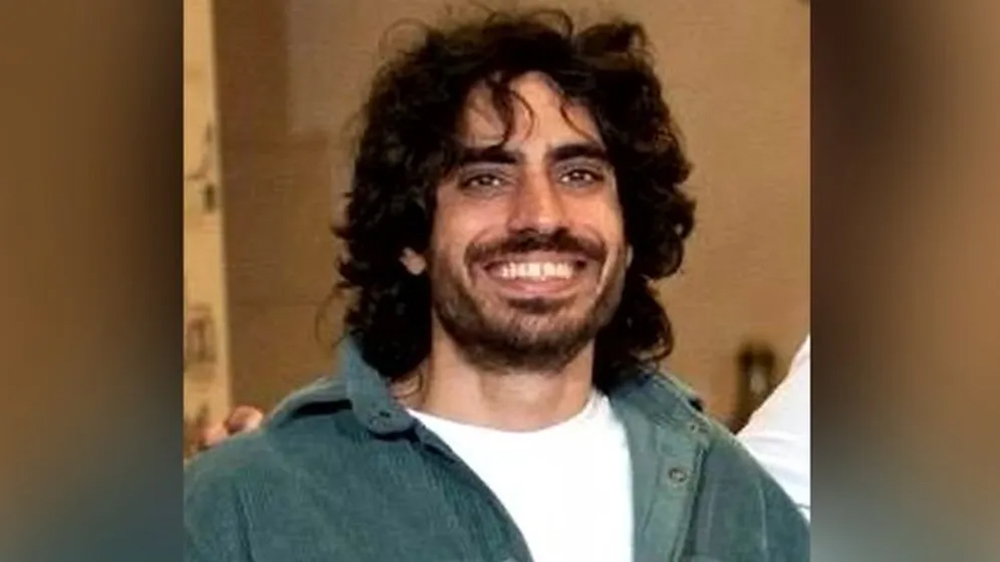
By any conventional measure, Gefen Bitton did not belong at the center of one of Australia’s darkest recent tragedies. He was not a soldier on active duty, not a trained first responder, nor a public figure accustomed to danger. He was, as friends and family describe him, a hardworking man in his 30s, a garage door installer by trade, an Israeli national living peacefully in Australia. And yet, when gunfire erupted at Sydney’s Bondi Beach, Bitton made a decision that would alter the course of his life—and perhaps save the lives of others.
According to a report that appeared on Sunday in The Jerusalem Post, Bitton is now hospitalized in critical condition, lying in a coma in an intensive care unit after undergoing multiple complex surgeries. He was shot three times while attempting to intervene in the deadly attack that left numerous victims dead and wounded. What distinguishes Bitton’s story, and why it has reverberated far beyond Australia’s shores, is a single, searing fact: he initially escaped the danger, only to turn back and run toward it.
The Jerusalem Post, citing Australian media including the Sydney Morning Herald, reported that Bitton had gone to Bondi Beach to mark Hanukkah with a friend after a long day of hiking. The evening, meant to be defined by light, tradition, and rest, was shattered by the sound of gunfire as attackers opened fire with a hunting rifle. Like others at the scene, Bitton fled. For a brief moment, instinct dictated survival.
Then instinct gave way to something else.
Within seconds, Bitton disappeared from his friend’s sight. It was only later that the meaning of that disappearance became clear. As terror unfolded around him, Bitton ran back toward the attackers, not away from them. Social media footage reviewed by investigators and journalists, including those cited by The Jerusalem Post, shows a man believed to be Bitton approaching one of the gunmen alongside another civilian, Syrian national Ahmed al-Ahmed, in a desperate attempt to distract and stop the attacker.
Ahmed al-Ahmed has since been widely praised for his actions and awarded a substantial financial reward. He, too, was injured during the confrontation. Yet as the Jerusalem Post report emphasized, Bitton’s role remained largely unknown in the immediate aftermath, obscured by chaos and the sheer scale of the tragedy.
It was only through painstaking efforts by friends and family that Bitton’s actions came fully into focus.
In the frantic hours after the shooting, loved ones struggled to locate him. One friend received a chilling call from Bitton’s sister in Israel: “My brother just called. He said he was shot twice, and then the line disconnected.” From that moment on, uncertainty ruled. With no official confirmation of his whereabouts, friends scoured Bondi Beach, then hospitals across Sydney, searching for any trace of him.
Bitton was eventually found at St Vincent’s Hospital, already undergoing emergency surgery for multiple gunshot wounds. By then, his condition was grave. Doctors placed him in a medically induced coma as they worked to stabilize severe internal injuries.
Bitton’s father flew in from Israel as soon as he learned what had happened. Together with friends, he began reconstructing his son’s final movements before the shooting. Using the Find My Phone app, they traced Bitton’s last recorded location to a point closer to the attackers than where he had originally been sitting. That discovery raised painful questions—questions that were answered only after friends meticulously reviewed video footage from the scene.
In one clip, they recognized a man in a red shirt standing beside Ahmed al-Ahmed as he confronted the gunman. The clothing matched what Bitton had been wearing earlier that day. His father confirmed the identification. The truth became undeniable: Gefen Bitton had returned to the heart of the danger.
“He thought only about the people around him,” one acquaintance told reporters. “It was a moment of extreme courage.”
The sequence of events is as harrowing as it is inspiring. When Ahmed al-Ahmed lunged at the gunman, Bitton was beside him. In the ensuing chaos, Bitton was shot, fell to the ground, and was shot again. Even then, he had not been armed. He had no protective gear, no expectation of survival. What propelled him forward was, by all accounts, pure instinct—an uncalculated decision rooted in a profound sense of responsibility to others.
Australian media have reported that Bitton remains in serious but stable condition. He has suffered significant internal injuries and faces a long and uncertain recovery. Friends say that despite the growing public attention, Bitton does not see himself as a hero. He has always acted quietly, without expectation of recognition or reward.
That humility has only deepened the admiration expressed by those who know him.
“Not a mere bystander, but an absolute hero who deserves recognition,” said his friend Cay Barr, as quoted by The Jerusalem Post. “He is currently in the ICU, after multiple surgeries, and has a long way to go. We are praying that in the next few days, he will be stable enough to wake up.”
Bitton’s family has issued a statement urging the public to respect his privacy while he fights to recover. At the same time, they have not shied away from articulating the moral clarity of his actions. “Gefen put his own life at risk with his selfless actions,” the statement read, according to the Jerusalem Post report. “Gefen—an unarmed Israeli civilian, living in peace in Australia—made a decision most of us couldn’t even think of. He ran into the face of danger like only a hero does.”
For Israeli readers, Bitton’s story resonates deeply. The Jerusalem Post report framed his actions not as an anomaly, but as part of a broader cultural narrative shaped by values of mutual responsibility and courage. Though Bitton was not on Israeli soil, and though he was not wearing a uniform, the instincts that guided him echo the ethos instilled in many Israelis from a young age: that the safety of others is not someone else’s problem.
As investigations into the attack continue, and as public debate unfolds about security, extremism, and communal resilience, Bitton’s condition remains uncertain. His family waits, doctors monitor, and friends pray. In Israel and Australia alike, his name has become synonymous with quiet heroism—a reminder that courage does not always wear a uniform, and that extraordinary acts often emerge from ordinary lives.