



|
Getting your Trinity Audio player ready...
|
By: Tzirel Rosenblatt
The intensifying struggle over the fate of Israeli hostages held by Hamas reached a new and dramatic juncture on Monday when President Trump issued a blistering call for the terrorist group to immediately release its captives. Trump’s remarks, posted on his Truth Social platform, reverberated across the Israeli political landscape and were quickly amplified by Prime Minister Benjamin Netanyahu, U. S. Ambassador to Israel Mike Huckabee, and an anxious chorus of hostage families who fear that their loved ones are being deliberately placed in harm’s way as the Israel Defense Forces (IDF) prepare for the next stage of their Gaza campaign.
According to a detailed report on Monday on Israel National News (INN), Trump’s statement was prompted by reports that Hamas has begun moving hostages from its labyrinth of subterranean tunnels to above-ground locations in Gaza City, where they may be used as human shields against the IDF’s imminent ground assault.
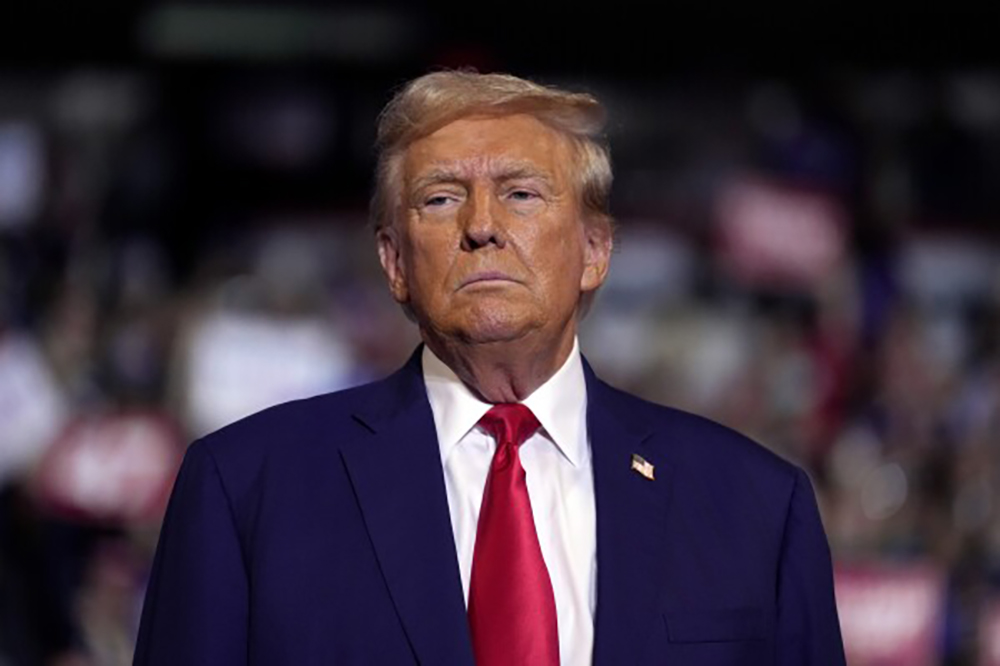
“I have just read a News Report that Hamas has moved the hostages above ground to use them as human shields against Israel’s ground offensive,” Trump wrote. “I hope the Leaders of Hamas know what they’re getting into if they do such a thing. This is a human atrocity, the likes of which few people have ever seen before. Don’t let this happen or, ALL ‘BETS’ ARE OFF. RELEASE ALL HOSTAGES NOW!”
Within hours of the post, Prime Minister Netanyahu expressed gratitude for Trump’s unequivocal message. “Thank you President Trump for your unflinching support for Israel’s battle against Hamas and the release of all our hostages,” Netanyahu said, according to the report on Israel National News.
The endorsement from Trump—who has consistently framed Hamas as part of a broader global jihadist menace—reinforced Israel’s position that no ceasefire or diplomatic compromise can be considered without the unconditional liberation of all captives.
U. S. Ambassador to Israel Mike Huckabee echoed Trump’s statement, sharing the post on X and writing, “Let’s hope the monsters of Hamas listen to President Trump.” Huckabee, a longtime ally of the former president, has repeatedly emphasized Washington’s role in pressuring Hamas and its backers to end the hostage crisis.
Reports broadcast on Kan Reshet Bet and cited in the Israel National News report suggested that Hamas has begun dispersing hostages into private homes and even tents above ground, hoping to complicate Israeli targeting decisions. Arab sources in Gaza confirmed that some captives had been relocated in anticipation of the IDF’s maneuver into Gaza City.
The tactic—placing innocent lives directly in the line of fire—has long been a hallmark of Hamas’ operational doctrine, using civilians and captives alike to shield its fighters and infrastructure. For many Israelis, the latest revelations underscored the urgency of Trump’s warning and the scale of Hamas’ disregard for human life.
Perhaps the most searing testimony of the day came from Merav, the mother of hostage Guy Gilboa-Dalal. Speaking in a restrained but anguished tone on Galei Tzahal (IDF Radio), she disclosed that her son is being kept alone above ground in Gaza, serving explicitly as a “human shield.”
“I was informed that Guy is being held alone above ground in Gaza, serving as a human shield,” she said. “Don’t try to question me further—there are many things I want to say, but I’m holding back out of concern for my son’s safety. When he comes home, maybe I’ll scream louder, maybe I’ll shake things up more.”
Her words, as reported by Israel National News, encapsulated the impossible dilemma facing hostage families—caught between public advocacy for decisive action and the fear that speaking too forcefully could endanger their loved ones.
As news of intensified IDF strikes in Gaza City spread, the Hostages and Missing Families Forum Headquarters issued a blistering statement late Monday evening. “The families of the hostages are receiving with deep concern reports of the major military operation launched tonight in Gaza City,” the statement read.
“After 710 nights of being held captive by terrorists, tonight could be the final night for hostages who are barely surviving, and our last chance to locate and recover the deceased for dignified burial,” the families warned. “Many living hostages are in Gaza City.”
The statement went further, accusing Netanyahu of “deliberately choosing to sacrifice them for political considerations, completely disregarding the assessments of the Chief of Staff and security establishment.”
According to the information provided in the Israel National News report, the families charged that the Prime Minister, Defense Minister, Strategic Affairs Minister Ron Dermer, and Chief of Staff had all refused to meet them, despite repeated requests. In contrast, they noted that Secretary of State Marco Rubio had met with the families three times in the past week alone.
“Prime Minister Netanyahu bears personal responsibility for the fate of the hostages,” the statement concluded. “The people of Israel will not forgive the sacrifice of the hostages and soldiers. The writing is on the wall.”
By nightfall, anger had spilled into the streets of Jerusalem. Families of hostages gathered outside the Prime Minister’s residence, demanding accountability and transparency. Einav Zangauker, the mother of Matan—one of the hostages still in Gaza—addressed her fury directly at Sara Netanyahu.
“Sara, come out here and tell me what you promised me in Nir Oz. Come!” Zangauker cried, her voice breaking. “There are other fathers and mothers here too. Come out and tell me how you lied to my face, how you told me that you were going to bring back a deal and return everyone home. Come out and tell me how you lied to me. You know how to meet with families behind closed doors, away from the media, away from everything, and you sell them complete nonsense. Enough!”
Her speech, as noted in the Israel National News report, symbolized a growing rupture between Netanyahu and families who feel abandoned in their darkest hour. “It’s over—the gloves are off,” Zangauker added. “If he stops at nothing and sends our precious, brave, heroic soldiers to fight while our hostages are being used as human shields—he is not a worthy Prime Minister!”

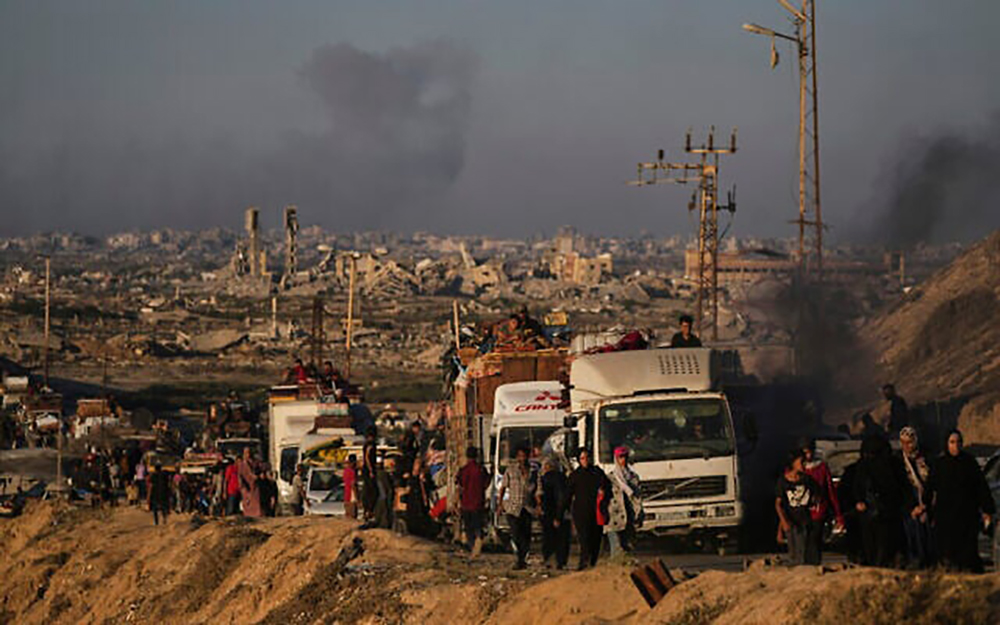
Parallel to the political firestorm, the Israeli defense establishment signaled that conditions were set for the IDF’s long-anticipated maneuver into Gaza City. According to Channel 12 News, cited in the Israel National News report, roughly 320,000 Gazans have already moved south toward designated humanitarian zones, clearing a path for the operation.
“The number of Gazans who have moved so far allows the maneuver to begin,” a defense official told reporters.
For weeks, Israel has urged civilians to evacuate northern Gaza ahead of the offensive, while Hamas has actively discouraged such movement in order to preserve human shields. The relocation of hundreds of thousands southward represents a partial success for Israel’s humanitarian corridor strategy, though tens of thousands remain in Gaza City, complicating IDF efforts to minimize civilian casualties.
Trump’s post carried both moral urgency and strategic deterrence. By warning Hamas that “all bets are off,” the president reinforced Israel’s view that the international community must hold Hamas—not Israel—responsible for the fate of the hostages.
The report on Israel National News highlighted the significance of Trump’s choice of language, recalling his past policy decisions such as withdrawing U. S. funding from UNRWA and recognizing Jerusalem as Israel’s capital. His latest intervention signaled to Hamas leaders that Washington’s political winds may be shifting back toward uncompromising support for Israel’s military objectives.
Ambassador Huckabee’s amplification of Trump’s message further underscored the alignment between U. S. conservative leaders and Netanyahu’s government, even as domestic Israeli politics seethes with recrimination over the hostages’ plight.
The hostage crisis has laid bare the agonizing contradictions of Israel’s war policy. On one hand, military officials insist that eliminating Hamas’ command infrastructure in Gaza City is essential to Israel’s long-term security. On the other, families of hostages warn that such operations may seal the fate of their loved ones.
The Israel National News report observed that this dynamic has created a combustible mix of hope, fear, and fury—hope that decisive action might weaken Hamas, fear that the hostages will be sacrificed, and fury that political leaders appear indifferent to personal anguish.
For Netanyahu, the balancing act grows increasingly precarious. His embrace of Trump’s message may rally international backing, but at home, nightly protests and accusations of betrayal sap his moral authority.
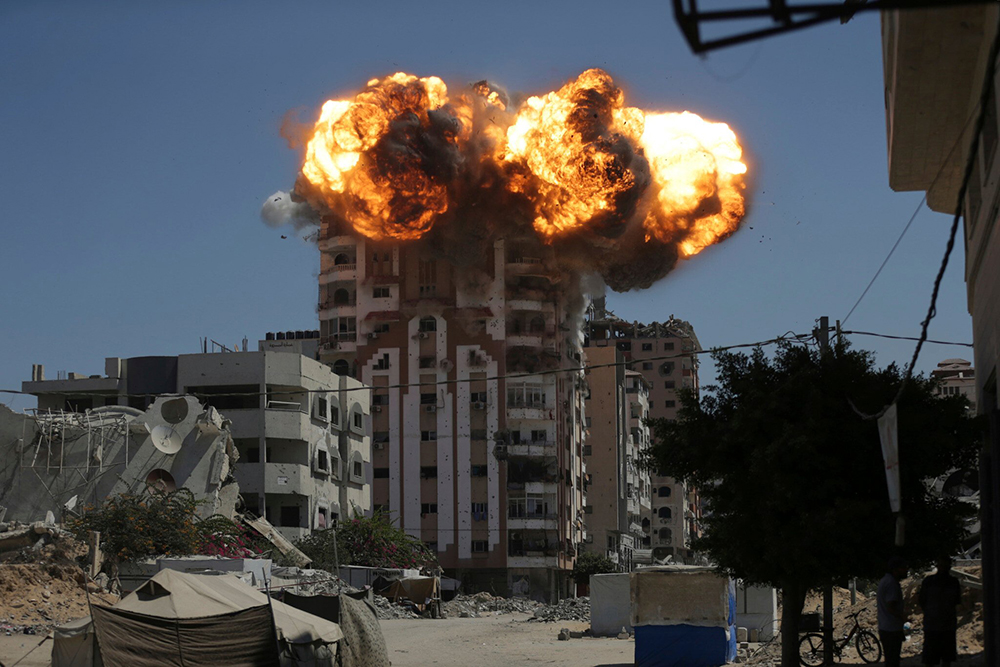
As Israeli jets pounded targets in northwestern Gaza City late Monday, the contours of the coming battle began to take shape. Hamas’ decision to move hostages above ground may delay Israel’s advance but is unlikely to alter its ultimate objectives. The IDF’s determination to dismantle Hamas’ infrastructure and rescue captives remains undiminished.
Yet the political cost of those operations—measured in the anger of hostage families, the growing rift between Netanyahu and sections of Israeli society, and the mounting international scrutiny—continues to rise.
The Israel National News report noted that the confrontation now pivots on three interlocking questions: Can Israel neutralize Hamas’ leadership in Gaza City without catastrophic loss of hostage lives? Will international allies, particularly the United States under Trump’s watchful gaze, sustain unequivocal backing for Israel’s strategy? And perhaps most painfully of all, how long can hostage families endure the waiting, pleading, and protesting before despair overwhelms hope?
For now, the only certainty is that the fate of dozens of Israeli captives remains entwined with the next phase of Israel’s war in Gaza—and with the words of a former American president whose blunt demand still echoes: “RELEASE ALL HOSTAGES NOW!”
Trump Warns Israel
The fallout from Israel’s attempted strike on Hamas leaders in Doha has reverberated well beyond the Middle East, drawing pointed remarks from President Donald Trump and igniting debate over Qatar’s role as both a mediator and host of Hamas’s political leadership. Speaking to reporters on Sunday, Trump cautioned Israel to “be very, very careful” while reiterating his administration’s view of Qatar as a trusted partner of the United States.
Trump’s words, delivered less than 48 hours after Israel National News (INN) and other outlets reported that Khalil al-Hayya, a senior Hamas figure, had survived the targeted operation in Doha, underscored the delicate balance between Israel’s pursuit of Hamas operatives abroad and Washington’s insistence on preserving ties with Gulf allies.
Asked directly what his message was for Prime Minister Benjamin Netanyahu in the wake of the Qatar strike, Trump did not equivocate.
“They have to be very, very careful,” the president said. “They have to do something about Hamas, but Qatar has been a great ally to the United States. A lot of people don’t know that.”
Trump, who has cultivated close personal ties with the Emir of Qatar, Sheikh Tamim bin Hamad Al Thani, added that he had counseled the Gulf leader to improve his country’s global image. “I told the Emir, who I think is a wonderful person, actually, I said, ‘You need better public relations because you don’t really get the public relations,’” Trump remarked.
According to the report at INN, Trump framed his comments as both a warning and a reassurance: Israel’s campaign against Hamas was legitimate, but strikes carried out in the capital of a U. S.-aligned state risk undermining crucial diplomatic alliances. “People talk of [Qatar] so badly, and they shouldn’t be,” Trump said. “Qatar has been a very great ally. So Israel and everybody else, we have to be careful. When we attack people, we have to be careful.”
While Trump emphasized restraint, Prime Minister Netanyahu defended Israel’s rationale for striking in Qatar. In an English-language post on X quoted in the INN report, Netanyahu argued that Hamas’s leadership in Doha has been the central obstacle to ending the war.
“These leaders blocked all ceasefire attempts,” Netanyahu wrote. “Getting rid of them would eliminate the main obstacle to ending the war and releasing all our hostages.”
Netanyahu’s statement reflected growing Israeli frustration with Hamas’s political bureau in Qatar, widely seen as the hub where strategic decisions are made and negotiations manipulated. Israel’s security establishment has long accused Doha-based Hamas chiefs of deliberately prolonging hostilities by rejecting ceasefire frameworks in order to maximize political leverage.