



|
Getting your Trinity Audio player ready...
|
By: Fern Sidman
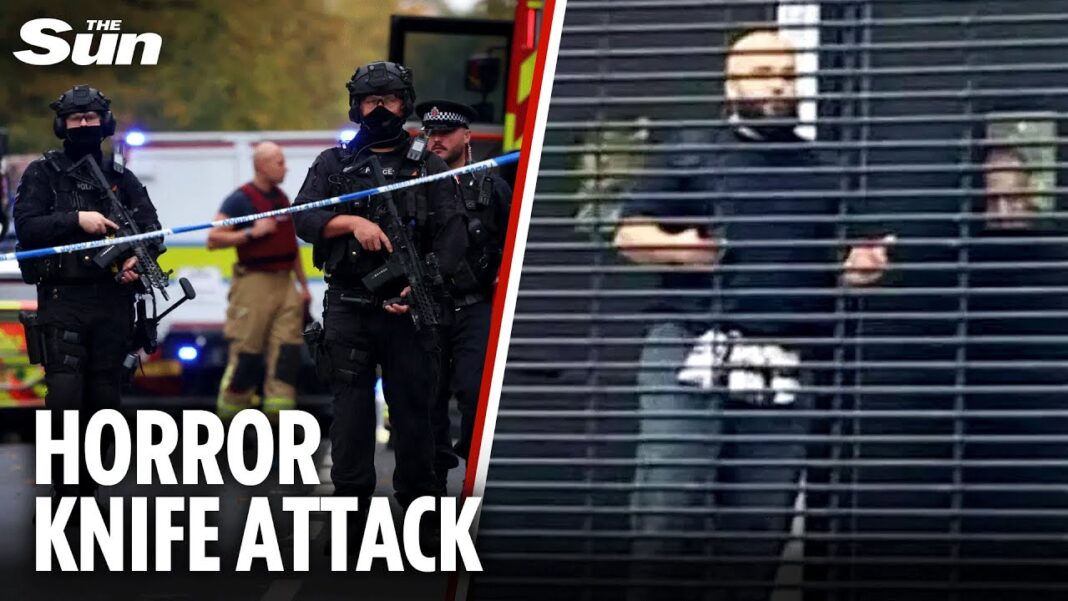
The shock of the October 2 terrorist attack outside the Heaton Park Hebrew Congregation in Manchester has reverberated far beyond the United Kingdom. For the Jewish community, the attack — which claimed two lives and left several others wounded on Yom Kippur, the holiest day of the Jewish calendar — has become a grim symbol of the precariousness of Jewish life in Europe in 2025. For the Religious Zionists of America–Mizrachi (RZA-Mizrachi), one of the oldest and most influential Zionist organizations in the United States, it has also become a rallying cry.
In a strongly worded statement issued Sunday, RZA-Mizrachi expressed both “outrage and deep sorrow” at the attack, while demanding that British leaders move beyond the language of condolences and begin to address what it described as the deeper drivers of antisemitic violence spreading across the country.
Stephen M. Flatow, President of RZA-Mizrachi, framed the group’s response with stark clarity. “Words of condolence are not enough,” he declared. “Britain must confront the policies that have allowed radicalization and antisemitism to flourish in its streets — from uncontrolled migration without integration, to the normalization of hate-filled protests masquerading as political activism.”
Flatow’s words reflected a growing frustration in global Jewish circles with political responses that emphasize mourning and solidarity but fail, in their view, to enact the structural changes needed to confront antisemitism at its roots.
Prime Minister Keir Starmer, in the immediate aftermath of the Manchester attack, pledged to “do everything in my power to guarantee the security that you deserve.” While RZA-Mizrachi welcomed the gesture, the organization made clear that the promise must be backed by tangible action. Without such action, the group warned, Britain’s Jews will continue to feel exposed, isolated, and increasingly abandoned by the state meant to protect them.
The Manchester attack came against the backdrop of contentious political decisions in London. Among them: the UK government’s recognition of a Palestinian state earlier this year.
For RZA-Mizrachi, the timing and symbolism of that decision could not have been worse. As Flatow observed, “By recognizing a Palestinian state without demanding the renunciation of terror or the release of hostages, the UK government emboldened extremists. That decision, combined with permissive street demonstrations that glorify ‘intifada,’ has made Britain’s Jews feel isolated and exposed.”
The organization pointed to a troubling pattern. On the one hand, British leaders express verbal commitments to Jewish security. On the other, policy choices — whether in foreign affairs or domestic protest regulation — appear to embolden those hostile to Jews and to Israel.
For RZA-Mizrachi, the Manchester atrocity was not only a Jewish tragedy but a British one. “If the United Kingdom cannot protect its Jews, it cannot protect its democratic values either,” Flatow said.
That sentiment reflects a broader argument increasingly voiced in Jewish and pro-Israel circles: antisemitism is not just a threat to Jewish communities but a bellwether for the health of liberal democracy itself. If a society cannot secure the rights and safety of its Jewish minority, its broader civic framework is in peril.
In practical terms, RZA-Mizrachi outlined a four-point plan for what Britain must do in the wake of Manchester:
Enforce hate-crime laws and prosecute antisemitic incitement. Legal tools already exist, the organization argued, but authorities have too often failed to use them with vigor when antisemitism is involved.
Regulate demonstrations that glorify violence or target Jewish institutions. Britain’s tradition of free assembly must be preserved, RZA-Mizrachi emphasized, but there is a clear line between political dissent and the incitement to violence that has become increasingly visible in recent pro-Palestinian rallies.
Invest in integration programs that teach civic responsibility and shared values. A failure to integrate immigrant populations, Flatow suggested, has contributed to an environment in which radical ideologies can thrive unchecked.
Affirm publicly that Jews are full partners in Britain’s national life. This point, the group noted, goes beyond security. It is about dignity and belonging. “Jews are not a community to be ‘protected’ from the outside,” Flatow said. “They are part of the fabric of British society and must be affirmed as such.”
The attack on Yom Kippur, which left hundreds of worshippers barricaded inside the synagogue for hours amid fears that the attacker wore explosives, has shaken the Jewish community of Manchester — Britain’s second-largest Jewish population center — to its core.
For many British Jews, the attack represented a threshold moment: the fear that had simmered for months in the wake of rising antisemitic demonstrations across the UK has now been realized in deadly form. Posters of Israeli hostages have been torn down, schools have been targeted, and chants of “intifada” have been heard openly in major cities. The events in Manchester turned those threats into lived trauma.
Community leaders have since called for an urgent increase in police presence at synagogues and schools, but many argue that the problem is not just about security at Jewish sites. It is about the broader social and political climate in which such violence can be imagined, justified, or tacitly condoned.
The Manchester synagogue attack cannot be seen in isolation. It follows years of escalating tension around the place of Jews in British society. Under Jeremy Corbyn’s leadership, the Labour Party was engulfed in a scandal over antisemitism so severe that it drew the attention of the Equality and Human Rights Commission, which issued a damning report in 2020.
While Keir Starmer has sought to rebuild trust with the Jewish community, adopting a more explicitly pro-Israel stance and pledging zero tolerance for antisemitism, critics argue that the persistence of hate in British streets and institutions shows how much remains unaddressed.
The recognition of Palestinian statehood after October 7 — when Hamas’s massacre of Israelis remains a fresh wound — only deepened Jewish suspicion of the government’s priorities.
Founded in 1913, the Religious Zionists of America–Mizrachi is no stranger to the intersection of Jewish advocacy and political urgency. As one of the oldest Zionist organizations in the United States, it campaigned for the establishment of Israel and helped create pioneering Jewish communities in the Land of Israel. In more recent decades, it has focused on pro-Israel activism and religious Zionist education in the diaspora.
The group is quick to emphasize its nonpartisan stance. It is not affiliated with any American or Israeli political party, which gives it latitude to speak in moral rather than partisan terms. Its intervention in the wake of the Manchester attack, then, is less about domestic British politics than about the global Jewish imperative to confront antisemitism wherever it emerges.
For RZA-Mizrachi, the implications of the Manchester attack extend far beyond Britain. In their statement, they called on “world leaders to confront the spread of antisemitism with clarity and courage.”
That call reflects a sobering reality: from Paris to New York to Sydney, Jewish communities have reported spikes in antisemitic incidents since Hamas’s October 7 massacre in Israel. Attacks on synagogues, threats in schools, and intimidation on university campuses have surged.
The Manchester tragedy thus serves as both a warning and a test case. If Britain, with its proud democratic tradition and history of multiculturalism, cannot decisively confront antisemitism, what hope is there elsewhere?
The massacre at Heaton Park Hebrew Congregation is, first and foremost, a human tragedy — two lives extinguished, families broken, a community traumatized on its holiest day. But it is also, as RZA-Mizrachi insisted, a test of Britain’s moral clarity and political resolve.
“Jews in Manchester were murdered on Yom Kippur because antisemitism has been permitted to fester and radicalization has been allowed to thrive,” Flatow said. “The response cannot simply be sympathy. It must be action.”
For Britain, that means not only securing synagogues and prosecuting perpetrators but also confronting the broader currents of hate, radicalization, and political equivocation that have made Jewish life feel so precarious. For the global Jewish community, it means watching closely — and holding leaders to account.
As RZA-Mizrachi’s statement indicated, the Manchester attack is not just a Jewish wound but a British one. Its healing will depend on whether Britain can rediscover the courage to defend both its Jews and the democratic values they represent.