



|
Getting your Trinity Audio player ready...
|
“A Nation Asleep While Jews Bleed”: Tony Abbott Unleashes Scathing Rebuke of Australia’s Leaders After Bondi Terror
By: Ariella Haviv
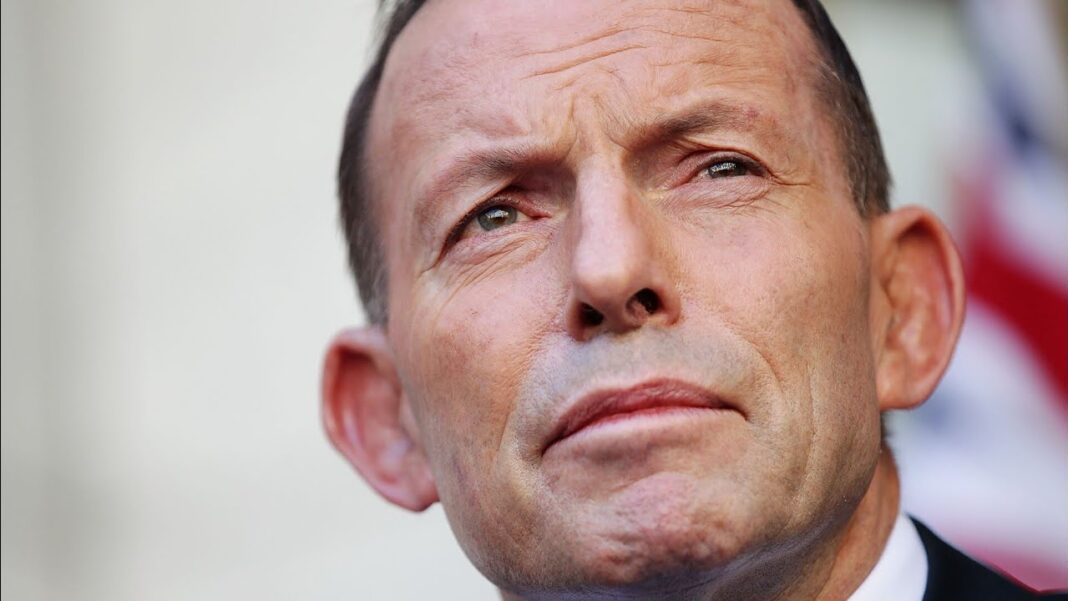
Former Australian prime minister Tony Abbott has emerged as one of the most forceful critics of the current Labor government’s handling of antisemitism in the wake of Sunday’s deadly shooting at Bondi Beach, a terror attack that has sent shockwaves through Australia’s Jewish community and reverberated across the democratic world. As reported on Tuesday by VIN News, Abbott’s remarks mark a sharp escalation in the national debate over whether Australia’s political leadership has been sufficiently resolute in confronting what many see as a rapidly intensifying climate of anti-Jewish hostility.
Speaking in the days following the attack, which claimed the lives of Jewish Australians gathered for a Hanukkah celebration, Abbott argued that the massacre was not an isolated aberration but rather the most violent expression yet of a pattern that has been building since the Hamas atrocities of October 7. According to the information provided in the VIN News report, Abbott accused the Labor government of responding to this trend with symbolic gestures and rhetorical condemnations while failing to take concrete enforcement actions capable of deterring extremists and reassuring vulnerable communities.
“This didn’t come out of nowhere,” Abbott said, in comments cited by VIN News. “When antisemitic rhetoric is tolerated, when intimidation masquerading as protest is allowed to flourish, eventually someone decides to turn words into bullets.” His critique reflects a growing sentiment among Jewish leaders, security experts, and opposition figures who argue that the warning signs were visible long before gunfire erupted on one of Australia’s most iconic beaches.
Abbott’s central charge is that the federal government has relied too heavily on what he derisively described as “ineffective gestures” — statements of concern, carefully worded press releases, and calls for calm — while failing to use the full force of the law against individuals and groups openly espousing antisemitic hatred. As VIN News has reported, Abbott pointed to repeated demonstrations in major Australian cities where chants, signs, and slogans crossed, in his view, from legitimate political expression into explicit intimidation of Jewish citizens.
In particular, he criticized authorities for not prosecuting extremist figures who have publicly glorified violence or invoked genocidal language. “If someone is calling for harm against Jews, that is not free speech,” Abbott said, according to the VIN News report. “That is incitement, and a serious country treats it as such.” His comments echo long-standing concerns raised by Jewish communal organizations that law enforcement has been reluctant to draw firm lines, allowing hate-driven activism to become normalized in public spaces.
The former prime minister also framed the issue as a test of Australia’s national character. For decades, Australia has prided itself on being a safe haven for Jewish life, a country where Holocaust survivors rebuilt families and institutions in relative security. Abbott warned that this reputation is now at risk. “If Jewish Australians no longer feel safe gathering openly for their holidays, then something fundamental has gone wrong,” he said, as quoted in the VIN News report.
Abbott’s remarks arrive amid a broader political reckoning over immigration, integration, and civic values — debates that have intensified sharply since the Bondi Beach attack. While careful to avoid sweeping generalizations, Abbott argued that Australia must be unapologetic in insisting that newcomers, regardless of background, adhere to the country’s democratic norms and reject sectarian hatred. As the VIN News report noted, his comments have resonated within segments of the opposition that are increasingly vocal about linking immigration policy to national cohesion and public safety.
“Multiculturalism only works when there is a shared commitment to basic values,” Abbott said. “One of those values is that you do not import ancient hatreds and act them out on Australian streets.” His position has reignited internal debates within conservative circles about how far governments should go in screening migrants and enforcing assimilation into civic life, particularly in the context of global ideological conflicts.
Jewish leaders have largely welcomed Abbott’s blunt intervention. According to the information contained in the VIN News report, several communal figures said that while they may not agree with Abbott on every policy issue, his willingness to speak plainly about antisemitism stands in contrast to what they perceive as evasiveness from current leaders. One senior community representative told VIN News that the attack at Bondi Beach “felt like the inevitable outcome of months of denial about how dangerous the rhetoric had become.”
At the same time, Abbott’s criticism has drawn pushback from government officials and some commentators, who argue that his language risks inflaming tensions further. Labor figures have insisted that they take antisemitism seriously and point to increased funding for security at Jewish institutions and task forces aimed at combating hate. However, as the report at VIN News observed, critics counter that such measures, while welcome, do little to address the ideological drivers of antisemitic violence if perpetrators believe they will face minimal consequences.
What distinguishes Abbott’s intervention is his insistence that leadership is measured not merely by empathy after tragedy but by the willingness to act decisively before violence occurs. He has called for clearer enforcement of existing hate speech laws, faster deportation proceedings for non-citizens engaged in extremist activity, and unequivocal political messaging that draws a bright line between legitimate protest and antisemitic intimidation.
The Bondi Beach massacre has become a grim inflection point in Australia’s national conversation. As the VIN News report documented, it has forced politicians across the spectrum to confront uncomfortable questions about whether warning signs were missed — or ignored — and whether fear of controversy allowed hatred to metastasize unchecked. Abbott’s remarks have amplified those questions, ensuring they will remain central to public debate in the months ahead.
Ultimately, Abbott framed his critique not as a partisan attack but as a call to moral clarity. “This is about protecting Australians who are being targeted because of who they are,” he said, according to the VIN News report. “If we cannot do that, then we are failing at the most basic level of government.”
As Australia mourns the victims of Bondi Beach and grapples with the broader implications of the attack, Abbott’s words call attention to a sobering reality: antisemitism, once dismissed by some as marginal or rhetorical, has demonstrated its capacity to erupt into mass violence. Whether the current government responds with the kind of decisive action Abbott demands may well shape not only the security of Jewish Australians, but the country’s democratic self-understanding in an increasingly volatile world.