



|
Getting your Trinity Audio player ready...
|
A Crown Against Hatred: King Charles III’s Historic Patronage Signals Defiance Amid Rising Antisemitism
By: Fern Sidman
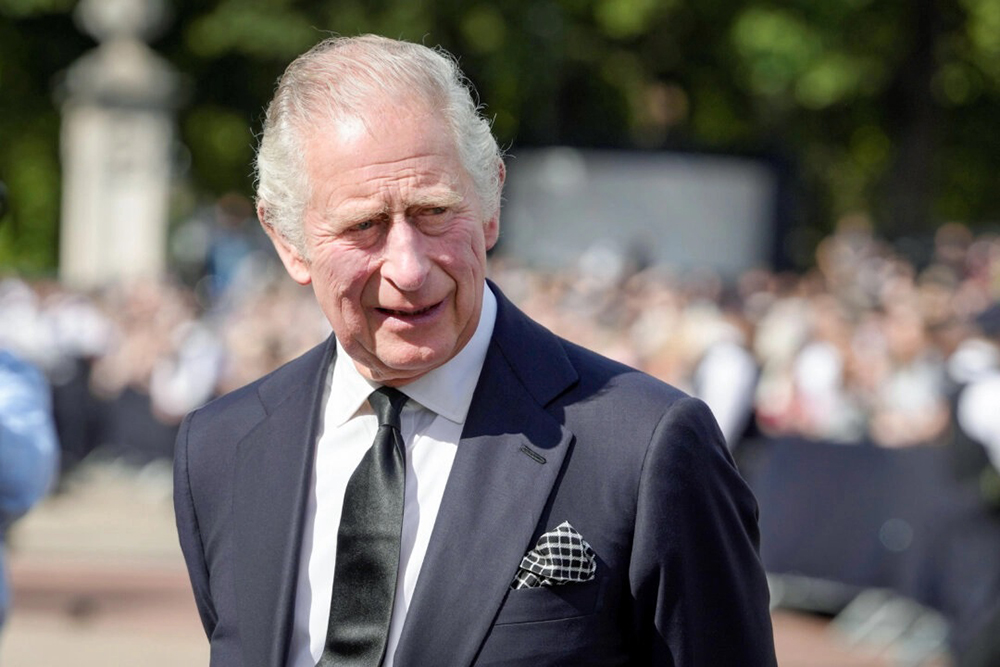
In a moment laden with symbolic resonance and national significance, His Majesty King Charles III has agreed to become the first royal patron of the Community Security Trust, the organization announced in a development that has reverberated across Britain’s Jewish community and beyond. The decision, formally confirmed during the CST’s annual dinner, arrives at a time of acute anxiety, following an antisemitic arson attack that has shaken public confidence and underscored the urgency of renewed vigilance.
As reported on Tuesday by The Jerusalem Post, the timing of the announcement—coming mere hours after the firebombing of four Hatzolah ambulances in Golders Green—has imbued the King’s acceptance of patronage with an added layer of poignancy. Although Buckingham Palace was quick to clarify that the decision had been under consideration for some time and was not a direct response to the incident, the juxtaposition of these events has nonetheless amplified the gesture’s symbolic weight.
The Community Security Trust, widely regarded as the principal body responsible for safeguarding Jewish communities across the United Kingdom, described the appointment as a “powerful recognition” of the monarch’s enduring commitment to combating antisemitism. The Jerusalem Post report highlighted that this marks an unprecedented moment in the relationship between the British Crown and the Jewish community, elevating the CST’s mission to a new level of national prominence.
The King’s association with Jewish communal life is neither recent nor incidental. Over decades, he has cultivated a reputation for interfaith engagement and has consistently expressed solidarity with Jewish institutions and causes. According to the information provided in The Jerusalem Post report, officials at Buckingham Palace emphasized that the patronage reflects a long-standing trajectory of support, rather than a reactive measure prompted by current events. This distinction, while important in institutional terms, does little to diminish the profound resonance of the announcement in the present climate.
At the CST annual dinner, the atmosphere was both celebratory and somber—a duality that encapsulated the broader mood of the community. Lord Daniel Finkelstein, a trustee of the organization, addressed attendees with a message that blended defiance with historical consciousness. He described the King as the community’s “greatest ally,” a characterization that reflects both personal admiration and an acknowledgment of the broader significance of royal endorsement.
Finkelstein’s remarks, as recounted by The Jerusalem Post, also addressed the recent arson attack, situating it within a longer narrative of adversity and resilience. “We are not just Jews, we are British Jews,” he declared, affirming a dual identity that has long been central to the community’s self-understanding. His assertion that “we have seen worse, and we have come through it” evoked a collective memory shaped by both persecution and perseverance.
The arson attack itself—targeting ambulances operated by the Hatzolah emergency service—has become a focal point for national reflection. The destruction of vehicles dedicated to life-saving work has been widely condemned as an act of particular cruelty, one that transcends ordinary criminality to strike at the moral fabric of society. The Jerusalem Post reported that the incident has intensified concerns about the trajectory of antisemitism in the United Kingdom, a concern echoed by political leaders and civil society organizations alike.
In this context, the King’s patronage assumes a significance that extends beyond ceremonial affiliation. It represents a form of moral leadership, a visible affirmation that the fight against antisemitism is not confined to any single community but is a matter of national importance. The Jerusalem Post has underscored that such gestures can play a crucial role in shaping public discourse, reinforcing norms of tolerance and inclusion at a time when they are under strain.
The role of the monarchy in contemporary Britain is often described in terms of continuity and unity—functions that are inherently symbolic yet deeply consequential. By aligning himself with the CST, King Charles III has effectively placed the weight of the Crown behind the imperative to protect Jewish life. This alignment carries both practical and psychological implications, enhancing the visibility of the issue and potentially galvanizing broader support for the organization’s work.
At the same time, the appointment invites reflection on the evolving nature of antisemitism in the modern era. The Jerusalem Post has documented a range of incidents in recent months, from vandalism and harassment to more overt acts of violence. These developments suggest that antisemitism is not merely a residual prejudice but a dynamic and, in some cases, intensifying phenomenon.
The CST, for its part, operates at the intersection of security and community engagement, providing both protective measures and educational initiatives. Its work is often conducted quietly, in the background of daily life, yet its importance becomes starkly apparent in moments of crisis. The King’s patronage is likely to enhance the organization’s capacity to fulfill its mission, both by raising its profile and by signaling institutional support at the highest level.
Buckingham Palace’s communication to The Jerusalem Post emphasized that the patronage had been “in the works for some time,” suggesting a deliberate and considered process. This detail reinforces the notion that the King’s commitment is substantive rather than symbolic, rooted in a sustained engagement with the issues at hand.
Nevertheless, the convergence of the announcement with the Golders Green attack has inevitably shaped public perception. For many observers, the timing has transformed what might otherwise have been a noteworthy but routine development into a moment of profound significance—a statement of solidarity delivered at a moment of vulnerability.
The broader implications of this development extend beyond the immediate context of the Jewish community. In a society grappling with questions of identity, cohesion, and resilience, the King’s patronage can be seen as part of a wider effort to reaffirm shared values. The Jerusalem Post has noted that such gestures contribute to a narrative in which diversity is not merely tolerated but actively defended.
As Britain confronts the challenges posed by rising antisemitism, the importance of leadership—both political and symbolic—cannot be overstated. King Charles III’s decision to assume the role of patron of the Community Security Trust represents a significant step in this regard, offering both reassurance to those directly affected and a broader message about the kind of society the United Kingdom aspires to be.
In the final analysis, the significance of this moment lies not only in the appointment itself but in what it represents: a reaffirmation of solidarity, a commitment to vigilance, and a recognition that the fight against hatred requires the engagement of all sectors of society. As The Jerusalem Post continues to report on these developments, the enduring question will be whether such gestures can translate into lasting change—an outcome that will depend not only on institutions, but on the collective will of the nation.
