



|
Getting your Trinity Audio player ready...
|
38 Members of the House of Lords Warn that Starmer’s Palestinian Recognition Plan Risks Breaching International Law
By: Fern Sidman
A growing controversy has erupted in London after Prime Minister Keir Starmer’s pledge to recognize a Palestinian state drew warnings from some of the United Kingdom’s most senior legal authorities. As VIN News reported on Thursday, a coalition of 38 members of the House of Lords — including several of Britain’s most respected lawyers — has written to the government’s chief legal adviser, Attorney General Lord Hermer, raising profound concerns that such a move could contravene international law.
The letter, which has been seen by reporters and confirmed by multiple parliamentary sources, challenges the legal validity of Starmer’s proposal, citing the Montevideo Convention of 1933 — the international treaty that outlines the criteria for statehood. According to the peers, the Palestinian territories do not meet the four central requirements: defined borders, a permanent population, an effective government, and the capacity to engage in relations with other states.
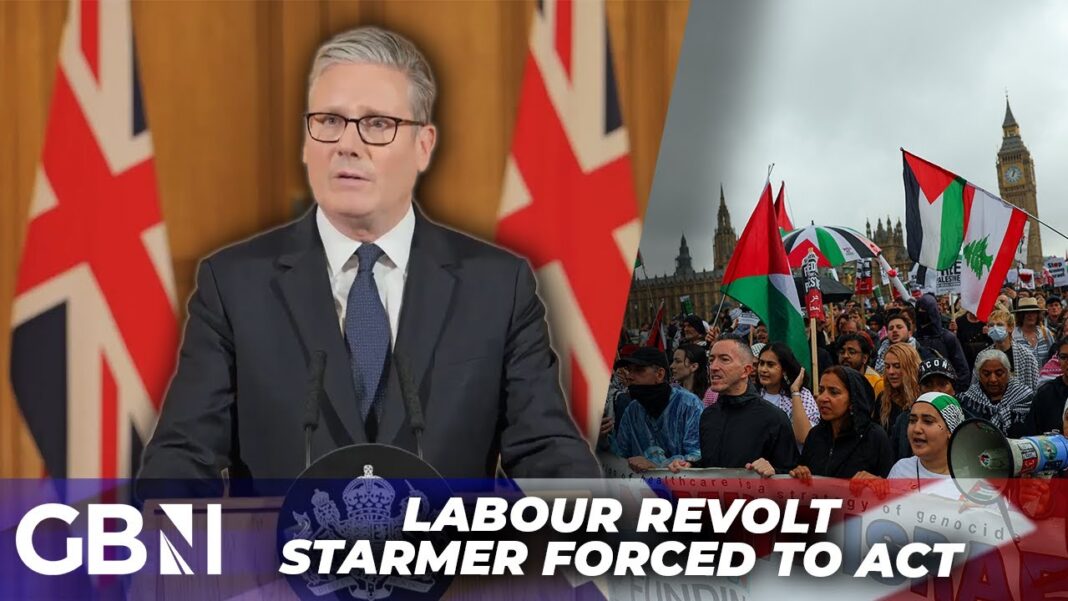
On Tuesday, Starmer announced that Britain could formally recognize a Palestinian state as early as September, ahead of a major United Nations gathering. As the VIN News report highlighted, the Prime Minister framed the decision as contingent on several conditions: Israel allowing more humanitarian aid into Gaza, halting settlement activity in Judea and Samaria and agreeing to a ceasefire, and committing to a long-term peace process.
Starmer also set conditions for Hamas, stating that the militant group must release all remaining Israeli hostages, disarm, sign up to a ceasefire, and accept exclusion from any role in governing Gaza. These stipulations, he argued, would lay the groundwork for what he termed a “credible path toward peace.”
Despite this, his remarks triggered immediate backlash from senior lawmakers, legal scholars, and Jewish community representatives, who argued that recognition of Palestine under current circumstances would not only lack legitimacy but could also embolden extremist factions.
The peers’ letter, first reported by The Times and later analyzed in detail by VIN News, constitutes one of the sharpest legal rebukes yet to the Labour leader’s foreign policy agenda. The signatories — a roster that includes Lords Pannick, Verdirame, and Faulks, along with crossbench, Labour, and Conservative figures — stressed that recognition “would be contrary to the principles governing recognition of states in international law.”
Citing Lord Hermer’s own prior statements, the peers reminded the Attorney General that a “selective, pick-and-mix approach to international law will lead to its disintegration.” They urged him to publicly clarify to both government and citizens that Palestine, under current conditions, cannot be recognized as a sovereign state without violating established international norms.
The letter further emphasized the lack of clarity regarding Palestine’s borders and the absence of a unified government, given the enduring enmity between Hamas in Gaza and the Palestinian Authority in Judea and Samaria. Without resolution of these fundamental issues, the peers argued, recognition would represent a politically expedient gesture rather than a legally defensible act.
As the VIN News report indicated, the intervention carried added weight given the involvement of several of Parliament’s most prominent Jewish voices. Baroness Deech, Lord Winston, and Baroness Altmann — long respected within both legal and political circles — joined the effort to caution against Starmer’s proposal.
Their concerns were echoed by other notable figures, including former Conservative cabinet ministers Lord Pickles and Lord Lansley, as well as Sir Michael Ellis KC, a former attorney general and the only non-peer to co-sign the letter. Collectively, their intervention demonstrates the breadth of cross-party unease at Starmer’s direction, particularly at a time when Middle East policy remains highly volatile.
The debate over Palestinian statehood has also been sharpened by personal testimony. VIN News reported on the reaction of Emily Damari, a British-Israeli woman who endured more than a year in captivity at the hands of Hamas. Damari denounced the Prime Minister’s pledge, arguing that it failed to account for the suffering of hostages and “rewards Hamas’s monstrous terrorism.”
Her remarks were reinforced by Israeli Prime Minister Benjamin Netanyahu, who similarly warned that premature recognition would embolden terrorist groups rather than advance peace. Netanyahu insisted that Britain’s policy risks undermining the security of Israel at a time when the region is still reeling from recent violence.
Despite mounting criticism, government ministers have defended the policy shift. Transport Secretary Heidi Alexander told the BBC that the proposal was not about “gesture politics” but rather about addressing the humanitarian crisis in Gaza. She stressed that the recognition process was fundamentally about “the Palestinian people” and the urgent need to deliver aid to children suffering under siege conditions.
Alexander added that the British government was giving Israel “eight weeks to act” if it wished to remain central to peace talks. “If they want to be sat at the table to shape that enduring peace in the region, they must act,” she said, according to the report at VIN News.
Starmer’s position also reflects increasing pressure from within Westminster itself. Last week, more than 250 cross-party MPs signed a letter urging him to recognize Palestinian statehood without further delay. The Prime Minister’s September timeline appears to be a response to these calls, aiming to satisfy demands from lawmakers while still leaving room for conditions tied to humanitarian and security developments.
At the core of the legal challenge lies the Montevideo Convention, a nearly century-old treaty that continues to serve as the benchmark for evaluating claims to statehood. Under its terms, entities seeking recognition must demonstrate four criteria: a permanent population, defined territory, an effective government, and the capacity for international relations.
The peers’ letter argues that Palestine, in its current fragmented state, meets none of these requirements conclusively. The lack of agreed borders, the divided rule of Hamas and Fatah, and the absence of effective centralized governance collectively undermine its claim. The VIN News report highlighted that this legal reasoning carries significant weight given the stature of the signatories, many of whom have represented the British government in landmark cases.
The Attorney General now faces mounting pressure to issue a formal opinion on the legality of recognition. While Lord Hermer has previously emphasized the centrality of international law to the UK’s foreign policy, he has yet to comment publicly on the peers’ letter.
The September deadline set by the Prime Minister looms large. In the coming weeks, much will hinge on developments in the Middle East: whether aid is permitted into Gaza, whether Hamas releases its hostages, and whether Israel and Palestinian leaders move toward any form of ceasefire.
These questions go beyond legal interpretation to touch on the broader credibility of Britain’s diplomatic standing. If the UK were to recognize Palestine prematurely, it risks setting a precedent of recognition that is divorced from international law — a move that could reverberate through future conflicts worldwide.
The debate over Palestinian recognition has once again placed Britain at the intersection of law, politics, and diplomacy. For Keir Starmer, the decision is fraught with risk: legally, as 38 peers now argue recognition may breach international law; politically, as Jewish voices and former hostages condemn the move as dangerous appeasement; and diplomatically, as Israel warns of rewards for terrorism while Britain’s allies watch closely.
Whether the UK ultimately proceeds with recognition in September or reconsiders in light of legal objections remains uncertain. What is clear is that the debate has exposed deep fissures at the heart of Britain’s foreign policy and has set the stage for a defining moment in Starmer’s premiership.
