



|
Getting your Trinity Audio player ready...
|
By: Fern Sidman – Jewish Voice News
As tensions mount along the Israel–Lebanon border, Hezbollah’s latest defiance—a categorical rejection of any negotiations with Israel and a reaffirmation of its refusal to disarm—has thrust Lebanon once again into the crosshairs of Middle Eastern volatility. In a development that underscores the fragility of last year’s U.S.-brokered ceasefire, the Iran-backed terrorist organization has openly denounced the very idea of diplomacy, vowing to preserve its vast arsenal of weapons in direct violation of Lebanese commitments.
According to a report that appeared on Thursday in The Algemeiner, Hezbollah’s open letter addressed to Lebanese President Joseph Aoun, Prime Minister Nawaf Salam, and Parliament Speaker Nabih Berri lays bare the group’s hostility toward any semblance of reconciliation. “Any attempt at political negotiations with Israel does not serve Lebanon’s national interest,” the letter declared, framing talks as capitulation and asserting Hezbollah’s “legitimate right to resist occupation.” The militant faction further insisted that “the weapons that defended Lebanon will not be up for negotiation,” positioning itself as the self-appointed guardian of Lebanese sovereignty—even as its actions threaten to plunge the country into renewed conflict.
The Algemeiner report noted that this incendiary declaration came at a time when both U.S. and Israeli officials have been quietly pressing Beirut to resume dialogue with Jerusalem to enforce the disarmament clause of the ceasefire agreement signed last year. That accord—brokered by Washington and supported by Egypt—stipulated that Hezbollah must fully disarm within four months in exchange for an Israeli withdrawal from the five strategic positions it occupies in southern Lebanon. But with that deadline long past and Hezbollah’s defiance growing bolder, the truce appears to be eroding rapidly.
In its latest correspondence, Hezbollah accused the Lebanese government of “haste” in agreeing to disarmament, claiming the decision had “enabled Israel to exploit the situation.” The Algemeiner reported that the letter framed Israel as an aggressor seeking to “blackmail Lebanon into surrendering its sovereignty.” Such rhetoric, however, belies a far more complex reality—one in which Hezbollah’s entrenched political and military dominance continues to paralyze Lebanon’s fragile democracy and undermine its sovereignty.
Lebanon’s political leadership now faces a stark dilemma: comply with its international obligations and risk domestic upheaval or continue appeasing Hezbollah and risk another devastating war with Israel. In either case, the country remains hostage to the dual pressures of Iranian influence and Western demands. As The Algemeiner report observed, “Hezbollah’s weapons are not simply tools of resistance—they are the instruments of Iran’s regional strategy, tethering Lebanon’s fate to Tehran’s ambitions.”
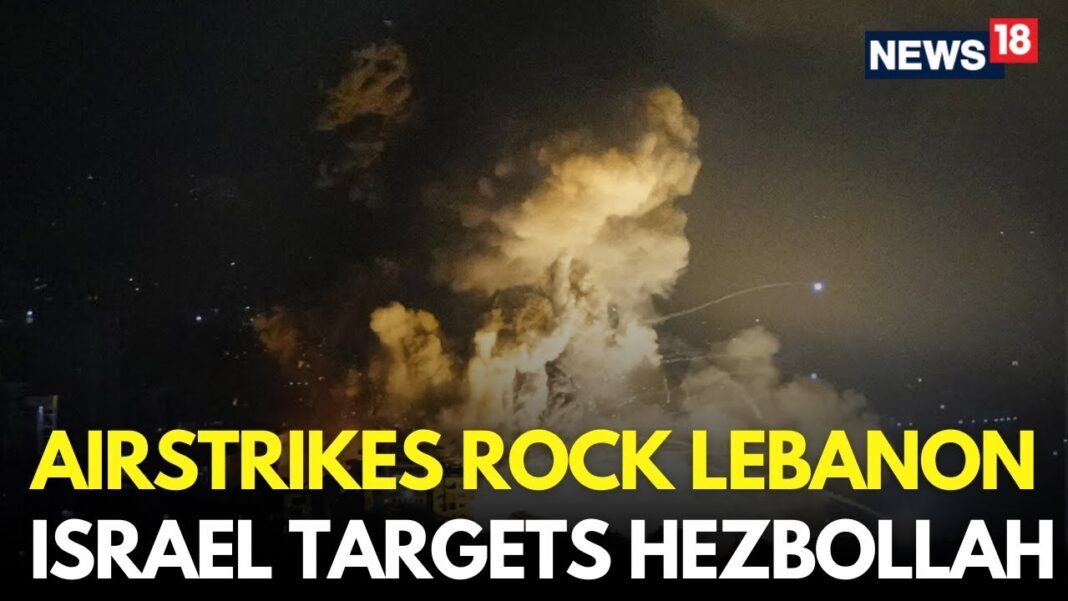
In response to Hezbollah’s renewed provocations, the Israel Defense Forces (IDF) have intensified airstrikes on targets across southern Lebanon. The Israeli military confirmed that its latest operation targeted a facility used by Hezbollah operatives to “produce equipment used to restore terror infrastructure.” The strikes, according to the information provided in The Algemeiner report, were retaliation for Hezbollah’s ongoing ceasefire violations, including drone incursions and the movement of armed units near the border.
The ceasefire’s terms were explicit: Hezbollah was to withdraw its forces north of the Litani River—approximately 15 miles from the Israeli frontier—and disarm completely under government supervision. Yet in the months following the agreement, Hezbollah has done the opposite. Intelligence sources cited by The Algemeiner reveal that the group has been “actively rebuilding its operational capacity,” engaging in the smuggling of arms and cash through Syrian routes, constructing underground bunkers, and embedding rocket launchers in civilian areas to deter Israeli retaliation.
In a statement released last week, Israeli Defense Minister Israel Katz accused Beirut of deliberate negligence. “The Lebanese government’s commitment to disarm Hezbollah must be implemented,” Katz asserted. “We will not allow any threat to the residents of the north.” Prime Minister Benjamin Netanyahu, echoing Katz’s warning, reiterated Israel’s right to act under the ceasefire’s self-defense clause. “We expect the Lebanese government to uphold its commitments, namely, to disarm Hezbollah,” Netanyahu said. “But we will do what is necessary to ensure our people’s safety.”
Hezbollah’s defiance cannot be viewed in isolation. As The Algemeiner consistently emphasizes, the organization’s strength—and its intransigence—derive directly from Iranian support. Tehran’s Islamic Revolutionary Guard Corps (IRGC) continues to channel funds, weapons, and training to Hezbollah, viewing the group as a forward operating arm of Iranian power in the Levant.
Analysts quoted by The Algemeiner suggest that Hezbollah’s escalating rhetoric and militarization are part of a larger Iranian strategy to maintain leverage amid shifting regional alliances. As Arab nations deepen ties with Israel under the Abraham Accords, Iran seeks to reassert its influence through proxy conflicts. “Hezbollah’s actions,” one security expert told the publication, “are designed to remind the world that Iran can still ignite the northern front whenever it chooses.”
Lebanon’s inability—or unwillingness—to curb Hezbollah’s activities has left it increasingly isolated on the international stage. Western diplomats privately acknowledge that while disarmament remains a condition of continued U.S. support, the Lebanese state lacks both the political will and the institutional capacity to confront Hezbollah without triggering civil unrest. In the words of one European envoy cited in The Algemeiner report, “Lebanon has become a state within a militia, rather than a militia within a state.”
The collapse of the 2024 ceasefire agreement now appears imminent. According to information contained in The Algemeiner report, the deal—hailed at the time as a major diplomatic breakthrough—was predicated on reciprocal restraint: Israel would scale back its military operations in southern Lebanon, and Hezbollah would relinquish its arsenal and military authority. The Lebanese government, in turn, was expected to restore sovereignty over its southern territories through its national army.
Yet none of these provisions have materialized. The Lebanese Armed Forces remain underfunded and politically constrained, while Hezbollah continues to operate freely, often overshadowing state institutions. In effect, Lebanon has outsourced its national defense to a militant organization that answers not to Beirut, but to Tehran.
U.S. officials have privately expressed frustration with Lebanon’s failure to uphold its commitments. As The Algemeiner reported, Washington has signaled that continued economic assistance to Lebanon could be contingent on tangible steps toward disarmament. Egypt, which has offered to mediate renewed talks between Beirut and Jerusalem, has thus far been unable to bridge the widening gulf between the parties.
Within Lebanon, public opinion remains deeply divided. Some view Hezbollah as a necessary bulwark against Israel, while others see it as the primary architect of the nation’s decline. The group’s promise to “stand with our army and people in defending our sovereignty” rings hollow for many Lebanese who blame Hezbollah for entangling their country in endless wars and economic ruin.
As The Algemeiner reported, Hezbollah’s threats of mass protests and civil unrest if disarmament proceeds have paralyzed Beirut’s leadership. Prime Minister Nawaf Salam and President Aoun face mounting domestic pressure to restore stability while navigating the perilous intersection of foreign and internal demands. Aoun, in a recent statement, accused Israel of “escalating strikes despite Lebanon’s openness to dialogue,” portraying his government as both victim and intermediary. Yet, as The Algemeiner report observed, Aoun’s overtures toward negotiation ring increasingly hollow in light of Hezbollah’s open defiance and his own unwillingness to confront it.
For Israel, the stakes are existential. The Algemeiner report indicated that Hezbollah’s rearmament south of the Litani River constitutes not only a violation of the ceasefire but also a direct threat to Israeli security. The IDF’s recent strikes reflect a strategy of “preemptive deterrence”—a calculated effort to disrupt Hezbollah’s operational capacity before it can launch a full-scale offensive.
Israeli military analysts cited in The Algemeiner report warned that Hezbollah now possesses tens of thousands of rockets and precision-guided missiles, posing a strategic threat far greater than that of Hamas in Gaza. Moreover, the group’s growing integration into Lebanon’s political system complicates Israel’s response, making it increasingly difficult to target Hezbollah without destabilizing the Lebanese state itself.
As Netanyahu remarked this week, “We will not allow Lebanon to become a renewed front against us. The choice remains with Beirut: enforce the ceasefire or face the consequences.”
In many ways, this unfolding crisis mirrors past cycles of escalation. Each attempt at peace or containment has foundered on Hezbollah’s refusal to disarm and Lebanon’s inability to compel it. The Algemeiner report pointed out that since the end of the 2006 Lebanon War, United Nations resolutions calling for the demilitarization of southern Lebanon have been ignored, while Hezbollah’s influence has only expanded.
Today, the threat is more acute than ever. With regional tensions inflamed by Iran’s ongoing confrontation with Israel and the West, and with Lebanon teetering on the brink of economic collapse, even a minor border incident could ignite a broader conflagration.
As the Algemeiner report noted, the next few weeks will determine whether Lebanon steps back from the precipice or slides deeper into chaos. The United States and its allies must decide how to balance diplomacy with deterrence, while Israel must weigh the risks of restraint against the dangers of inaction.
Hezbollah’s defiance, its letter asserts, is grounded in “resistance.” But resistance to what? To peace? To sovereignty? To accountability? For Lebanon’s beleaguered citizens, the true enemy may no longer be external—it may be the militant entity that claims to protect them.
As The Algemeiner report observed, Hezbollah’s weapons no longer defend Lebanon—they imprison it. And unless Beirut finds the courage to reclaim its state from the grip of a terrorist organization, the country risks being dragged once more into the darkness of war.
Israel knew this would happen. Israel cannot complain now that it did. Time to face reality. If Hezbollah does not withdraw, turn southern Lebanon south of the Litani River into another Dresden. Burn everything to the ground if Israel has to. Turn southern Lebanon into northern Israel might be Israel’s only alternative.