



|
Getting your Trinity Audio player ready...
|
Between Tunnels and Tombs: How Hamas Turned a Ceasefire Into a Battlefield
By: Fern Sidman
As reported extensively on Tuesday by Israel National News, Israel’s tenuous ceasefire with Hamas continues to fray under the weight of deception, violence, and grief. What began as a fragile pause in hostilities has evolved into a stark reminder of the moral chasm that separates Israel’s pursuit of accountability and the terrorist regime’s campaign of manipulation.
On Tuesday, that divide widened further when Hamas’ military wing issued a statement claiming it had located the bodies of two Israeli hostages—Amiram Cooper and Sahar Baruch—inside the Gaza Strip. Yet just hours later, another revelation underscored the bitter futility of trusting the terrorist group’s word: forensic evidence confirmed that the remains handed over by Hamas the previous evening were not those of a new hostage at all, but of Ofir Sarfati, a young Israeli already buried nearly two years ago.
According to the information provided in the Israel National News report, the discovery was verified by forensic specialists at the Abu Kabir Institute of Forensic Medicine. Their findings confirmed what Israeli authorities had feared—Hamas had recycled previously returned remains, presenting them as a new gesture of compliance under the ceasefire deal.
The deception coincided with a deadly confrontation in Rafah, where Hamas terrorists emerged from a concealed tunnel in the Jenina neighborhood and opened fire on Israeli troops conducting engineering operations. The IDF later described the gunmen as a “suicidal cell” that had likely been trapped in the tunnel for weeks before emerging to die in combat.
Though Hamas denied responsibility for the attack—insisting it remained committed to the ceasefire—Israeli officials swiftly rejected those claims. “This was a clear and deliberate breach of the agreement,” an Israeli military spokesman told Israel National News. “Hamas cannot claim adherence to a ceasefire while ambushing our soldiers from beneath the ground.”
As Israel National News reported, Tuesday morning’s chain of events encapsulated Hamas’ long-standing strategy: using ceasefires as camouflage for tactical advantage. By day, it pledges restraint; by night, it fires rockets, digs tunnels, and manipulates the humanitarian process to sow confusion.
When the IDF responded to the Rafah ambush with targeted air and artillery strikes, Hamas retaliated not on the battlefield but through propaganda—announcing it would “suspend the return of hostage bodies” in response to what it called “Israeli aggression.” This declaration represented yet another violation of the ceasefire agreement, which explicitly obligates Hamas to return all hostages and their remains without delay or condition.
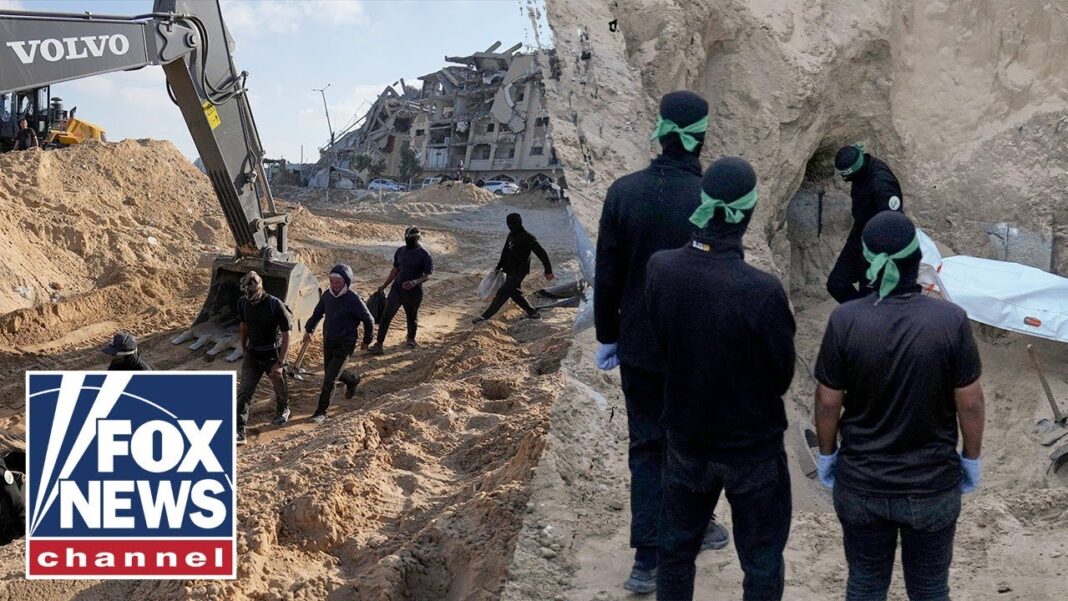
The report at Israel National News detailed how the IDF later released footage of Hamas operatives burying remains later identified as Sarfati’s, staging their “discovery,” and theatrically handing them over to the Red Cross. The spectacle was meant to simulate compliance while mocking the humanitarian process itself.
This act, Israeli officials said, was an “outrageous perversion” of international norms. “We are dealing with an organization that weaponizes compassion,” one defense source told Israel National News. “Every return of a body is an opportunity for psychological warfare.”
Prime Minister Benjamin Netanyahu, already under mounting domestic pressure to secure the release of the remaining hostages, convened his war cabinet in Jerusalem on Tuesday evening. His office later announced that he had authorized the IDF to carry out immediate and powerful strikes in the Gaza Strip in response to Hamas’ latest violations.
“Hamas pledged to return the remaining hostages, but it is violating its commitment,” said Chief of Staff Eyal Zamir, in comments reported by Israel National News. “We know the nature of this organization very well. It is built on terror, fraud, and deceit. We will not remain silent about this. We will continue to work to return all of our hostages for burial—this is our moral and ethical duty.”
Zamir vowed that Hamas would “bear responsibility and pay a heavy price” for its duplicity. “The war is not over yet,” he declared. “We will act with strength, faith, and responsibility until every Israeli is brought home.”
Within hours, IAF fighter jets struck multiple targets across Rafah and Khan Younis, including known tunnel routes, weapons depots, and command centers. Israel National News reported that the operation was the largest since the formal ceasefire began, signaling a shift toward a more aggressive enforcement posture.
Tragically, as the IDF was responding to Hamas’ provocation, Israel suffered another painful loss. The Binyamin Regional Council announced that Reserve Staff Sgt. Yonah Ephraim (Efi) Feldbaum, a 37-year-old father of five, was killed during the Rafah engagement.
“With deep sorrow, we announce the death in battle of Yonah Ephraim Feldbaum, a resident of Zayit Raanan-Neria in Binyamin,” the council said in a statement carried in the Israel National News report. “Efi lived a life of faith, family, and dedication to his country. During the war, he volunteered for meaningful reserve service in Gaza. He fell defending the land he loved.”
Feldbaum’s death marks the 59th soldier from the Binyamin Regional Council to be killed since the start of the Gaza conflict. His community remembered him as “a builder of both homes and hope,” a man who worked as a contractor by trade but viewed nation-building as a sacred mission.
Council head Israel Gantz, who also chairs the Yesha Council, paid tribute through Israel National News: “Efi fought on the front lines of Gaza and continued even after the ceasefire was declared, despite Hamas’ repeated violations. His bravery and sacrifice embody the spirit of our people. Because of heroes like him, Israel will prevail.”
Despite these provocations, some in Washington have expressed cautious optimism that the ceasefire will endure. Speaking from Capitol Hill, Vice President JD Vance told reporters that the administration’s “historic peace” would survive what he called “inevitable skirmishes.”
“The ceasefire is holding,” Vance said, in comments cited in the Israel National News report. “That doesn’t mean there aren’t going to be little flare-ups here and there. We know Hamas or somebody else attacked an IDF soldier, and we expect the Israelis will respond. But the President’s peace is going to hold.”
Vance’s remarks—meant to project confidence in the diplomatic architecture of the truce—were met with skepticism in Israel, where officials see Hamas’ actions not as “flare-ups” but as deliberate escalations. “Every bullet fired at an Israeli soldier is a broken promise,” a senior defense official told Israel National News. “You cannot make peace with an organization that thrives on betrayal.”
This latest episode follows a pattern familiar to Israelis: Hamas uses ceasefires to regroup, rearm, and rebuild its terror infrastructure. Since the October 2023 Hamas massacre—when over 1,200 Israelis were murdered and 251 hostages taken—Israel has faced mounting international pressure to restrain its military operations. Yet each pause in combat has produced the same result: renewed violence, renewed deception, and renewed suffering.
As Israel National News has documented, Hamas’ violation of humanitarian principles extends far beyond the battlefield. The group’s systematic abuse of hostage remains—swapping, staging, and misrepresenting them—amounts to psychological warfare against Israeli families. In one previous instance, during a temporary truce in February 2025, Hamas returned what it claimed were the bodies of Shiri Bibas and her two young sons. Israeli forensic teams later confirmed that one of the bodies belonged to a Palestinian woman. Bibas’ real remains were recovered days later.
Such manipulations are not errors but tactics. They reflect Hamas’ effort to project power even in defeat, to trade human life and dignity for political leverage.
The renewed fighting in Rafah underscores the peril of the region’s subterranean battlefield. IDF intelligence has long identified Rafah’s Jenina neighborhood as a central hub in Hamas’ tunnel network—a labyrinth connecting command bunkers, weapons caches, and smuggling routes. Tuesday’s ambush confirmed that even under ceasefire conditions, these tunnels remain active conduits for terror.
Israel National News reported that after Hamas opened fire, Israeli forces used precision-guided munitions to collapse several tunnel entrances and eliminate the attackers. Defense sources say Israel is now weighing whether to expand the strikes into a broader campaign aimed at dismantling Hamas’ remaining southern infrastructure.
“Every tunnel we uncover is a reminder of what we are up against,” an IDF engineer told Israel National News. “It’s not just a war over territory—it’s a war against an ideology that burrows into the earth, hides among civilians, and feeds on death.”
As the nation mourns Feldbaum and confronts Hamas’ deceit, Israeli resilience endures. Communities across the country held candlelight vigils on Tuesday night, praying for the safe return of the remaining 13 hostages still held in Gaza. Synagogues recited psalms; soldiers in the field observed a moment of silence.
The moral contrast could not be starker: a democratic nation that buries its dead with reverence versus a terrorist entity that uses the dead as pawns. The report at Israel National News captured that contrast poignantly, writing that “where Israel seeks closure, Hamas seeks chaos; where Israel builds graves of honor, Hamas builds tunnels of hate.”
Chief of Staff Zamir’s words—“The war is not over yet”—ring truer now than ever. For Israel, the battle is not only military but existential. It is a struggle to uphold the sanctity of life in the face of an enemy that sanctifies death.
Hamas’ repeated violations have once again exposed the fragility of diplomatic optimism. Each staged handover, each ambush from a tunnel, each manipulation of the truth erodes the moral foundation of any peace agreement. As the Israel National News report observed, “Israel’s ceasefire is being held hostage by the very organization that holds its citizens in the dark.”
And yet, even amid betrayal, Israel continues to act with restraint, guided by principles that distinguish it from those who seek its destruction. The Jewish state fights not for conquest but for survival, not for revenge but for justice.
As the rockets fall and the lies multiply, the lesson remains unchanged: peace cannot be negotiated with those who desecrate it. The ceasefire may still bear that name—but in Gaza’s tunnels and Israel’s cemeteries, the war rages on.
