



|
Getting your Trinity Audio player ready...
|
Adams Exits Mayoral Race: A Tumultuous Legacy, a Crowded Field, and the Shadow of Mamdani
By: Carl Schwartzbaum
In a stunning reversal that few could have predicted just months ago, New York City Mayor Eric Adams announced Sunday that he is suspending his campaign for re-election, effectively bowing out of one of the most contentious mayoral races in modern city history. The announcement, obtained in transcript form by The New York Post on Sunday and later confirmed by campaign insiders, came amid mounting pressure from party leaders, White House officials, and even President Donald Trump, all seeking to prevent socialist firebrand Zohran Mamdani from capturing City Hall.
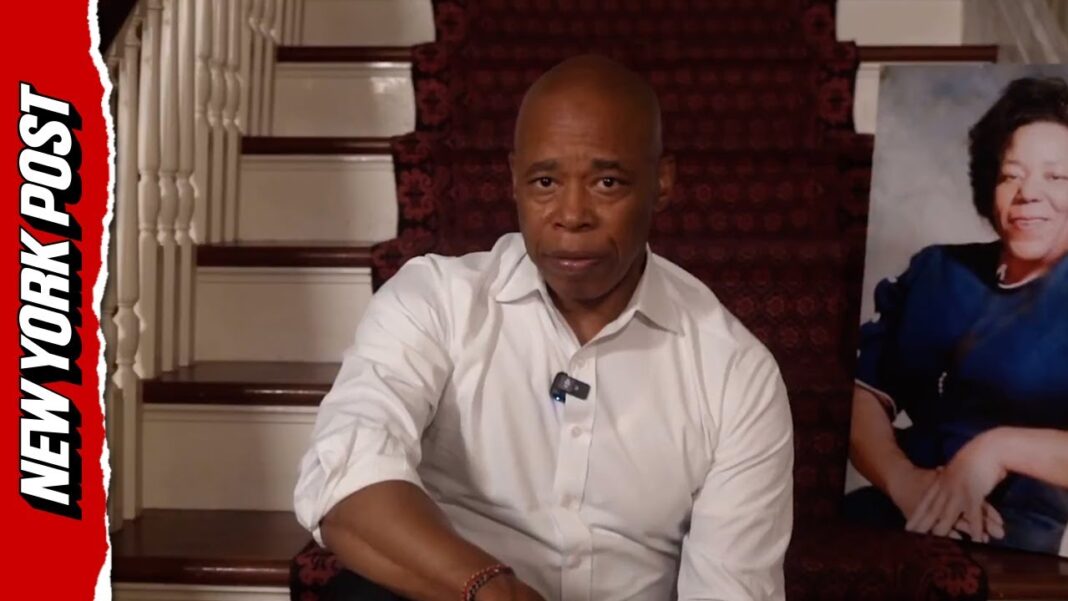
“It’s been an honor to be your mayor,” Adams said in his pre-recorded video statement, striking a tone both conciliatory and defensive. He highlighted his perceived achievements—crime reduction, housing development, and a controversial though ultimately stabilized approach to the migrant crisis—while avoiding any formal endorsement of the three leading candidates: Mamdani, former Governor Andrew Cuomo, and Republican stalwart Curtis Sliwa.
“I strongly encourage whoever takes over City Hall to continue what we’ve done,” Adams added, before warning voters of the dangers of electing a mayor who, in his words, “flip-flopped on the issues” or sought to “launder radical ideals through local government.”
Adams, who is polling a distant fourth in a crowded field, attempted to frame his withdrawal not as an admission of failure but as a sacrifice for the city’s future. Yet the shadow of corruption charges, waning public trust, and relentless scrutiny from both the press and political opponents had already rendered his campaign increasingly untenable.
The New York Post had reported for weeks on backroom negotiations, describing extraordinary efforts by Trump administration officials and city political operatives to slim down the field of candidates. The fear was straightforward: a split anti-Mamdani vote could propel the Democratic Socialist assemblyman from Queens into the mayor’s office, an outcome that moderates across party lines have called catastrophic for New York’s economic and security future.
Adams had resisted stepping aside until now, insisting only last month that he was “not going anywhere.” Yet as The New York Post reported on Sunday, the whispers of a deal grew louder. Potential offers ranged from diplomatic posts to advisory positions in Washington, though insiders told the paper that such possibilities fizzled once it became clear that Sliwa—the GOP nominee with a fiercely loyal base—was unwilling to withdraw in tandem.
Polls consistently showed Cuomo as the only candidate capable of defeating Mamdani in a head-to-head matchup, though Sliwa’s refusal to yield has created an unpredictable dynamic. In the end, Adams’ departure seems less about clearing the way for any single rival and more about preventing his own campaign from becoming a spoiler.
Adams’ trajectory from swagger-filled optimism to embattled resignation tells the story of a mayoralty marked by contradiction.
Elected in 2021 as New York City’s second Black mayor, the former NYPD captain and Brooklyn borough president promised to restore order and vitality after the ravages of the COVID-19 pandemic. “Swagger is back,” he famously declared in his early days at City Hall, presenting himself as a figure both tough on crime and sensitive to the city’s working-class struggles.
And for a time, the results seemed to validate his boasts. As The New York Post reported, under Adams and Police Commissioner Jessica Tisch, shootings dropped to historic lows. The NYPD seized more than 23,000 illegal firearms during his term. Housing initiatives preserved over 400,000 affordable units while laying the groundwork for one million new homes. Even the migrant crisis—once overwhelming the city with 4,000 new arrivals each week—was dramatically stabilized to fewer than 100 individuals per week, thanks in part to coordination with Trump administration officials.
Yet behind the rhetoric of success loomed an unrelenting series of scandals.
The defining cloud over Adams’ tenure was the five-count federal indictment he faced in September, charging him with bribery and fraud. Prosecutors alleged he accepted more than $100,000 in campaign contributions and perks, including international travel, in exchange for political favors. One alleged donor was a Turkish official, a detail that sparked accusations of foreign influence peddling at the highest levels of City Hall.
Adams pled not guilty, dismissing the case as “lawfare,” and the Trump administration ultimately dismissed the charges earlier this year. Still, the damage was done. As The New York Post reported, skepticism about his integrity became a permanent fixture of the public’s perception, eroding his base even as he pointed to policy wins.
Further complicating matters were the scandals engulfing Adams’ inner circle. His longtime aide and confidante, Ingrid Lewis-Martin, faced multiple bribery indictments, accused of running pay-to-play schemes involving everything from cash to luxury seafood dinners and even an acting role in a film starring Forest Whitaker. Adams was not named in those cases, but the optics of his closest ally being hauled into court multiple times proved politically devastating.
Then came the bizarre episode of Winnie Greco, another aide, who handed a reporter a potato sack stuffed with cash. The New York Post report described the incident as “baffling,” emblematic of the chaotic and ethically questionable environment surrounding the mayor. Though Greco resigned in 2024, speculation about potential indictments continues.
Despite repeated attempts to reframe his narrative—often invoking the mantra, “Jobs are up, crime is down”—Adams could never escape the gravitational pull of scandal.
“When you’re hearing every day that tomorrow Eric is leaving, tomorrow Eric is leaving six weeks out, it impacts your fundraising ability,” Adams recently lamented on WABC’s Sid & Friends in the Morning. His complaint, reported in The New York Post, revealed the sense of frustration and fatalism that had crept into his campaign.
The constant speculation about his exit undermined donor confidence, leaving him ill-equipped to compete against Cuomo’s political machine, Sliwa’s grassroots army, or Mamdani’s surging socialist momentum.
The specter of Zohran Mamdani loomed over every strategic calculation. A Democratic Socialist and outspoken critic of both the NYPD and U.S. support for Israel, Mamdani represents a dramatic leftward turn in New York politics. The New York Post has consistently highlighted the alarm among moderates and conservatives at his rise, warning that his victory would transform City Hall into a bastion of far-left ideology.
In his resignation video, Adams did not mention Mamdani by name, but his warning against “radical ideals” was widely interpreted as a thinly veiled critique. His decision to exit, however, may have the paradoxical effect of strengthening Mamdani’s position if anti-socialist votes fracture between Cuomo and Sliwa.
With Adams gone, the battlefield narrows but hardly simplifies. Cuomo, running as an independent after a humiliating primary loss to Mamdani, has emerged as the establishment’s best hope of blocking a socialist takeover. Polls suggest that in a direct contest, Cuomo would edge out Mamdani, but the continued presence of Sliwa complicates the equation.
Sliwa, the Guardian Angels founder and a fixture in New York politics, insists he has no intention of dropping out. His supporters argue that Cuomo, tainted by past scandals and opportunistic rebranding, should be the one to step aside. The New York Post report noted the growing tension between the two camps, both of which now stand as bulwarks against Mamdani’s ascendance.
Unusually, President Trump has been a behind-the-scenes player in the mayoral saga. His Department of Justice’s dismissal of Adams’ federal case removed a major legal obstacle but did not restore public trust. More recently, Trump officials floated positions for Adams in exchange for his withdrawal, though insiders told The New York Post those offers fizzled when Sliwa refused to cooperate.
Trump’s interest in the race reflects his broader strategy of positioning himself as a defender of law-and-order politics and a check on socialist movements. “This city cannot fall to radicals,” one White House source told The New York Post.
Adams’ decision ensures that his mayoralty will end after a single, tumultuous term, remembered as much for scandal as for substance. His supporters point to measurable achievements: historic reductions in shootings, stabilization of the migrant crisis, preservation of affordable housing, and bold ambitions for future development. His critics, however, argue that corruption and mismanagement defined his leadership, undermining public confidence at every turn.
“I will keep fighting for our city no matter what because I am a New Yorker,” Adams vowed in his farewell video. Whether that fight takes the form of advocacy, private-sector roles, or a future return to politics remains unclear.
What is certain, as The New York Post reported, is that Adams’ departure reshapes the race dramatically. The focus now shifts to whether Cuomo and Sliwa can prevent Mamdani from consolidating power—and whether New Yorkers will embrace moderation, conservatism, or socialism as the guiding vision for the city’s future.
Eric Adams entered City Hall promising swagger, but leaves it under the weight of scandal, frustration, and resignation. His exit calls attention to the volatility of New York City politics, where coalitions shift rapidly, scandals erupt overnight, and ideological battles define the city’s trajectory.
As November approaches, the stakes could not be higher. The election will decide not just the next mayor, but the ideological soul of America’s largest city.
And as The New York Post report indicated, this is more than a local contest. It is a referendum on whether New York, a city that has long balanced progressivism with pragmatism, will embrace the radicalism of Zohran Mamdani—or return to the centrist instincts that have defined its governance for generations.

Cuomo should exit too. Give Sliwa a chance to go head to head with Mamdani. Both Cuomo and Adams have their issues. Mamdani would be a terrible choice for New York. Trump should give Sliwa his full support. The founder of the Guardian Angels could be the Guardian Angel New York needs.
GO CUOMO!!