



By: David Avrushmi
Australia is grappling with a moment of profound national reckoning in the aftermath of the deadly terrorist attack on a Hanukkah celebration at Sydney’s Bondi Beach—an atrocity that has shaken the country’s Jewish community and reverberated across its political leadership. As reported on Monday by World Israel News, Prime Minister Anthony Albanese found himself at the center of raw public anger this week, forced to confront not only the trauma inflicted by ISIS-inspired violence but also deepening fears among Australian Jews that their security concerns have gone unanswered for too long.
One week after the Bondi Beach massacre, which claimed numerous lives and injured dozens more during what was meant to be a joyful Chanukah gathering, Albanese attended a memorial event in Sydney. Instead of quiet solidarity, he was met with jeers and boos from members of the Jewish community—an extraordinary public rebuke of a sitting prime minister at a moment of national mourning. According to the World Israel News report, the reaction highlighted the depth of frustration and grief coursing through a community that increasingly feels exposed, targeted, and unheard.
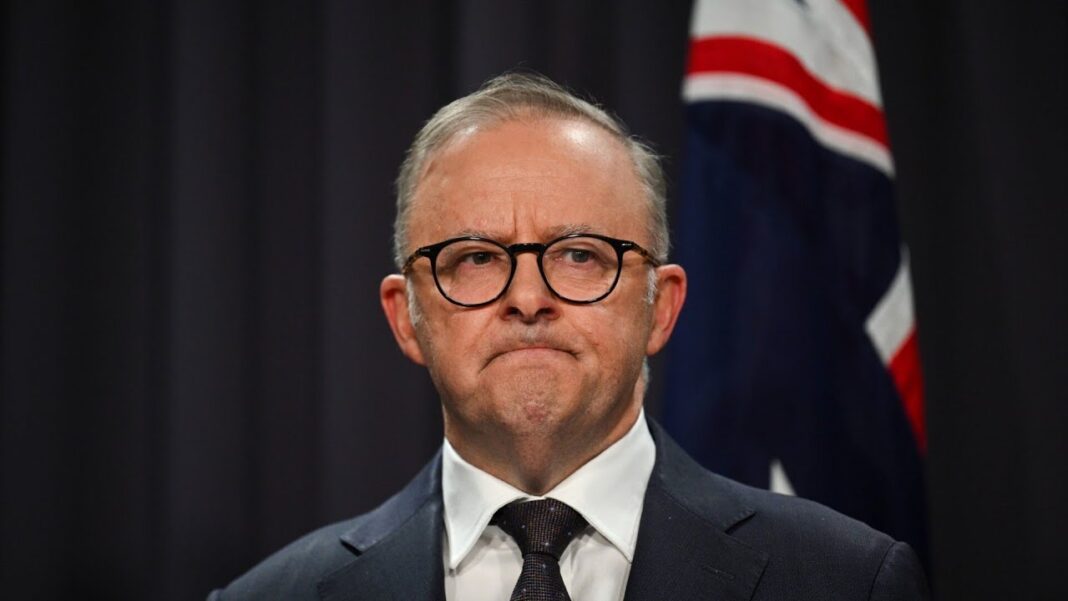
Addressing the controversy the following day from the floor of Australia’s Parliament, Albanese struck a contrite and somber tone. “Emotions were raw and a lot of people in the community are hurting and angry, and some of that anger was directed towards me, and I understand that,” he said. His words marked a rare acknowledgment of personal accountability—if not culpability—for a terror attack carried out under his government’s watch.
“As Prime Minister, I feel the weight of responsibility for an atrocity that happened whilst I’m Prime Minister,” Albanese continued. “And I’m sorry for what the Jewish community and our nation as a whole has experienced.” The apology, while welcomed by some, did little to immediately quell criticism from Jewish leaders and activists who argue that expressions of sorrow must now be matched by decisive action.
The Bondi Beach attack, described by Australian authorities as ISIS-inspired, has emerged as one of the most devastating antisemitic terror incidents in the country’s modern history. As World Israel News has repeatedly emphasized, the massacre did not occur in a vacuum. It followed months of rising antisemitic incidents across Australia, including synagogue vandalism, physical assaults, and increasingly aggressive anti-Jewish rhetoric in public spaces and online forums, often linked to radicalized political and ideological movements.
Albanese, for his part, framed the attack as an attempt to fracture Australia’s social fabric—an effort he insisted would ultimately fail. “We’re not going to let the ISIS-inspired terrorists win,” he declared before Parliament. “We won’t let them divide our society, and we’ll get through this together.” He characterized the national response as a “triumph” of unity over division, though critics argue that unity cannot be proclaimed into existence while minority communities remain under threat.
In an effort to demonstrate resolve, the prime minister used his parliamentary address to outline a sweeping package of proposed policy changes aimed at combating extremism, hate crimes, and gun violence. These measures include tightening Australia’s already stringent gun-ownership laws, increasing penalties for hate-motivated crimes, and expanding the legal definition of hate speech and racial vilification.
Among the most significant proposals is legislation that would make hate motivation an aggravating factor in sentencing—ensuring harsher penalties for crimes targeting protected groups, including religious minorities. Albanese’s government also plans to introduce tougher penalties for advocating violence or property destruction, ban extremist and hate-based organizations, and expand offenses related to racial supremacy and vilification.
Further measures outlined by Albanese, and highlighted by World Israel News, include canceling visas for individuals linked to extremist or hate-based activity, tightening laws governing extremist symbols, and blocking the importation of extremist propaganda materials. The proposals signal a broad attempt to close legal loopholes that have, in recent years, allowed radical ideologies to circulate with relative impunity.
Yet for many within Australia’s Jewish community, the announcement of new policies—however comprehensive—comes painfully late. Jewish leaders speaking to World Israel News have noted that warnings about escalating antisemitism were repeatedly raised long before the Bondi Beach massacre, often without eliciting meaningful governmental response. The sense that it took mass casualties at a Hanukkah celebration to spur decisive action has fueled resentment and distrust.
The public backlash Albanese faced at the memorial event reflects more than anger over a single attack; it is emblematic of a broader crisis of confidence. Australian Jews, who have historically viewed the country as a safe and pluralistic society, are now questioning whether that social contract still holds. As World Israel News has reported, many families are increasing security at Jewish schools, synagogues, and community centers, while others are reconsidering their long-term future in Australia altogether.
The prime minister’s challenge, analysts say, lies not only in implementing new laws but in restoring a sense of moral clarity. Critics argue that political leaders across the spectrum have been hesitant to confront antisemitism directly, particularly when it intersects with controversial geopolitical issues. The result, they contend, has been a normalization of rhetoric that dehumanizes Jews under the guise of political critique—creating fertile ground for extremist violence.
Albanese’s insistence that the Bondi attack ultimately united the nation has also drawn scrutiny. While there has been widespread condemnation of the violence, the World Israel News report noted that unity remains fragile. Jewish Australians continue to report fear and isolation, even as public officials speak of solidarity. The disconnect between rhetoric and lived experience remains one of the defining tensions of the current moment.
Still, some observers see an opportunity amid the tragedy. The legislative agenda outlined by Albanese represents one of the most aggressive anti-extremism pushes in Australia’s recent history. If enacted and enforced rigorously, it could significantly curtail the activities of hate groups and signal a zero-tolerance approach to incitement and ideological violence.
Whether that will be enough to rebuild trust is far from certain. As World Israel News has emphasized, trust is earned not through speeches but through sustained action, consistent enforcement, and an unwavering commitment to protecting vulnerable communities—especially when doing so is politically inconvenient.
For now, Australia stands at a crossroads. The Bondi Beach massacre has stripped away any lingering illusions about the reach of global jihadist ideology and the domestic consequences of unchecked hate. Albanese’s apology and policy proposals mark an acknowledgment of that reality, but the path forward will require more than contrition.
As the Jewish community mourns its dead and braces for an uncertain future, the nation watches to see whether its leaders will rise to the moment. The true test will be whether Australia can transform grief and anger into lasting resolve—ensuring that a celebration of light is never again plunged into darkness by terror.